But here’s the thing: people don’t learn in lockstep. One student already knows Python inside out and is itching to train models. Another is still untangling the difference between a list and a tuple. Put them through the same quiz, and you’ve lost both.
Now imagine a quiz that learns as you go. You miss a question on loops? The next one gives you a fresh angle on the same concept until it clicks. You ace a couple of NumPy questions? It skips the basics and throws in something tougher, like data aggregation in pandas. That’s what an adaptive quiz does—and when you bring it into a course like Data Science & Machine Learning using Python at Uncodemy, the whole learning process shifts gears.
Why Static Quizzes Fall Flat
Static quizzes are like canned playlists. Same order, same pace, no regard for what the listener actually wants. They’re fine if your only goal is grading, but lousy if the goal is learning.
- For beginners, they’re discouraging. Miss a question early, and you keep getting hammered by harder ones you’re not ready for.
- For advanced learners, they’re boring. You slog through a dozen “Hello World”-level questions before getting anything challenging.
- And for instructors, they’re blunt instruments. You know who scored 60%, but not why.
That’s not teaching. That’s paperwork.
How AI Makes Quizzes Smarter
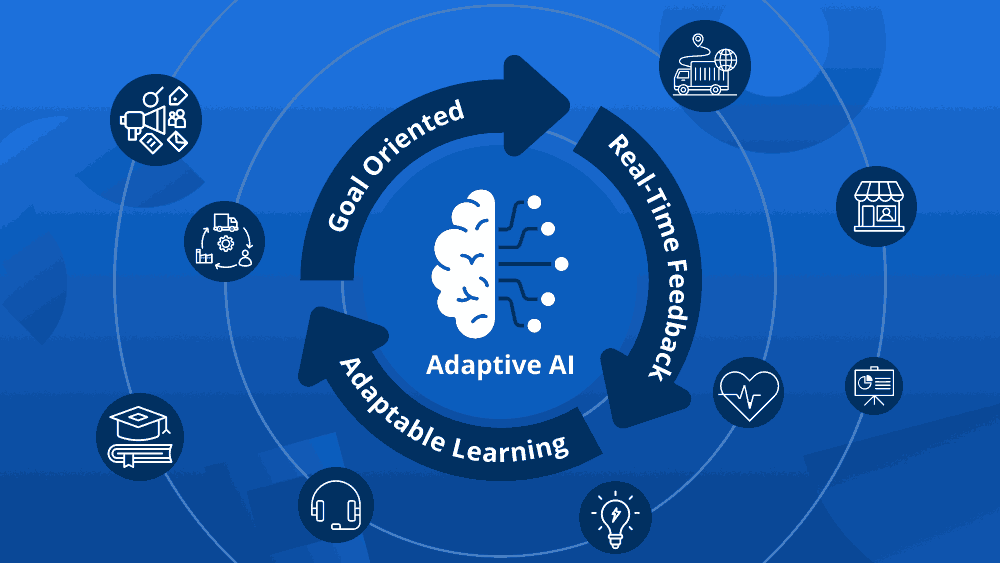
Here’s how adaptive quizzes actually work under the hood:
1. They build a map of what you know. Think of it like a mental profile: the system figures out your strengths (say, data wrangling with pandas) and weaknesses (maybe logistic regression math).
2. They choose the next question on the fly. Answer correctly? You level up. Miss it? You get another question on the same theme, maybe with a hint baked in.
3. They scale difficulty naturally. You don’t jump from “What’s a Python variable?” to “Implement gradient boosting from scratch.” The path stretches based on where you’re standing.
4. They offer feedback that matters. Instead of “Wrong,” you see something like: “Check your understanding of recall—remember, it’s about how many actual positives you identified.”
It feels less like taking a test and more like having a tutor who adjusts in real time.
Why This Fits Data Science & Machine Learning using Python
Uncodemy’s Data Science & Machine Learning using Python isn’t some surface-level intro course. It’s hands-on. You start with Python basics, move into data visualization, then into machine learning algorithms, and eventually real projects. That’s a big arc, and students don’t move through it evenly.
Adaptive quizzes are the glue that keeps learners engaged all the way through:
- In Python basics, one student may get ten variations on loops until it finally sticks. Another skips ahead to decorators because they already code daily.
- In machine learning, some need extra practice with classification metrics like precision and recall, while others are ready to tackle ROC curves and hyperparameter tuning.
- By the project stage, the quiz engine can serve custom questions based on what someone’s building—like clustering for a customer segmentation project or regression for price prediction.
Instead of one rigid path, every learner gets their own.
What the Research Says
This isn’t just theory. Studies show AI-generated quizzes can match or even outperform human-written ones. One paper tested GPT-4 on multiple-choice question design for programming and found the results both high-quality and scalable. Another experiment with an AI-powered platform showed beginners stuck with coding longer because the system kept adjusting to their pace, instead of throwing them into the deep end.
The common thread? Adaptive systems make people want to keep going. And that’s half the battle in learning something as complex as machine learning.
What Students Actually Get Out of It
For someone inside the Data Science & Machine Learning using Python course, here’s the payoff:
- No wasted time. You don’t grind through material you already know.
- Real confidence. Weak areas get tackled when they appear, not weeks later in an exam.
- Better retention. Concepts resurface just when your brain needs the reminder.
- A clear growth path. You see progress, not just scores.
It’s not about passing a test. It’s about feeling that the course is designed for you.
What Instructors and Uncodemy Gain
For instructors, adaptive quizzes are a goldmine of insight. Instead of just test scores, they see patterns: maybe most students get stuck on loops, or half the class trips over k-means clustering. That feedback loops straight into better teaching.
For Uncodemy, it means Data Science & Machine Learning using Python becomes more than another coding course. It becomes a personalized experience at scale—something learners remember, talk about, and recommend.
How to Make It Happen
Putting adaptive quizzes into practice isn’t rocket science anymore.
- Use AI models to generate quiz questions across difficulty levels.
- Plug them into the same learning platform students already use.
- Track performance and adjust the question bank as patterns emerge.
- Pair quizzes with live mentoring so students never feel isolated.
It’s a system that scales without losing the personal touch.
Looking Ahead
Adaptive quizzes are just the start. Imagine quizzes that also adjust to learning style—visual learners get charts and diagrams, analytical ones get equations and code snippets. Or quizzes that sync directly with a student’s capstone project, serving up questions tailored to their dataset or problem domain.
That’s the direction courses like Data Science & Machine Learning using Python are headed. Not just teaching, but adapting.
Closing Thoughts
Static quizzes made sense when classrooms were small and paper was the only option. But in a world where people learn online, at different speeds, with different backgrounds, they just don’t cut it.
AI-powered adaptive quizzes turn assessment into a learning tool. They respect where each student is starting, challenge them at the right level, and help them move forward without wasting time. For a course as wide-ranging and hands-on as Data Science & Machine Learning using Python, that shift changes everything.
Instead of feeling like they’re being tested, students feel like they’re being guided. And that’s when real learning happens.