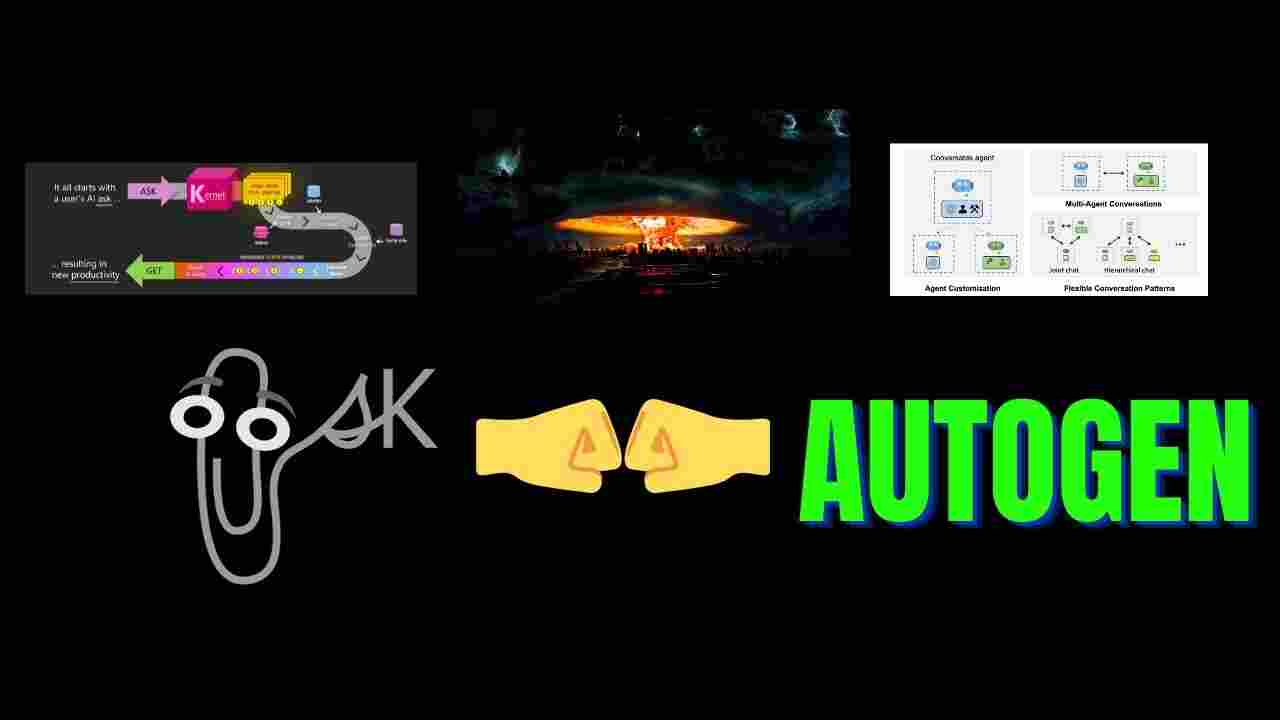
Choosing between Agent SDK and AutoGen depends on various factors like your project scope, technical background, integration needs, and future scalability goals. In this article, we’ll explore both frameworks in detail– what they are, how they work, their strengths and weaknesses, and key considerations that can help you make the best choice.
Understanding Agent SDK
Agent SDK is a developer-focused framework that provides a structured way to build AI agents. It’s designed for flexibility and control, allowing developers to design multi-step workflows, integrate custom APIs, and define logic explicitly. Think of it like a toolkit that gives you the building blocks to craft specialized agents tailored to your project’s requirements.
One of the standout features of Agent SDK is its modularity. Developers can define agents with specific roles, memory capabilities, and reasoning patterns. It supports chaining together different functions, APIs, or language model calls in a predictable and maintainable way. This is ideal for projects that demand precision, security, or domain-specific behavior.
For example, if a company wants to create a customer support agent that follows strict compliance rules, integrates with a CRM, and logs all conversations, Agent SDK can provide the low-level control to implement these rules effectively. It is particularly suited for enterprise-grade applications where customization and fine-tuning are essential.
Another key aspect is agent orchestration. Agent SDK allows developers to coordinate multiple agents to work together, passing information back and forth systematically. This is useful for building collaborative systems – like one agent handling data extraction, another analyzing it, and a third generating insights for users.
Strengths of Agent SDK
1. Full Control Over Logic:
Developers can define exactly how an agent should behave. This is ideal when compliance, explainability, or deterministic behavior is required.
2. Enterprise Integration:
Agent SDK often provides clear hooks for integrating external APIs, databases, and security layers, making it suitable for production environments.
3. Modularity:
You can mix and match components, reuse code, and scale your agent architecture over time.
4. Better Debugging and Testing:
Because of its explicit structure, debugging workflows or testing specific agent behaviors becomes more manageable.
Limitations of Agent SDK
While powerful, Agent SDK can be complex for beginners. It requires some programming experience and an understanding of how AI agents work internally. Setting up multi-agent collaborations may involve more boilerplate code. It is less “plug and play” compared to some newer frameworks.
Additionally, because it gives developers so much control, development speed can be slower for small projects or prototypes. If the goal is rapid experimentation, the detailed structure of Agent SDK may feel like overkill.
Understanding AutoGen
AutoGen takes a different approach. Developed by Microsoft, AutoGen focuses on automating the creation and coordination of AI agents. Instead of manually defining every interaction, AutoGen lets you declare roles and tasks, and it handles much of the communication, planning, and reasoning automatically.
Imagine you want to create a system where two agents collaborate to generate content – one drafts and the other reviews. In AutoGen, you can define these two agents and their roles, and the framework will manage the conversation between them. It’s designed to make multi-agent systems easy to build, even for developers who are not experts in complex orchestration.
AutoGen is also designed for scalability. It supports different communication patterns, agent hierarchies, and coordination mechanisms. It’s particularly powerful for researchers, startups, and developers who want to focus on high-level problem-solving rather than low-level infrastructure.
Another important point is AutoGen’s ability to connect to external tools and APIs. While it’s not as manually detailed as Agent SDK, it provides interfaces to incorporate retrieval-augmented generation (RAG), function calling, or external data sources. This allows developers to enrich their agents’ capabilities without needing to manually manage every step.
Strengths of AutoGen
1. Rapid Prototyping:
AutoGen is excellent for quickly setting up multi-agent systems without a lot of boilerplate code.
2. Automation of Orchestration:
The framework handles communication between agents efficiently, allowing developers to focus on high-level goals.
3. Accessible for Non-Experts:
Even those with limited experience in complex AI systems can create powerful agent workflows.
4. Scalable Collaboration:
It’s well-suited for creating agent teams that handle different tasks autonomously.
Limitations of AutoGen
While AutoGen simplifies development, it comes at the cost of less fine-grained control. Developers who need strict control over each interaction or deterministic behavior might find AutoGen’s abstraction limiting.
Debugging can also be trickier. Because much of the orchestration happens under the hood, it can sometimes feel like a “black box,” making it harder to trace errors or unexpected behaviors. For enterprise systems with strict audit requirements, this could be a challenge.
Key Differences Between Agent SDK and AutoGen
While both frameworks enable multi-agent development, their philosophies differ:
Level of Control vs Automation:
Agent SDK prioritizes explicit control and customization, while AutoGen emphasizes automation and ease of use.
Target Users:
Agent SDK is aimed at experienced developers or teams building production-grade systems. AutoGen targets rapid prototyping, research, and simpler collaboration setups.
Learning Curve:
Agent SDK has a steeper learning curve due to its manual structure. AutoGen is easier for newcomers.
Debugging:
Agent SDK allows clear tracing of agent behaviors, while AutoGen can be harder to debug because of its automated orchestration.
Use Cases:
Agent SDK excels in enterprise applications, compliance-heavy systems, and fine-tuned logic. AutoGen shines in collaborative multi-agent tasks, quick iterations, and experimentation.
When to Choose Agent SDK
You should consider Agent SDK if:
~You need full control over agent workflows.
~Your project involves sensitive data, regulatory compliance, or strict behavior rules.
~You’re building a long-term, scalable enterprise application.
~Debugging and transparency are critical.
~Your team has technical expertise and time for structured development.
Example use cases include customer service bots, financial advisory agents, internal enterprise tools, and scientific research assistants that require structured outputs.
When to Choose AutoGen
You should consider AutoGen if:
~You want to prototype quickly without setting up everything manually.
~Your use case involves multiple agents collaborating in creative or exploratory tasks.
~You’re working on R&D projects, hackathons, or early-stage startups.
~You prefer high-level declarations over low-level orchestration.
~You want to build conversational systems or workflows that benefit from automation.
Example use cases include content generation teams, collaborative research tools, multi-step data processing pipelines, and student projects where speed matters more than control.
Integration and Ecosystem Considerations
Both frameworks can integrate with various language models, databases, and external APIs, but the approach differs. Agent SDK tends to give you clear API hooks where you manually manage calls, while AutoGen often provides wrappers that automate the interaction.
If you’re already working within an ecosystem that requires strict integration with backend services, Agent SDK may fit more naturally. On the other hand, if you’re exploring how to make different models or tools talk to each other automatically, AutoGen might provide faster results.
Another factor to consider is community and support. AutoGen has gained popularity among researchers and hobbyists, leading to a growing number of tutorials, demos, and open-source projects. Agent SDK, depending on the specific implementation you choose, might offer more structured documentation for professional teams.
Performance and Scalability
In terms of performance, both frameworks rely heavily on the underlying language models. However, Agent SDK may allow better optimization in specific workflows because you can fine-tune the interaction. AutoGen may introduce some overhead due to its abstraction layer, though this is often negligible for most applications.
For scaling multi-agent systems, both frameworks are capable, but Agent SDK offers more granular control, which may be important for production environments. AutoGen’s strength lies in its ability to scale conceptually, letting you add new agents easily without rewriting the orchestration logic.
Final Thoughts
Choosing between Agent SDK and AutoGen, as explained in this Artificial Intelligence course, ultimately depends on your goals, available resources, and the level of control you want over your AI workflows. If you’re developing solutions that require precision, security, and deep customization—such as enterprise platforms or regulatory systems—Agent SDK provides the structure and control needed to fine-tune every aspect of agent behavior. In contrast, this Artificial Intelligence course also highlights how AutoGen is ideal for rapid experimentation, creative collaboration, and high-level problem solving, helping teams move faster without getting stuck in orchestration complexities.
The good news is that both frameworks are evolving quickly, and many developers even use them together in hybrid ways –leveraging AutoGen for fast prototyping and Agent SDK for production-level refinement. By understanding their strengths and differences, developers can make smarter decisions and build AI solutions that are both effective and scalable.
As the AI agent ecosystem grows, tools like these will continue to shape how intelligent systems are built. Platforms like Uncodemy can be invaluable for learning these frameworks hands-on and turning ideas into real applications.