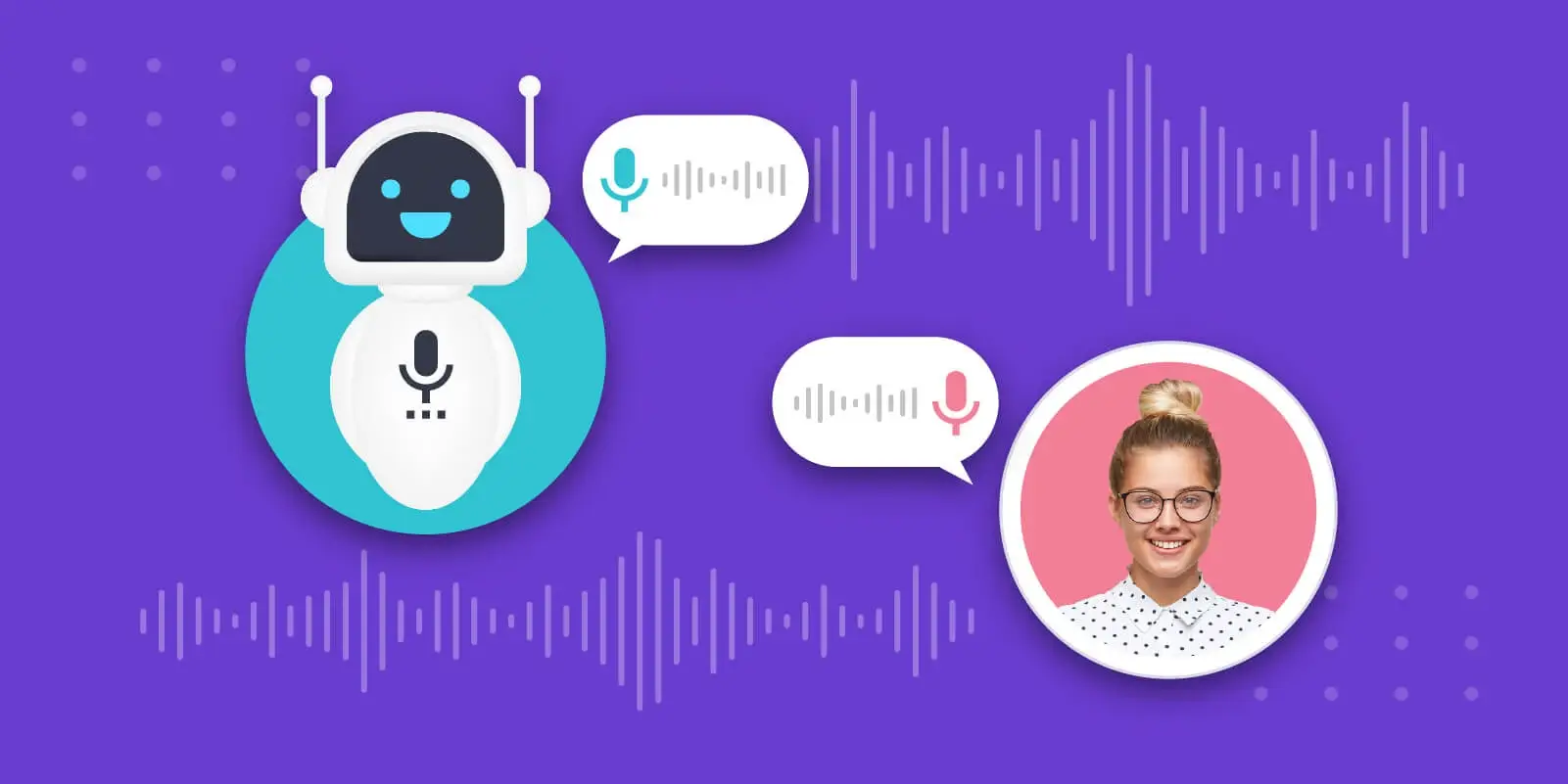
What Are AI Voice Tools?
AI voice tools are a category of Artificial Intelligence applications that process and synthesize human speech. They primarily fall into three categories:
- Speech-to-Text (STT) / Automatic Speech Recognition (ASR): These tools convert spoken language into written text. They are powered by Natural Language Processing (NLP) and Machine Learning (ML) algorithms that recognize speech patterns, phonemes, and context to accurately transcribe audio.
-
- Text-to-Speech (TTS): These tools convert written text into spoken audio. Advanced TTS models use Deep Learning and Generative AI to produce highly natural-sounding voices, often with customizable tones, emotions, and accents, far beyond the robotic voices of the past.
-
- Voice Cloning / Voice Synthesis: This cutting-edge technology can create a synthetic voice that mimics a specific person's voice, requiring only a small audio sample. It's a powerful application of Generative AI, capable of replicating unique vocal characteristics.
Key Applications and Use Cases in 2026
The applications of AI voice tools are vast and continue to expand rapidly across various sectors:
1. Customer Service and Support
AI-powered chatbots and virtual assistants are now the first point of contact for many customers.
- Intelligent Voicebots: Handling routine inquiries, guiding users through troubleshooting steps, and providing instant information over the phone or through smart speakers. These voicebots use STT to understand customer queries and TTS to provide natural-sounding responses.
-
- Call Center Automation: Transcribing calls in real-time, analyzing sentiment, and providing agents with relevant information or suggested responses, significantly improving efficiency and customer satisfaction.
-
2. Content Creation and Media
AI voice tools are transforming how audio and video content are produced.
- Audiobooks and Podcasts: Converting written content into high-quality audio, making publishing more accessible and cost-effective for authors and content creators.
-
- Voiceovers and Dubbing: Generating realistic voiceovers for videos, presentations, and e-learning modules in multiple languages, accelerating global content distribution.
-
- Personalized News Feeds: Delivering news articles and summaries in a user's preferred voice, creating a more engaging and personalized listening experience.
-
- Dynamic Advertisements: Creating personalized voice ads that adapt based on user demographics or real-time context.
-
3. Education and Learning
AI voice tools enhance accessibility and engagement in educational settings.
- Language Learning: Providing interactive pronunciation practice, offering real-time feedback on spoken language, and simulating conversations with native speakers.
-
- Accessible Content: Converting textbooks, articles, and online materials into audio formats for students with reading disabilities or those who prefer auditory learning.
-
- Virtual Tutors: Offering spoken explanations, answering student questions, and providing verbal feedback on assignments, making learning more interactive and personalized.
-
4. Healthcare
From administrative tasks to patient care, AI voice tools are making significant inroads.
- Medical Dictation: Accurately transcribing doctor-patient conversations, clinical notes, and surgical reports, reducing administrative burden and improving documentation.
-
- Virtual Health Assistants: Providing patients with information on medication, appointment reminders, and general health advice through voice interfaces.
-
- Patient Communication: Generating personalized voice messages for patient follow-ups or wellness reminders.
-
5. Accessibility and Assistive Technologies
AI voice tools are crucial for empowering individuals with disabilities.
- Screen Readers: Converting on-screen text into speech for visually impaired users, enabling them to navigate digital interfaces.
-
- Voice Control: Allowing individuals with limited mobility to control devices and software using only their voice.
-
- Communication Aids: Providing synthetic voices for individuals who cannot speak, often with personalized voice cloning to retain their unique identity.
-
6. Gaming and Entertainment
AI voice tools create more immersive and dynamic experiences.
- Dynamic Character Voices: Generating unique voices for non-player characters (NPCs) in games, allowing for more diverse interactions and adaptive dialogue.
-
- Interactive Narratives: Creating voice-driven stories where user input influences the plot and character responses.
-
- Personalized Audio Experiences: Tailoring in-game audio or background music based on player actions or emotional states.
-
7. Marketing and Advertising
AI voice tools enable new forms of engagement and personalization.
- Brand Voice Consistency: Ensuring that all automated voice interactions (e.g., voice assistants, IVR systems) maintain a consistent brand persona and tone.
-
- Personalized Audio Ads: Delivering highly targeted and dynamic audio advertisements that adapt based on user data and preferences.
-
- Voice Search Optimization: Understanding natural language queries to optimize content for voice search, which is becoming increasingly prevalent.
-
-
How AI Voice Tools Work (The Underlying Technology)
The intelligence behind these tools is rooted in advanced AI and Machine Learning techniques:
- Natural Language Processing (NLP): Essential for STT to understand the meaning and context of spoken words, and for TTS to generate natural-sounding and contextually appropriate speech.
-
- Deep Learning (DL): Particularly neural networks (like Recurrent Neural Networks - RNNs, and Transformer models), are critical for learning complex patterns in speech and text data, enabling highly accurate transcription and realistic voice synthesis.
-
- Generative AI: For TTS and voice cloning, generative adversarial networks (GANs) and transformer-based models create entirely new, realistic audio outputs based on learned patterns.
-
- Large Language Models (LLMs): While not exclusively voice tools, LLMs like GPT and Gemini often serve as the "brain" behind intelligent voice assistants, providing the conversational intelligence and knowledge base that the TTS and STT components then vocalize or transcribe.
-
-
Ethical Considerations for AI Voice Tools
The rapid development of AI voice tools also brings significant ethical concerns:
- Deepfakes and Misinformation: The ability to clone voices raises serious concerns about creating convincing fake audio or video content for malicious purposes (e.g., impersonation, spreading misinformation).
-
- Consent and Misuse of Voice Cloning: Obtaining explicit consent for voice cloning and preventing its unauthorized use is a critical challenge.
-
- Data Privacy: STT and voice recognition systems collect sensitive voice data, raising concerns about how this data is stored, used, and protected.
-
- Job Displacement: Automation of tasks like transcription and voiceover could impact jobs in these sectors.
-
- Bias in Voice Recognition/Synthesis: AI models can exhibit biases based on their training data, potentially performing less accurately for certain accents, dialects, or demographic groups.
-
-
Uncodemy Courses for Mastering AI Voice Technologies
To effectively understand, utilize, and even contribute to the development of AI voice tools, specialized training is invaluable. Uncodemy offers several courses that can equip you with these critical skills:
- AI & Machine Learning Courses: These courses provide the foundational knowledge of AI concepts, machine learning algorithms, and deep learning, which are essential for understanding how STT, TTS, and voice cloning models are built and trained. You'll learn about neural networks and transformer architectures that power these tools.
-
- Data Science Courses: Working with audio data, transcribing it, and preparing it for AI models requires strong data science skills. Our Data Science courses teach you how to collect, clean, preprocess, and analyze various data types, including audio, using Python libraries like Pandas and NumPy.
-
- Python Programming Course: Python is the primary language for AI and machine learning. A strong foundation in Python programming is indispensable for working with AI voice tool APIs, building custom applications, and manipulating audio data.
-
- Prompt Engineering Course: For interacting with Generative AI models that underlie advanced TTS and STT (especially when integrated with LLMs), Prompt Engineering is crucial. You'll learn to craft precise instructions to get the desired voice output or accurate transcriptions.
-
- Digital Marketing Course: If you're interested in applying AI voice tools in marketing, this course teaches you how to leverage AI for personalized audio ads, voice search optimization, and maintaining brand voice consistency across AI-powered interactions.
-
Conclusion
AI voice tools are rapidly evolving, moving beyond novelty to become indispensable components of our digital world in 2026. Their applications in customer service, content creation, education, healthcare, and beyond are transforming industries and enhancing user experiences. While ethical considerations around deepfakes, privacy, and bias demand careful attention, the potential for positive impact is immense. For individuals looking to contribute to or leverage these advancements, acquiring expertise in AI, Machine Learning, Data Science, and Python programming through comprehensive programs like those offered by Uncodemy is paramount. The future of human-computer interaction is increasingly voice-driven, and mastering these AI tools is key to shaping it responsibly and innovatively.