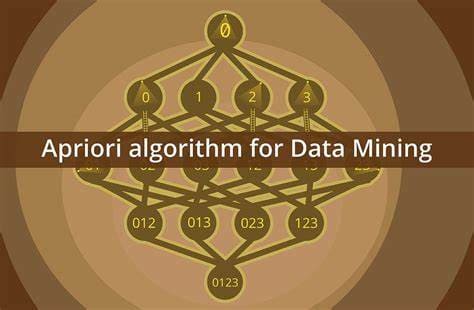
Apriori Algorithm in Data Mining: Step-by-Step Guide with Examples
In today’s world driven by massive amounts of data, understanding how patterns are extracted from raw data has become an essential skill. Whether you are an aspiring data scientist or an enthusiastic learner curious about analytics, learning data mining techniques is a crucial step in your journey. Among the many algorithms used in this field, the Apriori Algorithm stands out as a foundational method for uncovering interesting relationships in data.
Apriori Algorithm in Data Mining: Step-by-Step Guide with Examples
Mr. Irshad Khana / 1 days
0
4 min read
If you are enrolled in or looking for a Data Science Course in Noida, you’ve likely come across this algorithm during your curriculum. But even if you are just starting out, don’t worry — this article is your complete step-by-step guide to the Apriori Algorithm, explained with clear examples, practical applications, and beginner-friendly language.
We will break down the concept, walk through how the algorithm works, and show you why it remains relevant even in today’s advanced data mining landscape.
What is the Apriori Algorithm?
The Apriori Algorithm is a classic data mining method used to identify frequent itemsets in a dataset and generate association rules. In simpler words, it helps find patterns like: “People who buy bread and butter often also buy jam.” This is known asmarket basket analysis — and it’s used extensively in retail, e-commerce, banking, and many other industries.
The core idea behind Apriori is based on the “apriori property,” which states:
If an itemset is frequent, all of its subsets are also frequent.
This means that if people often buy bread, butter, and jam together, then the pair bread + butter is also a common purchase, as is butter + jam.
The Apriori Algorithm reduces the number of combinations that need to be checked by focusing only on those that have a chance of meeting a minimum frequency threshold, calledsupport.
Why is Apriori Important in Data Science?
Anyone taking aData Science Course in Noidaor elsewhere will come across many algorithms, from supervised learning (like decision trees and linear regression) to unsupervised learning (like k-means clustering). Apriori fits into a third, often less discussed, category:association rule mining.
Association rule mining helps businesses and researchers uncover hidden patterns, correlations, or causal structures in data.
Banking:Identifying patterns in fraudulent transactions.
Healthcare:Discovering combinations of symptoms or treatments.
Apriori is often the first algorithm taught in this category because it’s intuitive, simple to implement, and lays the foundation for more advanced techniques like FP-Growth.
How Does the Apriori Algorithm Work?
Let’s break this down into clear, digestible steps.
Step 1: Set Minimum Support and Confidence
Before we start, we need two important thresholds:
Support:The proportion of transactions in the dataset that contain a particular itemset.
Confidence:The likelihood that a rule is true — for example, if people buy X, how often do they also buy Y?
You also might encounterlift, which tells you how much more likely X and Y are bought together compared to random chance.
Setting the minimum support and confidence values helps filter out only the most meaningful patterns.
Step 2: Generate Frequent Itemsets
Next, we scan the dataset to find frequent itemsets — combinations of items that meet the minimum support threshold.
Here’s how:
Generate candidate itemsets (C1):List all single items.
Count support:Calculate how often each item appears.
Computationally expensive:It generates many candidate itemsets, which can slow down performance on large datasets.
Requires careful setting of support/confidence:Too high, and you miss interesting patterns; too low, and you get overwhelmed with noise.
Not suitable for continuous data: Works only on categorical data.
To overcome these, algorithms like FP-Growth have been developed, but Apriori remains an excellent learning tool.
How to Learn Apriori Algorithm in a Data Science Course in Noida
If you are serious about mastering data mining techniques, enrolling in aData Science Course in Noida can be a game-changer. Leading institutes like AnalytixLabs offer structured courses that cover Apriori and other essential algorithms with:
Real-world datasets
Hands-on coding sessions (Python, R)
Case studies and industry applications
Assignments and projects to reinforce learning
While online tutorials and blogs are helpful, guided learning ensures you truly grasp not just what an algorithm does, but why it works the way it does.
Implementing Apriori Algorithm in Python
In most Data Science Courses in Noida, you will use Python libraries like mlxtend to implement Apriori.
Here’s a simple Python snippet:
from mlxtend.frequent_patterns import apriori, association_rules
This gives you a powerful, automated way to extract association rules from real datasets.
Tips for Students Learning Apriori
Understand the math:Don’t just memorize the steps; understand support, confidence, and lift.
Work on real data: Use open datasets like those from Kaggle to practice.
Visualize the rules: Tools like network graphs can help you see the relationships between items.
Optimize parameters:Play with support and confidence thresholds to see how results change.
Compare with other algorithms:Learn when to use Apriori versus FP-Growth or Eclat.
Future of Apriori Algorithm
While newer algorithms have emerged, Apriori remains relevant in education and small-scale applications. It introduces core concepts like frequent pattern mining, combinatorial search, and pruning strategies — all essential ideas for anyone working in data science.
Moreover, understanding Apriori gives you a strong foundation for advanced topics like:
Sequential pattern mining
Graph mining
Recommender systems
Deep learning-based pattern discovery
Conclusion
The Apriori Algorithmis one of the most intuitive and foundational tools in the data mining toolbox. Whether you are a student, a professional, or a business enthusiast, understanding how it works can open doors to valuable insights and smarter decisions.
If you are pursuing or considering a Data Science Course in Noida, make sure to master Apriori and its family of techniques. With guided projects, hands-on practice, and expert mentorship, you’ll be well-equipped to apply these skills in the real world.
As data continues to explode in volume and complexity, the ability to uncover hidden patterns will only become more valuable. Start your journey today — and let algorithms like Apriori light the way.