The Truth Behind The Paradox of Personalization and Privacy
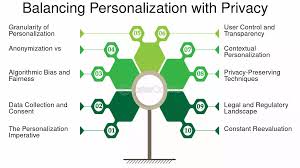
In the digital era, companies gather tons of information about consumers to customize their marketing messages and products and services hoping to have a better conversion rate and customer satisfaction. Nonetheless, through this data driven method, privacy issues of consumers have been pronounced. According to a survey done by Deloitte, 91 percent of consumers showed that they believe companies should be open about their data in an attempt to build trust. Publicity of the large-scale data breaches and misuse contributes to the lack of confidence and, consequently, emergence of regulations such GDPR and CCPA that give individuals more control over their data.
The twist of irony to the marketers is that on one hand personalized experiences involve the collection of data yet on the other hand consumers are insecure about sharing their precious piece of information, more so to a third party whom they do not know. This paradox develops a fine line between the companies that need to walk where they can provide appropriate content without going overboard and destroying trust. A large number of thought leaders recommend a right down the middle approach, and this will erode privacy and personalization unless managed. Customization enhances the experience of customers and business results, and the organizations with the fastest rates of growth have 40 percent of revenue growth linked to personalization than the organizations with slower rates of growth. As a matter of fact, 71 percent of consumers demand tailored engagements, while 76 percent end up feeling frustrated when they fail to get the same.
Privacy and Personalization as a Strategic Plan
The marketer needs to be guided on how to go about this zigzagging world by taking a first step in privacy in which all the activities of the marketer would involve making those activities privacy friendly.
Transparency/ Consent
Transparency of data collection and use is the number one issue.
Clear Representations: Businesses are expected to present the information on what data is taken, how it will be utilized, and why it requires information in simple terms in privacy policies.
Explicit Consent: Consumers should be given consent to collect their data as opposed to it being assumed. This involves provision of specific options to share the data with the customer having the option to opt in or out of individual types of data.
Consent Management Platforms (CMPs): CMPs should be used to give customers the freedom to make choices about how their data should be used whilst businesses can comply with the privacy law by documenting consent preferences.
2. Minimizing Data, and Fair Uses of Data
Social reduction of the magnitude of data gathered to what is essentially unknown minimises the risks to privacy and fosters trust.
Data Collection Requirements: Pay attention to gathering such data that is necessary to personalise the product recommendations but not such data that can be considered as sensitive such as the age or location.
Anonymization and Aggregation: Anonymous or aggregate data should be used when performing analysis where possible in order to get new insights without compromising individuals. This lowers the exposure risk in case data gets compromised.
Practical Ethics of AI and Machine Learning: Create AI algorithms that will process only the minimum amount of data they need to customize and make operations as explainable as possible, describing the inner processes of the AI models and customer data use. Check AI systems regularly to make sure that they are functioning ethically and do not violate privacy regulations.
3. Safe Data Management and Customer Control
High-security and the ability of the user to control the data is essential.
Encryption and Access Control:While transferring and storing sensitive customer information, use encryption and also perform role-based access control, so that employees only see the data they really need to do their work. There is also an additional layer of security provided by Multi-factor authentication.
Privacy by Design: include privacy aspects everywhere in the marketing plan instead of as an afterthought. This offensive measure levels regulatory risks and creates trust.
User Control Options: Impose simple to understand privacy control options and opt-in/out options where the user can control his or her information and preferences.
First-Party and Zero-Party Data Role
The decreasing usage of third-party cookies by such browsers as Firefox, Safari, and Chrome pushes brands to focus on first- and zero-party data.
First-Party Data: These are first-hand data that were gathered about users including the purchase history, preferences, and interaction with owned digital resources.
Zero-Party Data: this means the information that customers provide willingly by participating in interactive quizzes and surveys as well as preference center. Such a first party collection generates trust and gives insight in personalization.
Impact Measured and Future Outlook
A privacy-first personalization approach has a potential to improve customer retention, the opening rates of email, and conversion rates because the consumers tend to engage with familiar and trusted brands. Privacy-first personalization model A privacy-first personalization model will characterize marketing analytics in the near future and be adjusted to the regulatory and customer demands. AI and machine learning are just two of the technologies that are already making predictive personalization possible without needing to lean too heavily on personalized data; contextual cues (i.e., location, device type, browsing session data) can be used instead. Companies which focus on ethical data practice, transparency and refrain their marketing strategy to be consent-based will develop healthier, more lasting relationships with their audiences and acquire a competitive edge.
Uncodemy Courses Marketing Analytics
To establish a robust career in data analytics, Uncodemy provides wholesome training programs that are likely to impart or provide students with the much-needed skills in the industry. The courses include the fundamental topics, tools, and technologies involved in data analytics that give students an idea on how to work in diverse positions within a rapidly expanding field.
Uncodemy trains:
Data Analytics: This curriculum is related to data analysis methods, forecasting models, and business analytics. It is concentrated on real-life situations (the collection, storage, and analysis of data, their visualization). The course guarantees a practical training and qualifies the students towards business intelligence and reporting jobs.
Data Science and Machine Learning with Python: Uncodemy specialized course: The course on Data Science and Machine Learning with Python is vitally needed in order to dig into the depth of information, create a model and make predictions in different possibilities.
Business Analytics: Business Analytics is also a subdivision of Data Analytics, and at Uncodemy, it deals with providing businesses with the power to make effective decisions via data mining, statistical analysis, and predictive modeling to obtain and highlight the trends that ultimately lead to the optimisation of strategies.
Digital Marketing: Uncodemy offers Digital Marketing courses too, one of which is advanced digital marketing and SEO.