Indian data science students look at performance the most. Processing power is needed to
handle large datasets, run Jupyter notebooks, and use tools such as RStudio, Tableau, Power
BI, or Python libraries. In 2026, the market is ruled by laptops based on a 13th and
14th-generation Intel Core i5 or i7 CPU, AMD Ryzen 7 and Ryzen 9, and a new line of M3 Apple
processors. Future-proofing Students hoping to future-proof should look to an Intel i7 or
Ryzen 7 at the least, but i5 or Ryzen 5 will still be suitable for basic coursework when the
budget is constrained. MacBook Air and MacBook Pro with an M3 chip are also gaining
popularity in India, where students are also oriented towards macOS due to its smooth
performance and long battery life. They are more expensive, but their long-term cost is
worth it, in the eyes of Indian students attending school in metro cities, as they hardly
slow down after years of use.
RAM is another important aspect. Eight GB is no longer sufficient in data science, and the
majority of professionals suggest having at least 16GB to multitask comfortably. Students
will be used to having several applications open at a time: coding tools, browsers with
dozens of tabs, Zoom sessions, and local datasets. Laptops equipped with 16GB RAM have
become mainstream in India and can be found at starting prices of 65,000 rupees (Windows) or
going up to 1.5 lakh rupees or higher in more premium models. If you are going to venture
into deep learning, 32GB RAM is better suited, but this is much more expensive. Storages
count too, and the default is solid-state drives (SSD) now. Most students will be fine with
a 512GB SSD, but those who want to save and work with large datasets or have multiple
programs locally rather than in the cloud should look at a 1TB SSD.
A pertinent question asked by Indian students is - Do I actually need a dedicated graphics
card laptop? It depends on the level at which you want to pursue machine learning and AI. In
the majority of undergraduate courses and simple projects, a powerful processor and
sufficient RAM are sufficient, as cloud-based platforms such as Google Colab and Kaggle
provide free access to GPUs. Nonetheless, should you wish to train a model locally,
particularly in computer vision or natural language processing, a discrete GPU will
considerably save you much time, making the laptop far more flexible. RTX 4050 or 4060
notebooks by NVIDIA are also now available in India. Its gaming laptop range, though a bit
by the side, provides great value to students who need to focus on academics and dabble in
gaming or creating content occasionally. The laptops are around 90,000 - 1.5 lakhs, which is
again high but worth it in case you want to utilise them after college too.
Indian students cannot afford to ignore battery life, too. Most of them spend much of their
time in classrooms, libraries, or cafes, where outlets are scarce. The leader in this area
is Apple laptops, with MacBook Air M3 having a battery life of up to 18 hours, which can
hardly be matched. At Windows, laptops such as the Dell XPS, Lenovo ThinkPad, and ASUS
ZenBook offer up to 8 to 12 hours of usage, which is more than enough to spend a day on
campus. It is also best not to buy a laptop that has low battery backup, even though it is
enticing on paper, as a charger is a hassle, and it is always annoying to deal with the
battery percentage in the long run.
Portability is equally vital. Every day, Indian students carry their laptops to school in
their backpacks, whether commuting by metro in Delhi, bus in Bangalore, or auto in Pune. A
bulky gaming laptop has the benefit of great performance, but it can be cumbersome to carry.
This is the reason why lightweight ultrabook devices are so popular. You can choose the Dell
XPS 13, MacBook Air, or Lenovo Yoga Slim, which weighs less than 1.5 kg and can be easily
transported. Nevertheless, when you focus on raw performance, particularly with a GPU,
readiness to accept slightly bulkier models ASUS ROG Zephyrus or MSI Creator laptops, is
anticipated. Just make sure to select a laptop that you will be comfortable carrying around,
as a large computer that you leave in your hostel room would be of little value to you
during those whole days at the campus.
Another point where Indian students tend to argue is the operating system. MacOS has very
good performance, which is very useful when it comes to coding. This is why a lot of
students of the best IITs and IIITs have MacBooks as their computers. However, Windows is
still less costly and easily accessible in various brands and hence, the most feasible for
most students. Windows is most certainly able to run a wider range of gaming and general-use
applications, which may prove to be helpful in owning a single unit of device that covers
studies. In India, Linux is significantly less ubiquitous, and setting up Ubuntu or Fedora
on a dual-boot on a Windows laptop is a more common low-cost measure that allows students to
develop an environment with which they are more compatible. This is a hybrid product that
suits one who desires flexibility without excessive spending.
The most important factor is likely to be price for most Indian students. Basic data science
requires a bottom-end laptop that begins at 55,000 to 65,000 rupees in 2026. These are
typically equipped with Intel i5 or Ryzen 5 processors, 8GB RAM (which can be upgraded to
16GB), and 512GB SSDs. The most serious students are in search of mid-range laptops that lie
between the range of 80,000 to 1.2 lakh. These are usually available with i7 or Ryzen 7
processors, 16GB of RAM, improved build quality, and in some cases, dedicated GPUs. High-end
laptops such as MacBook Pro M3 or Dell XPS 15 may cost even more than 1.5 lakh, but they
perform really well, have more extended lifespan, and maintain a higher resale price. Most
Indian students utilise educational discounts by Apple, Dell, and Lenovo, as well, saving a
few thousand rupees.
Students must also look at build quality, keyboard comfort, and display besides specs. Hours
spent coding require a comfortable keyboard, and Lenovo ThinkPad and MacBook keyboards are
legendary. The minimum screen resolution is Full HD display (1920x1080), although higher
resolutions are less fatiguing when studying for long durations. The screens with anti-glare
are also crucial in an Indian environment where students tend to be exposed to bright light
and even sunlight. Good construction guarantees that the laptop can withstand the abuse of
college life, being carted around in a full bus or shoved into a backpack. Another aspect
that Indian students need to consider is after-sales service. Brands such as Dell, HP, and
Lenovo enjoy well-developed service networks in India, whereas Apple has authorised service
centres primarily in the metro cities. The improvement areas: ASUS and MSI have widened
their service coverage, yet students in small towns are advised to verify before buying.
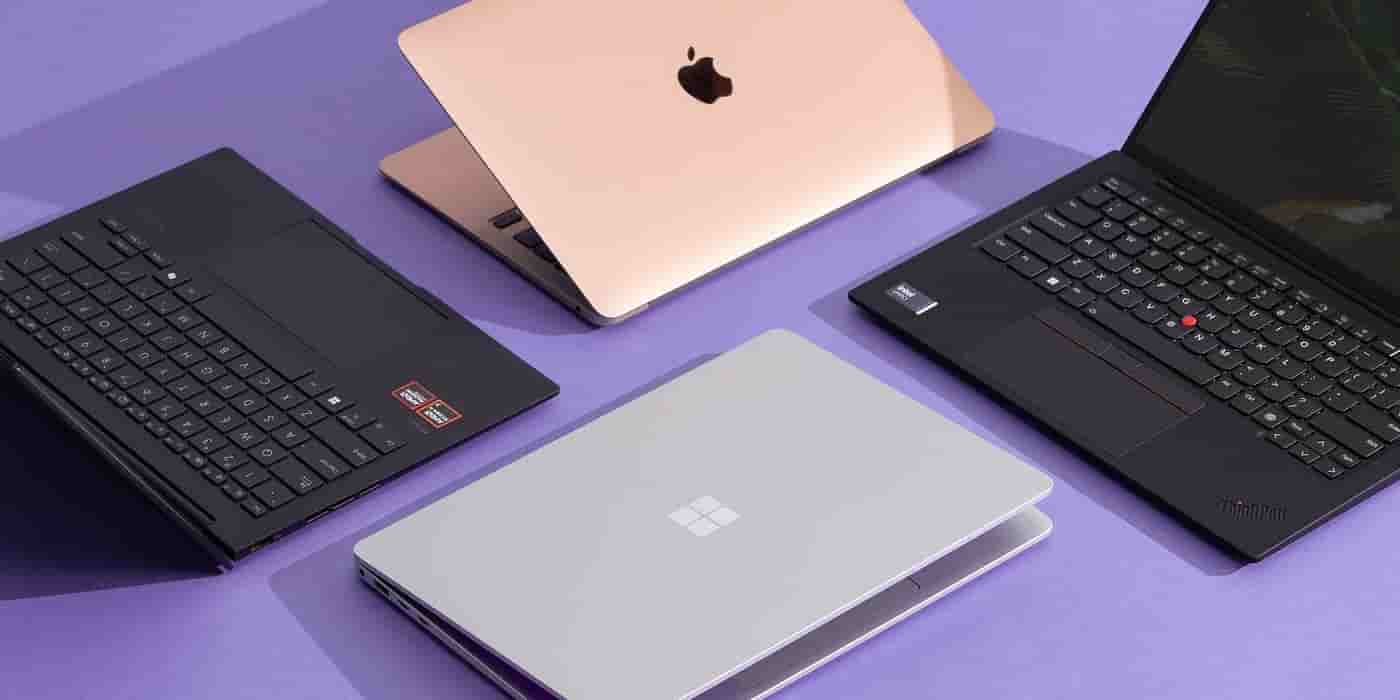
Based on specific recommendations, the MacBook Air M3 is among the finest that students can
afford, with insane battery life, smoothness and long-term security in a well-balanced
package around 1.15 lakh rupees. Within the high-end market, Windows users might consider
the Dell XPS 15 or the Lenovo ThinkPad X1 Carbon. Mid-range laptops, such as the ASUS
ZenBook 14, Acer Swift X, and HP Pavilion Plus, are less expensive with well-rounded
capabilities, and they are typically sold in the range of 80 thousand to 1 lakh rupees.
Those best suited to students in need of both a data science and gaming system include the
ASUS ROG Zephyrus G14 and MSI Creator series, though they are comparatively heavy-duty. On a
lower budget, you might look into Lenovo IdeaPad Gaming 3 or HP Victus, which often comes
with a Ryzen 5 or i5 chip and an RTX 3050, a reasonable place to begin at less than 70,000
rupees.
Finally, the top laptop of a data science student in India in 2026 is a question of personal
objectives, finances, and preferences. Others are more interested in battery life and
stylish bodies, others in raw performance and dedicated graphics, and others in
affordability. The trick is to invest in a machine that addresses all the required features
and presents no additional financial load to students or their families.