Why MERN Stack Projects Matter So Much
Mr. Snehank Singh / 15 day ago - 10
- 12 min read
When you are in the process of learning web development, theory can get you only so far. You might understand how databases work or how React components are supposed to function, but until you build full-scale MERN stack projects, you will never really comprehend how everything fits together. You are like the person learning how to drive by reading about steering wheels and brakes ad nauseum, rather than actually stepping into the driver's seat and driving down a real road with its unique challenges.
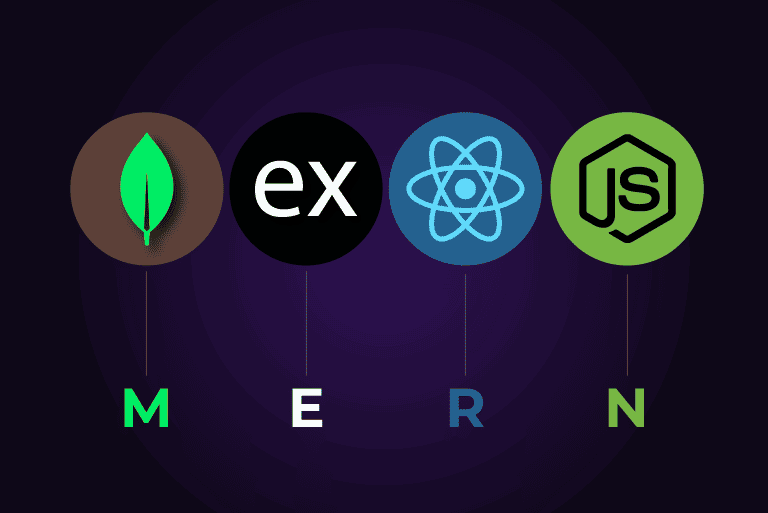
That is why MERN stack projects are so helpful, as they show you how different technologies work together or communicate with each other. For example, you will understand how your React application sends information requests to your Express backend, how the Node.js application processes that information, and how MongoDB is configured to store and retrieve the relevant data. It is only when you connect all of the dots do you go from someone who understands programming concepts to someone who can build real applications.
Ultimately, most importantly, MERN stack projects allow you to offer something physical to a potential employer or client. Rather than talking about your skills, you can showcase working applications that demonstrate how to solve real problems. This portfolio of projects is often the deciding factor when securing job opportunities versus remaining invisible.
Starting Your MERN Journey: Simple Project Ideas
MERN stack projects are wonderful, as you can keep the scope minimal and increase complexity as you go. The first project does not need to change the world, it just needs to function and help you learn how the four technologies all connect together.
A personal portfolio website is a great first MERN stack project. Although it feels like a simple project, having to build a portfolio is a full MERN application. You will have an application with routing, manage some state, and possibly store contact form submissions in a database. You will learn how to structure projects, get an understanding of deployment, and become comfortable with a development workflow.
Another option for a beginner project could be a simple blog application. This will expose you to creating, reading, updating, and deleting data, which is the basic use case for almost all web applications. It helps you get familiar with user input, basic data validation, and basic authentication flows without getting overwhelmed with complex features.
An ordinary task manager or to-do application may sound like a cliché, but it is popular for good reason. These MERN stack projects cover common uses of main concepts like user authentication, making use of relationships in data, allowing for real-time updates, and thinking about responsive design. On top of this, you will be able to make use of the application, which gives you a greater understanding of how a user will experience it from the perspective of a developer.
Intermediate Projects That Build Real Skills
Once you have a handle on basic MERN stack projects, it is time to work on challenges that resemble real-world applications in some way. These intermediate projects will not cover everything you'll see in a professional development environment, but they will introduce you to features that you may be using in the industry one day.
An e-commerce application is one of the most useful and practical MERN stack projects you can build. Although there are nearly endless possibilities for features and functionality, building an eCommerce application would expose you to extensive user authentication features, product catalog features, shopping cart features, payment processing features, order summary features, and an admin dashboard of sorts. It may seem overwhelming, but you will certainly benefit from the widespread learning experience of building an e-commerce application, knowing that you can take it one step at a time. Start small, then continue to expand on top of the previous functionalities; for example, you can begin with a simple list of products, then again make a site that has registered user accounts, a shopping cart, and so forth.
A social media application, although potentially more complex than an e-commerce application, even a stripped-down version, would take you through many interesting technical challenges. A social media application will teach you about complex data relationships, file uploads, what it means to have real-time features, and user interaction. You will explore how to handle user-generated content, how to provide friend systems and notifications, and most importantly, how to optimize your performance in the context of many users using the system at the same time.
Finally, a learning management system (LMS) or online course management system (CMS) incorporates many of the above discussed challenges, and it also involves dealing with video content, tracking user progress, dealing the payment processing, building interactive quizzes, and user roles and permissions (students, instructors, administrators). In short, these projects will resemble what you will likely be doing in a professional context, using the MERN stack.
Advanced Projects for Serious Developers
As you enhance your capabilities through different MERN stack projects, you'll be ready to take on applications with more sophisticated applications that utilize professional capabilities. Many of these projects require the use of third-party services, complex algorithms, and scaling.
An example of this is a real-time chat application that has capabilities such as group chats, sharing files, video communication with participants, and perhaps even encrypting message content. Real-time applications, in particular, require frameworks that allow your team to utilize WebSockets, process data in real-time, and implement security. Ultimately, real-time apps require higher user experience and performance tuning than most projects.
A project management application like Trello or Asana represents another example with many sophisticated features, such as complex data relationships, drag-and-drop features, concurrent real-time collaboration features, and user management with permissions. Developing a project management tool has lessons for learning about scaling, state management, optimistic updates, and concurrent user experience.
Finally, a financial accouterment dashboard or expense tracking application that involves the ability to conduct data visualization, automated data categorization, and goals and progress can provide your team with the mimics of many complex data management systems. A financial app also allows you to explore UX elements in charts and tables, automation of data ingestion or data export functions, and reporting export features.
The Learning Process: From Idea to Implementation
The process of building MERN stack projects usually involves the same steps that become more natural as you gain experience. Starting out, the first stage is planning - what do you want to actually build, sketching out the user interface, and what data you will need to store and manage.
Once you have planned everything, you set up your development environment and create the project structure. The initial setup portion may seem tedious; however, once you create a set way of organizing your MERN stack project, you will save time and confusion with your projects.
Most students who are taking a MERN stack course in Noida or online courses will use the standardized project structure that they have learned throughout their careers.
The actual development process usually starts at the backend, first setting up your Express server, creating a database schema, and defining your API endpoints. You can then build the React front-end application while connecting it to your backend and styling the user interface. You finally test everything together and deploy your finished application.
Common Challenges and How to Overcome Them
Every web developer experiences similar obstacles when they start their first MERN stack project, with overwhelming complexity and multi-technology inconsistency occurring most frequently. The simple solution is to break everything down into pieces, then focus on each component singularly.
For example, authentication and authorization are common beginning pitfalls. Start with simple username/password authentication before attempting more complex authentication systems like OAuth, multi-factor authentication, etc. By solidifying this basic knowledge, the implementation of advanced features will come with much ease later.
While eventually intuitive, data modeling and database design can be difficult when first starting. You typically don't make a complex model with complex relationships as a first or second-time MERN stack project. You begin with simple and flat data structures, then make models more complex over time as you learn.
Deployment and hosting are also challenges, but just like above, it is an important part of any developer's skill set. Every developer should be able to deploy locally, on a server, and with an advanced with specialized hosting solution. Start with basic hosting as part of the MERN stack, and learn how to deploy as the project becomes more complicated.
Conclusion: Your Journey to Full-Stack Mastery
Building MERN stack projects is more than just combining four technologies - it's about developing the mindset and skills of a professional web developer. Each project you complete teaches you something new about problem-solving, user experience, system design, and the craft of building software that people actually want to use.
The path from your first simple application to sophisticated, production-ready systems is challenging but incredibly rewarding. Every bug you fix, every feature you implement, and every deployment you complete builds confidence and competence that no amount of theoretical study can provide.
Remember that the best MERN stack projects solve real problems for real people. As you plan your next application, think about the challenges you face in your daily life or problems you've observed in your community. The most satisfying projects are often those that make someone's life a little bit easier or more enjoyable.
Your journey with MERN stack projects is just beginning, and the possibilities are limitless. Whether you're building the next great social platform, creating tools that help businesses operate more efficiently, or developing applications that make learning more accessible, your skills with MongoDB, Express, React, and Node.js give you the power to turn ideas into reality. Keep building, keep learning, and keep pushing the boundaries of what you thought was possible.
Frequently Asked Questions (FAQs)
Q: How many MERN stack projects should I build before applying for jobs?
A: Focus on quality over quantity. Three to five well-built, documented projects that showcase different skills are better than ten simple applications. Make sure each project demonstrates something unique about your abilities.
Q: Should I deploy all my MERN stack projects online?
A: Yes, deployed projects are much more impressive than code that only runs locally. Use free hosting services like Netlify, Heroku, or Vercel to make your projects accessible to anyone with an internet connection.
Q: How long does it typically take to complete a MERN stack project?
A: This varies widely based on complexity and your experience level. Simple projects might take a week or two, while complex applications could require several months. Don't rush - focus on building quality applications that work well.
Q: Can I use MERN stack projects for my college assignments?
A: Many colleges encourage students to build practical projects, but always check with your instructors about requirements and academic integrity policies. MERN stack projects often make excellent capstone or final year projects.
Q: What's the best way to get feedback on my MERN stack projects?
A: Share your projects on developer communities like Reddit, Discord servers, or local meetup groups. You can also ask for code reviews on platforms like GitHub or seek feedback from instructors if you're taking a structured course.