Imagine this: you are in a really big library and trying to find a specific book (which you can't find because you have no clue where that book is located). Are you going to just randomly run around on the bookshelves, or will you methodically explore each section level by level? If you choose the methodical exploration, then congratulations - you have grasped the essence of the BFS algorithm!
The Breadth First Search (BFS) algorithm can be compared bbto the methodical library explorer. The BFS algorithm is one of the most primary graph traversal algorithms that computer scientists and programmers can rely upon, and to be honest, there is a good reason for this. Whether you are going to create the next big social media app or the most sophisticated GPS navigation system, the BFS algorithm can help you get there!
What Exactly is the BFS Algorithm?
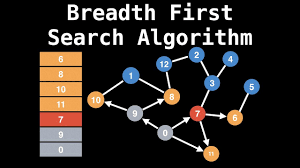
To put it simply, the BFS algorithm is a way of traversing a graph systematically (visiting the nodes, which you can think of as places) level by level. You might visualize the algorithm like this: as though you were the center of a ripple in the pond surrounding you. The BFS algorithm will visit all the nodes that are distance 1 from the starting point first, then all those that are distance 2, and so on.
This simple, systematic approach, makes the BFS algorithm very powerful for solving problems in which you want to determine the shortest path between two points or examine all the options at a particular distance before going further away from your starting point.
The Magic Behind BFS Algorithm: How It Works
The beauty of the BFS algorithm lies in its simplicity and effectiveness. Here's how this algorithmic marvel operates:
Step 1: Start with a Queue The BFS algorithm uses a queue data structure (first-in, first-out) as its backbone. Think of it like a line at your favorite coffee shop – first person in line gets served first.
Step 2: Mark and Enqueue Begin with your starting node, mark it as visited (so you don't revisit it), and add it to the queue.
Step 3: The Exploration Loop While your queue isn't empty:
Remove the front node from the queue
Examine all its unvisited neighbors
Mark each neighbor as visited and add them to the queue
This process continues until either you find what you're looking for or the queue becomes empty.
Real-World Applications: Where BFS Algorithm Shines
You may be thinking, "That sounds great, but where exactly do I use the BFS algorithm in real life?" The answer may shock you. The BFS algorithm can be used everywhere!
Social Network Analysis
Have you ever wondered how LinkedIn knows to suggest, "People you may know"? They are using a BFS algorithm to analyze your network connection, level by level, to find mutual friends/connections, and suggest people you may want to connect with.
GPS Navigation Systems
When you use a GPS to find the shortest route to your planned destination, the GPS is using a process very close to the BFS algorithm to explore each possible path in an organized manner.
Web Crawling
Search engines use search algorithms nearly identical to the BFS algorithm to crawl websites. By exploring pages level by level, the search engine can effectively index web content.
Game Development
Game developers of puzzle or strategy games will use the BFS algorithm to evaluate the best moving decisions for AI characters in a game.
BFS Algorithm Implementation: Let's Get Coding
Here's a straightforward implementation of the BFS algorithm in Python:
                    python
                    from collections import deque

                    def bfs_algorithm(graph, start_node):
                        visited = set()
                        queue = deque([start_node])
                        visited.add(start_node)
                        result = []

                        while queue:
                            current_node = queue.popleft()
                            result.append(current_node)

                            for neighbor in graph[current_node]:
                                if neighbor not in visited:
                                    visited.add(neighbor)
                                    queue.append(neighbor)

                        return result
This implementation showcases the core principles of the BFS algorithm in action. The queue ensures we process nodes in the correct order, while the visited set prevents infinite loops.
BFS vs DFS: The Great Debate
As you learn about the BFS algorithm, you'll run into its related algorithm, Depth-First Search (DFS). Both of these algorithms are used to traverse graphs; however, they're quite different:
The BFS algorithm is like a careful explorer who checks each layer before going any deeper. It guarantees the shortest path in unweighted graphs and utilizes more memory because it's based on a queue.
DFS is like an adventurous explorer who travels deep down one path layer before returning. It uses less memory than BFS but it does not guarantee the shortest path.
Time and Space Complexity: The Technical Side
Understanding the performance characteristics of the BFS algorithm is crucial for making informed decisions in your projects:
Time Complexity: O(V + E)
V represents the number of vertices (nodes)
E represents the number of edges (connections)
The BFS algorithm visits each vertex once and examines each edge once
Space Complexity: O(V)
In the worst case, the queue might contain all vertices
Additional space is needed for the visited tracking structure
Common Pitfalls and How to Avoid Them
Even experienced programmers can stumble when implementing the BFS algorithm. Here are some common mistakes:
Forgetting to Mark Nodes as Visited This leads to infinite loops and incorrect results. Always mark nodes as visited when you add them to the queue, not when you process them.
Using the Wrong Data Structure The BFS algorithm specifically requires a queue. Using a stack (LIFO) would turn your algorithm into DFS.
Not Handling Disconnected Graphs If your graph has multiple disconnected components, a single BFS call won't visit all nodes. You might need to run the BFS algorithm multiple times.
Enhancing Your Skills with Uncodemy Data Structure Courses in Noida
If you're committed to learning algorithms like BFS, you should take data structure courses. Uncodemy Data Structure Courses in Noida will give you hands-on training. Many programming courses focus on the theory but Uncodemy courses give you the hands-on experience training that you need to understand the true application of the BFS algorithm and any data structure in a real-world scenario.
You will have a better understanding of not just how the BFS algorithm works but when and where to implement the BFS implement the algorithm, so the structured learning of Uncodemy Data Structure Courses in Noida, will be a great hands-on learning experience. You will be more confident when it comes to using complex algorithms with the help of the engineer instructors and practical project experience.
Advanced BFS Variations and Optimizations
Once you have gained conclusive mastery over the standard BFS algorithm, there are several alternative variations that augment your armory of techniques:
Bidirectional BFS
This optimization runs the BFS algorithm from both the start position and the end position, which can drastically reduce the space of the search.
Multi-Source BFS
Instead of starting at one node source, this variation begins the BFS algorithm with multiple sources.
Weighted BFS
When dealing with a graph with edge weights, algorithms like Dijkstra's can be considered weighted adaptations of BFS conceptually.
Practical Tips for BFS Implementation
When applying the BFS algorithm in actual projects, consider the following practical matters:
Memory Management
For large graphs, BFS may be quite memory intensive - in that case, consider using generators or processing nodes in groups rather than all at once for more memory efficient uses of BFS.
Early Out
If you know what you are searching for (example, if you are finding a target and can stop searching once the target is found), then implement an early exit so that the BFS can terminate when you find what you are looking for.
Graph Repr.
You need to choose an appropriate representation of your graph (adjacency list v. adjacency matrix) based on the density of the graph and planned operations.
Building Your Foundation: Next Steps
Learning the BFS algorithm is just the start of your advanced data structures and algorithms learning process. All the systematic thinking and problem-solving skills you learn through BFS will be very beneficial when starting to learn more advanced algorithms.
Whether you are interviewing for a technical job, building advanced applications or just looking to learn more programming concepts, learning the BFS algorithm lays a fantastic foundation. The logical, step-by-step process mirrors the methods of thinking and problem-solving you will be applying as a software engineer.
Try to practice different types of BFS problems like shortest path finding, level-order tree traversals and connected component finding. Each of these problems will help reinforce your understanding and help you become comfortable with using the data structure.
Don’t forget that everyone, including all experts, always start as beginners. The BFS algorithm may feel simple, but the different kinds of applications possible with it are virtually endless, and its basic principles form the basis of more advanced algorithms.
Learning algorithms like BFS is a thrilling journey. It also will lead to amazing opportunities in software development, data science and also computer science research. With purposeful practice and some deliberate learning (through courses like Uncodemy Data Structure Courses in Noida) you will swiftly reach a place where complex programming problems become easily solvable tasks.
Frequently Asked Questions
Q: What's the main difference between BFS algorithm and DFS?
A: The BFS algorithm explores nodes level by level (breadth-first), while DFS goes as deep as possible before backtracking. BFS guarantees shortest paths in unweighted graphs but uses more memory.
Q: When should I use the BFS algorithm over other search methods?
A: Use BFS when you need the shortest path in unweighted graphs, want to explore all nodes at a specific distance, or need to find the minimum number of steps to reach a target.
Q: Can the BFS algorithm work on weighted graphs?
A: Basic BFS works on weighted graphs but doesn't guarantee the shortest weighted path. For weighted shortest paths, use Dijkstra's algorithm instead.
Q: What data structure is essential for implementing BFS algorithm?
A: A queue is essential for the BFS algorithm. It ensures nodes are processed in the correct first-in, first-out order to maintain the breadth-first exploration pattern.
Q: How does Uncodemy Data Structure Courses in Noida help with algorithm learning?
A: Uncodemy Data Structure Courses in Noida provide hands-on training with practical implementations, experienced instructors, and real-world projects to master algorithms like BFS effectively.
Q: What's the time complexity of the BFS algorithm?
A: The BFS algorithm has O(V + E) time complexity, where V is vertices and E is edges. Each vertex and edge is visited exactly once during traversal.