Binary Tree in Data Structures (Examples, Types, Traversal, Operations)
The foundation of effective system design and programming is data structures. The Binary Tree is one such
fundamental structure that is essential to applications ranging from hierarchical data storage to search
functions. Knowing binary trees is essential whether you’re studying algorithms or getting ready for
technical interviews. Professional courses like a linked list course in Noida, which also covers trees
and their variations, are popular choices for students looking for in – depth education.
The types, traversals, operations, applications, and implementations of binary trees in common
programming language will all be covered in this article.
Table of Contents
Introduction
What is Binary Tree in Data Structure
Types of Binary Tree in Data Structure
Binary Tree Traversals
Binary Tree Operations with Examples
Time and Space Complexity of Binary Tree
Applications of Binary Trees with Examples
Binary Tree Implementation in C
Binary Tree Implementation of C++
Binary Tree Implementation in Java
Binary Tree Implementation in Python
Common Mistakes While Implementing Binary Trees
Advantages of Binary Trees
Disadvantages of Binary Trees
What is Binary Tree in Data Structure?
Ms. Sonal Rana / 4 days ago
0
9 min read
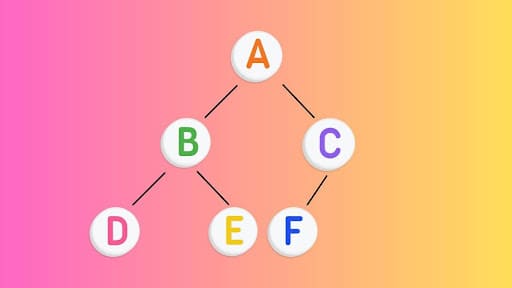
Each node in a binary tree, a hierarchical data structure, can have a maximum of
two offspring, known as the left and right children. Fast data lookup, insertion, and deletion
are made possible by this structure.
Each node in a binary tree contains :
Data: The node’s stored value.
Point to the child on the left.
Point to the child on the right.
The basis for more intricate trees like Binary Search Trees (BSTs), AVL Trees,
and Red – Black Trees, this form is very effective for sorting and searching tasks.
Understanding trees often begins with foundational topics such as LinkedIn lists,
which is why many students enroll in a linked list course in Noida, gaining the stepping stones
to mastering tree- based structures.
Types of Binary Tree in Data Structure
Full Binary Tree
A binary tree where each node has precisely two offspring, excluding the leaf
nodes.
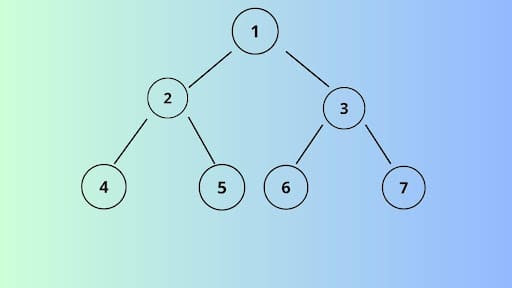
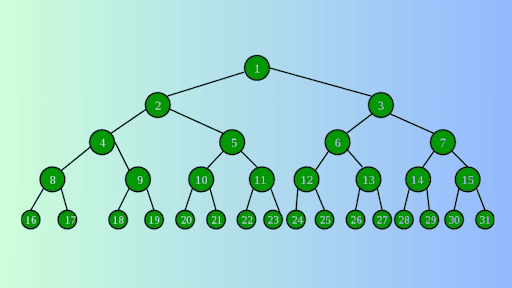
Perfect Binary Tree
Every leaf is at the same level, and every internal node has two children.
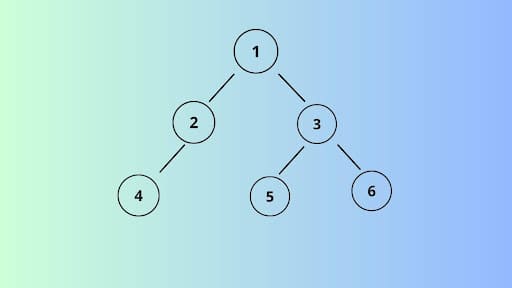
Complete Binary Tree
With the potential exception of the last level, which contains all of the
keys as far to the left, every level is fully filled.
Balanced Binary Tree
A tree in which each node’s left and right subtree heights differ by no more
than one.
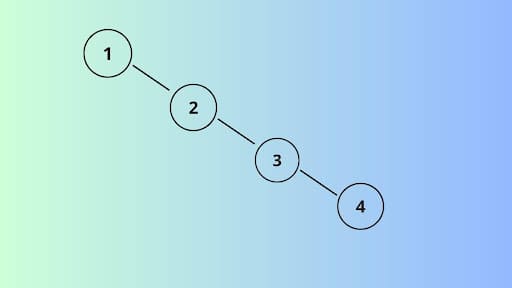
Degenerate (or Pathological) Tree
A tree with a single child on each parent node. It functions similarly to a
linked list.
Binary Tree Traversals
The technique of methodically going to every node in the tree exactly once is
known as tree traversal.
In – order ( Left, Root, Right ) : Helpful in retrieving
sorted data for BST.
Pre – order Traversal ( Root, Left, Right) : Used to make a
duplicate of the tree or prefix expression of an expression tree.
Post – order ( Left, Right, Root ) : Helpful for analyzing
postfix expressions or removing the tree.
Level – order ( Breadth – First Search) : Visit nodes level by
level.
Binary Tree Operations With Examples
Insertion : To preserve the whole tree property, place a node
at the first accessible location.
Deletion : Remove a node and swap it out with the node
farthest to the right.
Search : Locate the appropriate node value by navigating the
tree.
Height : The number of edges along the longest path from root
to leaf is the height of a binary tree.
Traversal : Visits every node.
Size : Total number of the tree’s nodes.
Time and Space Complexity of Binary Tree
Operations
Best Case
Average Case
Worst Case
Search
O(log n)
O(log n)
O(n)
Insertion
O(log n)
O(log n)
O(n)
Deletion
O(log n)
O(log n)
O(n)
Space
O(n)
O(n)
O(n)
Traversal
O(n)
O(n)
O(n)
Note : These complexities assume a balanced tree.
Applications of Binary Trees with Examples
Expression trees are used to represent expressions in compilers.
Binary search trees are an effective way to search and sort.
In priority queues, heaps are utilized.
Machine learning makes use of decision trees.
Routing Tables used in network routing protocols.
Using Huffman coding trees for data compression.
Examples : For instance, Huffman encoding uses binary trees to give
shorter codes to often used letters in order to compress text files.
Binary Tree Implementation in C
#include
#include

// Define the Node structure
struct Node {
    int data;
    struct Node* left;
    struct Node* right;
};

// Function to create a new Node
struct Node* newNode(int data) {
    struct Node* node = (struct Node*) malloc(sizeof(struct Node));

    if (node == NULL) {
        printf("Memory allocation failed\n");
        exit(1);
    }

    node->data = data;
    node->left = NULL;
    node->right = NULL;
    return node;
}
Binary Tree Implementation in C++
#include
using    namespace   std;

class    Node    {
public :
       int data;
         Node*    left;
         Node*    right;
         Node*(int   val)   {
                        data   =   val;
                         left    =    right    =   NULL;
             }
};
Binary Tree Implementation in Java
class   Node    {
             int    data;
             Node   left,   right;

             Public   Node(int   item)    {
                   data   =   item;
                   left     =    right   =  null;
             }
  }
Binary Tree Implementation in Python
Class   Node :
        def   ___init__(self,   data):
                 self . data   =  data
                 self . left   =  None
                 self . right = None
Common Mistakes While Implementing Binary Trees
When creating binary trees, even seasoned engineers make blunders. Here are a
few typical dangers and how to stay clear of them.
Inaccurate Recursion Base Conditions : Binary Trees have a lot
of recursive functions. A typical mistake :
if (node == NULL) return;
// correct
Using node - >left == NULL when the entire node may be null is a
common mistake.
Traversals Loops That Never End : During Traversal, infinite
loops may result by inadvertently flipping the left and right pointers or from
improperly updating the current node.
Combining BST logic with Binary Tree : The rules for insertion
In a binary tree and a binary search tree (BST) vary. The structure of a typical binary
tree will be broken if BST logic is used.
Pointers Are Not Correctly Updated During Deletion : The tree
structure may get corrupted if child pointers are not reassigned when a node is deleted.
Advantages of Binary Trees
Effective sorting and search (in BSTs).
Data representation in a hierarchical fashion.
Quick additions and removals (in balanced trees).
Used in decision – making and expression parsing.
Disadvantages of Binary Trees
Tree balance affects performance.
Might turn into a linked list with an O(n) time complexity.
More RAM is needed for pointers.
Intricate processes such as balancing (e.g., in Red – Black Trees or
AVL.)
Conclusion
One of the most important data structures, the binary tree supports a large number of operations and applications. It is a fundamental aspect of computer science that is used in both academic and practical settings. Gaining proficiency with binary trees expands one’s problem-solving abilities, particularly when combined with a fundamental understanding of linked lists and other related subjects.
Enrolling in Uncodemy's Data Structure and Algorithm Course in Delhi might be a great place for Indian students seeking professional guidance. These classes usually include hands-on instruction in trees, graphs, and other data structures, assisting you in developing a solid foundation in programming.
Start creating your own tree structures in your favorite programming language and practice traversal, insertion, and deletion if you are interested in learning more. In addition to improving your DSA knowledge, you will get ready for competitive programming challenges and interviews.
FAQs
Q. Why are binary trees important ?
Hierarchical data, increasing the effectiveness of searches, and serving as the
foundation for sophisticated structures like balanced trees and heaps.
Q. How is a binary tree different from a linked List ?
Every node in a linked list points to the one after it, giving the list or linear
structure. A binary tree, on the other hand, is hierarchical and can have up to two offspring
per node.
Q. What is the difference between a binary tree and a binary search tree
(BST) ?
In contrast to a BST, where the left child holds values less than the parent and
the right child contains values larger than the parent, a binary tree permits nodes to be
ordered in any order. Effective searching in BSTs is made possible by this feature.
Q. Can a binary tree be both complete and perfect ?
It is possible for a binary tree to be both flawless and complete. Although a
complete binary tree isn’t always perfect until every parent has two children and all leaf nodes
are at the same level, a perfect binary tree is always complete.
Q. Why do we use recursion in binary trees ?
Binary trees are recursive data structures by nature.Since every subtree is a
binary tree in and of itself, recursion is perfect for insertion, deletion, and traversal.
Q. What are self – balancing binary trees ?
In order to provide optimal time complexity, self balancing trees, such as AVL
Trees or Red – Black Trees, automatically maintain a minimum height following insertions or
deletions.
Q. Can a binary tree be implemented without recursion?
Yes, binary can be implemented and traversed using iterative methods with the
help of stacks or queues, especially for in- order and level – order traversals.