Why build a fitness challenge tracker?
People stick with fitness when goals are social, visible, and measurable. A well-designed tracker + leaderboard:
- Encourages daily habits through social proof and status.
- Increases long-term retention for your app or program.
- Provides instructors/managers insight into engagement.
- Enables viral growth (users invite friends, share progress).
But to do this right you need good product design, reliable data capture, fair scoring, and clean analytics — all covered below.
Core features (MVP → advanced)
MVP (must-haves):
1. User accounts & profiles — name, avatar, fitness level, privacy settings.
2. Challenges — create one-off or recurring (weekly, monthly) challenges (e.g., “10k steps/day”, “30-day plank”).
3. Activity logging — manual entry and integrations (Google Fit, Apple Health, Fitbit) for automatic sync.
4. Points & scoring engine — rules that turn activity into points.
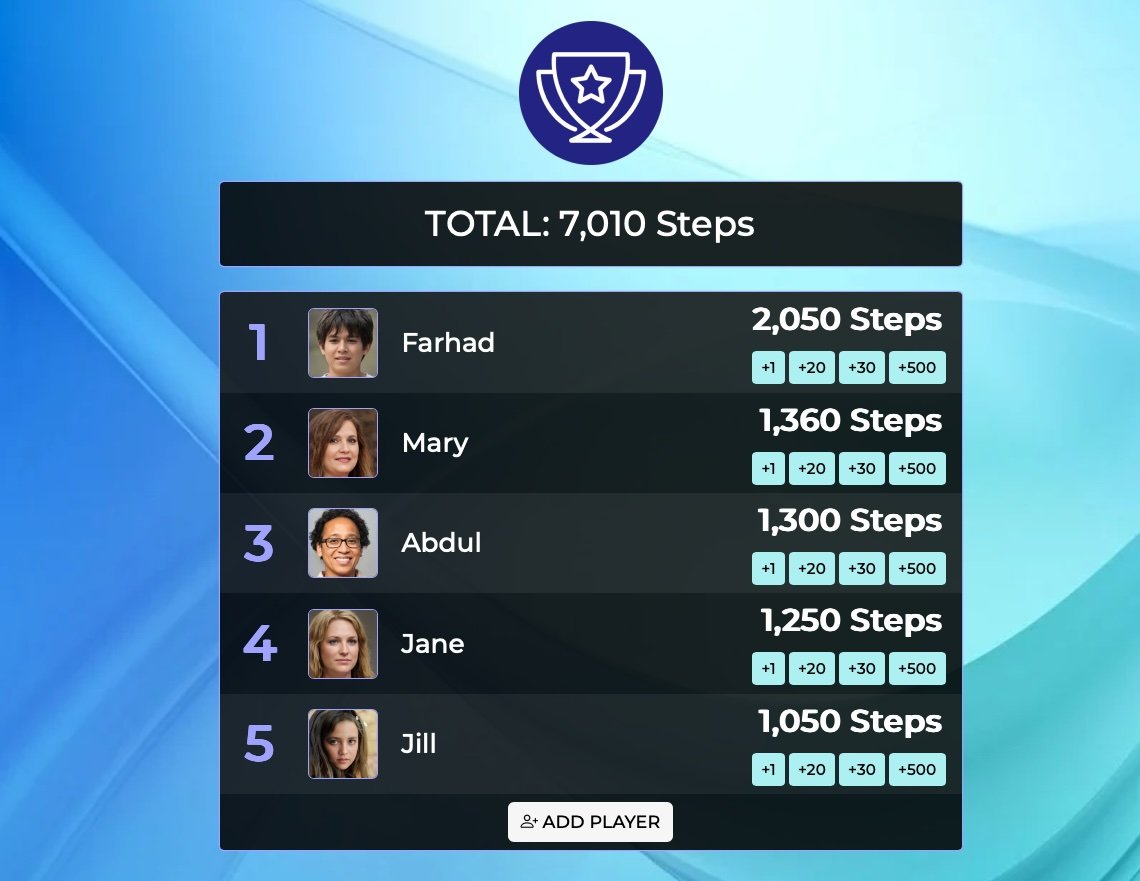
5. Leaderboard — global, friends-only, team-based views with filters (timeframe, challenge).
6. Notifications — reminders, progress nudges, leaderboard updates.
7. Basic analytics — participation rates, completion rate, top performers.
Advanced features:
1. Team challenges — groups pool or average points.
2. Badges & achievements — milestones unlockable by actions.
3. Social sharing — post achievements to social networks.
4. Anti-cheat & validation — motion data checks, rate-limiting manual entries.
5. Personalized coaching — AI-suggested next challenge or rest days.
6. Monetization features — in-app purchases for premium challenges, sponsorships, enterprise dashboards.
Scoring & leaderboard mechanics
The fairness and clarity of your scoring system determine trust and adoption.
Common scoring models
- Raw-metric points: e.g., 1 point per 1,000 steps, 10 points per workout minute.
- Normalized score: scale activities to a common denominator (METs, calories).
- Weighted tasks: different activities get different multipliers (running > walking).
- Streak bonuses: consecutive days increase points multiplier.
- Team scoring: average, sum, or top-n contributor models.
Leaderboard types
- Time-bound: weekly/monthly — helps rotation and fresh engagement.
- All-time: for prestige and historical recognition.
- Friends-only: fosters friendly competition.
- Team leaderboards: corporate wellness and gym classes.
Anti-cheat approaches
- Require linked device integrations for higher-value points.
- Set realistic rate limits on manually logged data.
- Use heuristics (e.g., too-high speeds, repeated identical timestamps) to flag suspicious entries.
- Add human moderation workflow for flagged cases.
Technical architecture (high-level)
Frontend
- React (web) or React Native / Flutter (mobile) for cross-platform app.
- Screens: dashboard, challenge list, activity logger, leaderboard, profile.
Backend
- RESTful or GraphQL API (Node.js/Express, FastAPI, or Django).
- Auth: JWT or OAuth2 (support for SSO for corporate customers).
- Database: PostgreSQL for relational data (users, challenges, points); Redis for caching leaderboards and queues.
- Worker queue: Celery / Bull / Sidekiq to process activity events, compute points, and recalc leaderboards asynchronously.
- Storage: S3-compatible for user media (photos, avatars).
Integrations
- Health APIs: Apple HealthKit, Google Fit, Fitbit, Garmin.
- Push notifications: Firebase Cloud Messaging / APNs.
- Analytics: Segment / Mixpanel / GA4 for engagement funnels.
Scaling
- Pre-compute or cache leaderboards in Redis; update incrementally when new activity arrives rather than recalculating entire leaderboards on every request.
- Use pagination and rate limiting for public endpoints.
Data model (essential tables / collections)
Simplified relational model:
- users (id, name, email, avatar, timezone, privacy_settings)
- challenges (id, title, description, start_date, end_date, scoring_rules, type)
- activities (id, user_id, activity_type, metric_value, source, timestamp, validated)
- points (id, user_id, challenge_id, points_awarded, reason, created_at)
- leaderboard_cache (challenge_id, timeframe, rank_json, last_updated)
- teams (id, name, members) + team_points
Design considerations:
- Store raw activities for audit and reprocessing if scoring rules change.
- Keep an append-only points ledger to audit points awarded and support dispute resolution.
How activity -> leaderboard update works (flow)
1. User records activity (manual or via integration).
2. Activity is persisted to activities table.
3. Worker picks up event from queue, validates and computes points according to active challenge rules.
4. Points are inserted into points ledger.
5. Worker updates leaderboard_cache incrementally (e.g., ZINCRBY in Redis sorted set per challenge).
6. Frontend queries cached leaderboard for fast responses.
This incremental model scales well: leaderboard reads are fast and writes are steady and batched.
UX & product design best practices
- Make joining a challenge effortless: one-tap join or invite link.
-
- Show progress clearly: percent complete, daily targets, streaks.
- Encourage micro-wins: visible short-term goals (today’s target).
- Promote transparency: show scoring rules and proof (e.g., device sync) to build trust.
- Privacy controls: let users choose friends-only or anonymous leaderboard participation.
- Celebratory moments: confetti, push notifications for rank changes and milestone unlocks.
- Accessibility: readable fonts, color contrast, and screen-reader labels for progress elements.
Moderation, privacy & compliance
- Allow users to export their data and delete their accounts (GDPR/FCRA-like needs depending on region).
- If used by minors or corporate employees, restrict sharing appropriately and provide parental or employer controls.
- Keep sensitive health data encrypted in transit and at rest; follow local regulations for health data if you store biometrics.
Monetization ideas
- Freemium model: free basic challenges; premium tiers for custom challenges, advanced analytics, or coaching.
- Corporate licensing: sell to businesses for employee wellness programs with admin dashboards.
- Sponsorships & branded challenges: partner with fitness brands to sponsor prizes.
- Marketplace: let expert trainers sell curated challenge templates.
Implementation pitfalls & solutions
- Pitfall: Recalculating leaderboards on demand — slow at scale.
Fix: Use Redis sorted sets and incremental updates.
- Pitfall: Fake activity flooding leaderboards.
Fix: Prioritize device integrations for high-value points and add heuristics.
- Pitfall: Low retention after initial signup.
Fix: Use streaks, reminders, and social features to re-engage.
- Pitfall: Confusing scoring rules.
Fix: Keep rules simple and surface examples in the challenge overview.
How Uncodemy helps you build this
Creating a production-quality fitness challenge tracker touches many disciplines. Uncodemy’s courses that will speed your build:
- Full Stack Development — build the frontend + backend, REST/GraphQL APIs, auth flows, deployment.
- Mobile App Development (React Native / Flutter) — build smooth mobile experiences and integrate HealthKit / Google Fit.
- Data Engineering & DevOps — set up databases, caching (Redis), background workers, CI/CD pipelines.
- AI & Machine Learning — add personalized coaching, activity classification, or anti-cheat models.
- UI/UX Design — design motivating study/fitness flows, onboarding, and accessible leaderboards.
- Product Management — learn how to design retention loops, metrics, and monetization strategies.
Uncodemy’s hands-on projects and mentorship help you move from prototype to production-ready app, with sample projects that mirror this exact use case.
Next steps & checklist (MVP launch)
- Define 2–3 challenge templates and scoring rules.
- Build user accounts and challenge join flow.
- Implement activity logging (manual + at least one integration).
- Implement points ledger and Redis-based leaderboard.
- Add notifications and basic analytics dashboard.
- Beta test with a small group and monitor cheating patterns.
- Iterate UX and add team features.
-
Conclusion
A fitness challenge tracker with a leaderboard is a powerful engagement product when built with fairness, clarity, and reliable data flows. Start small with a tight MVP that proves the social loop, then expand to teams, badges, and AI-driven personalization. If you want a guided path to build this app — from APIs and mobile integration to data pipelines and UX — Uncodemy’s Full Stack development course in Kurukshetra
Mobile, Data, AI, and UX courses give you the exact skills you’ll use in production.