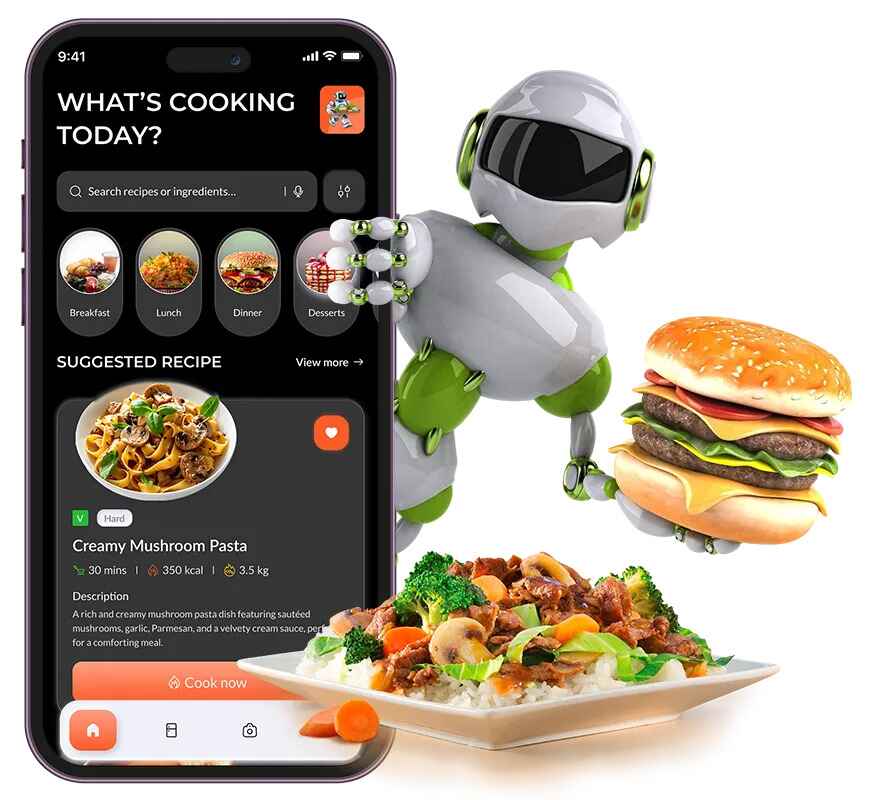
One of the most exciting applications of artificial intelligence is in personalized recommendations, and food is the perfect industry to benefit from it. Imagine typing:
👉 “Show me high-protein vegetarian dinners under 30 minutes.”
And instantly, the app suggests recipes that meet all your requirements. This is not science fiction—it’s a reality you can build today.
In this article, we’ll take a deep dive into:
- What a recipe recommendation app is.
- How AI filters make it powerful.
- The technologies and tools needed to build it.
- Step-by-step guide for developers.
- Career benefits of learning AI-driven app development.
By the end, you’ll not only understand how to create such an app but also why skills like AI, Machine Learning, Full Stack Development, and Data Science are crucial in today’s tech industry.
🌟 What is a Recipe Recommendation App?
A recipe recommendation app is a platform where users can search for food ideas and get personalized results. Unlike traditional recipe apps, an AI-powered app doesn’t just show static lists. Instead, it uses:
- Natural Language Processing (NLP) to understand user queries like “healthy low-carb dinner”.
- AI filters to apply dietary restrictions, ingredient availability, or time constraints.
- Recommendation systems to suggest recipes based on user history or preferences.
These apps go beyond just cooking—they become your personal nutritionist and chef, guiding you towards healthier, tastier, and time-efficient meals.
🔎 Why Add AI Filters?
AI filters are the “secret sauce” of such applications. They make the app smart and user-friendly. Here’s how:
1. Dietary Preferences – Vegan, vegetarian, keto, paleo, gluten-free, dairy-free, etc.
2. Nutritional Goals – High-protein, low-carb, weight loss, heart-healthy meals.
3. Ingredient Filters – Include or exclude items (e.g., “without peanuts” or “must include chicken”).
4. Cooking Time – Quick meals (under 15 minutes), medium meals (30–45 minutes), or elaborate recipes.
5. Cuisine Filters – Indian, Italian, Chinese, Mexican, Continental, etc.
AI doesn’t just filter recipes—it learns over time. If you frequently choose pasta-based dishes, the app might recommend Italian recipes you haven’t tried yet.
🛠 Tech Stack for a Recipe Recommendation App
To build such an app, you’ll need a combination of frontend, backend, database, and AI services.
1. Frontend (User Interface):
- React.js or Vue.js for a modern, responsive UI.
- Tailwind CSS for beautiful, clean designs.
2. Backend (Server & Logic):
- Node.js (Express) or Python (Flask/FastAPI).
- Handles queries, filters, and recommendation logic.
3. Database:
- MongoDB or PostgreSQL to store recipes, user profiles, and preferences.
4. AI Layer:
- OpenAI API for understanding natural language queries.
- Embedding-based similarity search (to recommend similar recipes).
- Optional: TensorFlow or PyTorch for building a custom recommendation engine.
5. Extra Features:
- User authentication (sign in, save favorites).
- Shopping list generator.
- Nutritional calculator.
🧑💻 Step-by-Step Guide to Building the App
Let’s break down the process of creating a recipe recommendation app.
1. Plan the Core Features
Ask: What do you want your app to do? For example:
- Search by ingredients.
- Recommend based on health filters.
- Save favorites.
- Generate shopping lists.
2. Set Up the Frontend
Using React, you can build:
- A search bar where users type natural queries.
- Filter dropdowns for cuisine, diet, and cooking time.
- Recipe cards showing image, description, and cooking time.
Example:
<input placeholder="Search: healthy vegan dinner under 20 mins" />
3. Build the Backend
Your backend takes user input and passes it to the AI model. For example:
- Input: “Show me high-protein vegetarian recipes under 30 mins.”
- AI interprets it → applies filters → queries recipe database → returns results.
4. Integrate AI
Use OpenAI or Hugging Face APIs to:
- Parse natural queries into structured filters.
- Generate missing descriptions (if your dataset lacks them).
- Suggest similar recipes.
Example Prompt:
Find 3 recipes matching: "high protein vegetarian under 30 mins".
Return JSON with: title, description, ingredients, cooking_time.
5. Connect the Database
Store recipes with metadata like:
- Title, cuisine, ingredients.
- Cooking time.
- Calories, nutrition values.
This allows the AI filters to work efficiently.
6. Personalization with Machine Learning
Go beyond filters by adding:
- Collaborative filtering (suggest recipes liked by similar users).
- Content-based filtering (suggest recipes with similar ingredients).
- Hybrid recommendation system (best of both worlds).
7. Polish the User Experience
- Add recipe images.
- Show step-by-step cooking instructions.
- Allow users to bookmark and rate recipes.
📱 Real-World Use Cases
Such apps are not just for hobby projects—they have real applications:
- Health Apps: Suggest meals aligned with fitness goals.
- Food Delivery: Recommend dishes from nearby restaurants.
- Smart Kitchens: IoT-enabled fridges that suggest recipes based on available ingredients.
- E-commerce: Grocery stores recommending products based on recipes.
📈 Career Benefits of Building AI Projects
Working on a project like this boosts your portfolio and demonstrates real-world problem-solving. Employers love to see hands-on projects because they prove you can apply concepts in practice.
By mastering AI filters, full stack development, and recommendation systems, you open doors to roles like:
- AI Engineer
- Full Stack Developer
- Data Scientist
- Machine Learning Engineer
- Product Developer in FoodTech
🎓 Learn the Skills with Uncodemy
If you’re excited about building a recipe recommendation app, you’ll need the right set of skills. Here’s how Uncodemy can help:
1. Full Stack Development Course in Noida
- Learn frontend (React, Angular) and backend (Node.js, Python).
- Work on projects like e-commerce apps and recommendation systems.
2. Artificial Intelligence Course in Noida
- Master AI fundamentals, NLP, and deep learning.
- Hands-on projects with OpenAI and TensorFlow.
- Perfect for building AI-driven apps like recipe recommenders.
3. Data Science & Machine Learning Course in Noida
- Understand data cleaning, feature engineering, and model building.
- Learn recommendation algorithms and predictive modeling.
4. Python Programming Course
- Since Python is widely used in AI and backend development, mastering it is essential.
👉 With Uncodemy’s expert trainers, practical projects, and career support, you can go from beginner to job-ready professional and even build your own AI-powered applications.
🚀 Final Thoughts
Building a recipe recommendation app with AI filters is an exciting project that combines creativity, technology, and problem-solving. It’s more than just coding—it’s about improving people’s lives by helping them eat better, save time, and discover new flavors.
With the right mix of AI, Full Stack Development, and Data Science skills, you can create not just a recipe app, but also other powerful recommendation systems for movies, shopping, or fitness.
If you want to gain these skills and work on real-world projects, check out Uncodemy’s courses in Noida. They provide the training and mentorship you need to succeed in the tech industry.
So, what are you waiting for? Start your journey today and build the next big food-tech app powered by AI.