What is C Function?
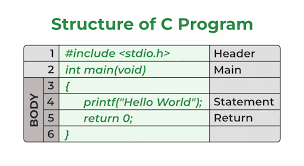
In C, the function is a closed code that aims at doing a specific job. Functions are executed upon calling. They provide the possibilities of using the code more than a single time; you can define a group of statements once and run them repeatedly when necessary. A good example is main() which is a function used as the start point in the program, and the printf() which is a function that helps to print on the screen.
What is the significance of functions?
The benefits of functions are many and they are found to make the C programs more efficient as well as easier to maintain.
Code Reusability: Functions would help you to write some code only once and call it as many times as required rather than having to repeat the same code to use with different arguments.
Modularity: Functions can be used to subdivide big programs into small and separate modules, easing the understanding of the code, handling it, and debugging.
Abstraction: After a function has been declared it is possible to use it without having to know how it works.
Readability: The code is more organized and easy to read since the repetitive task is converted into functions.
Recursion: Recursion is a viable method of solving a problem that entails executing a certain action with the purpose of resolving a problem by dividing it into smaller subproblems.
Simpler syntax forms of functions
Writing a function in C should start with its name, then parenthesis (), and then curly braces {}.
A line of signal stack should begin with the following syntax:
return_type function_name ( parameter list ) {
// function body
// Statements under evaluation
}
return_type: It denotes the type of data that will be returned by the function. Void is written as the return type when the function does not give any value.
function_name: This is the name of the function called to implement it in the program.
parameter list: A list of data type, order, and number of parameters (arguments) the function is expecting, this is optional and has no requirements. Parameters are variables of the function.
Body of the function: This appears in the bracket curly brackets {} and stores all the statements that are going to be performed when the Function is invoked.
Functions Aspects
C programming functions consist of three parts, whose sequence is declaration, definition, and calling.
Function Declaration
Function declaration, also named a function prototype or signature, makes the compiler aware of the existence of a function, its name, the type of data that the function can return and the types and the number of parameters such a function can accept. This enables calling of the function earlier than its completion has been given. Although it is not mandatory to state names of parameters in the declaration, there is no doubt that their types are important.
Syntax of declaration of function is:
return_type function_name(parameter_list); An example declaration is int add(int num1, int num2); which states that the name of the function is add that has two parameters that are integers and returns an integer.
Function Definition
The definition of a function, gives a literal piece of code executed by the compiler when a function is called. It contains the name of the function, one or more parameters, type of what is returned and the body of the statements. A call should be preceded by a function definition, or it has to be a forward declaration.
Copy Code
Functions definition example:

int add(int a, int b) { // body of the function ((302))

int result = (a +b);

return result;

}
This case demonstrates the body of a function named add that takes two integer parameters and returns the summation of the parameters.
Function Call
The calling function executes the set statements in the function. You write the name of the called function + 2 parenthesis () and semicolon ; to call it. The arguments being passed when the function is being called should be the same in number as the parameters that are declared in the functions declaration and in the same types.
An example of a call of a function:
Copy Code
myFunction();int m = max_Num (x, y);
C Functions Types
Functions (Built-in)
Such functions have already been pre-defined in C libraries; they carry out specific tasks. You do not have to write their definitions; you just include the appropriate header file and you call them using the correct syntax. Examples are main (), printf (), (), ceil () and (). These functions are found in header files such as stdio.h (input/output), math.h (mathematical operations) and string.h (string manipulation).
User-Defined Functions
The programmer defines these functions, declares these functions, and calls them in order to do some certain tasks. They improve reusability of the code and modularity. Libraries may also serve to add user-defined functions that will be used in other programs.
Return values and function parameters
No Argument and No Return Value
There are functions that can operate without any input argument and also do not produce a value.
These are functions that are normally deployed whenever the tasks entail immediate output or rather actions that do not necessitate external information or result in offering a product to other components of the program.
Example:
Copy Code
void print Name( ) {

printf("Simplilearn");

}
Here, main() is a void but calls the printName() then this prints Simplilearn.
Functions that do not Take Arguments, Yet have Return Value
A function might not accept any argument and give a value in output.
It can be applied in a case when a function is required to perform some computation internally, i.e. to calculate a constant value, read data, and expose its outcome to the external calling code.
Example:
Copy Code
int three() {

return 3;

}
The return of getThree() is in a position to be called, of the form printf( "%d", getThree()) would print 3.
Functions That Have Arguments Only
Arguments can be passed to functions to operate using given data but functions can return nothing.
The functions are appropriate when it is necessary to alter external states, print information or do something that cannot afford to pass the result back.
Example:
Copy Code
void add(int y) {

printf('The addition of the numbers is %d", x + y);

}
The major purpose can invoke add(x,y); with the aim of writing the sum directly.
Arguments and Return of the Functions
The majority of C functions take arguments and can give a return value.
Through this, they are granted the ability to accept certain data to be processed and afterward give back the calculated output to the caller.
Example:
Copy Code
int adder (int x, int y) {

return ( x + y );

}
In main, res = add(x, y); which stores the addition of the numbers in res and printed by the printf("The sum of the numbers is %d", res);.
Notable Concepts on C Functions
Local variables and Global variables
When declared within a function, such variables are called local variables; they are available only within that given function. None of these can be accessed outside of the function. Global variables, on the other hand, can be called anywhere within the program even within the functions.
C Function Memory Management
On the stack, when a function is called, a stack frame is allocated as a separate block where memory is allocated to store the variables and other information. This is called the function call stack. When the execution of the function terminates, its stack frame is discarded in the stack, thus freeing up the memory that was occupied by the stack frame.
C Main Function
Main() is a special and required function in each and every C program, as it is the point to which a program goes. The kind of return value it gives normally shows whether the program was performed successfully or not. Although technically a program could be written without main(), it is very advisable to include it and ensure good program design. The main function has an int default type of return.
Recursive Functions
A function is recursive when it calls itself as a part of its definition until it satisfies a certain exit criteria. The optimal way to handle that problem is recursively without enlarging it as; reusing the small and identical subtasks. One is the computation of the factorial of a number.
Inline Functions
So low-latency calls are performed via inline functions, in order to avoid the time and space costs of a call to an external definition where the program control flow usually pauses to the external definition and resumes at the point of the call. Declaring a function to be inline with the inline keyword, the compiler does not call the function but instead inserts the program code in the place where the call was made, thus there is no extra pointer jump to be performed, as in a normal call. Such are functions that are normally utilized in small calculations.
Uncodemy C Courses
In case you want to understand the ins and outs of C programming, Uncodemy has courses that equip beginners to become experienced coders. The C Programming Course in Noida offered by Uncodemy would be a good choice to the individuals, who would like to have hands-on advice from specialist instructors. The Uncodemy C Programming Tutorial for Beginners presents learners with projects and gurus to turn them into self-assured programmers in C. It is stressed in the tutorial that learning C is a strong foundation to the way codes operate and helps in simplifying learning about other languages.It touches upon such basic notions as variables, operators, conditionals (if-else, switch), and different kinds of loops (for, while, do-while). More sophisticated concepts, viz. arrays (including strings), pointers, structures, file handling, and dynamic memory allocation will also be covered in the course.
It may be dangerous as well as challenging but quite rewarding performing learning C, just like learning how to ride a bicycle without training wheels. Knowing it allows gaining enough confidence to study implementations of other sophisticated programming areas, such as embedded systems and complicated algorithms. The strategy of Uncodemy is to simplify this trip and make it wide-ranging to developing people.