A Brief Context: Why Was C Even Needed?
Before we uncover the “C language was developed by whom” part, it’s important to understand the backdrop against which it came into being. We’re talking about the early 1970s—a time when computers were massive machines occupying entire rooms, and software was written in assembly language or early high-level languages like FORTRAN or B.
These languages served their purposes but were often bulky, inefficient, or too hardware-specific. Developers needed something that could:
- Provide low-level memory access
- Work efficiently across systems
- Enable system-level programming
- Still be easier than writing pure assembly
In other words, they wanted something powerful yet elegant.
That’s where our story truly begins.
C Language Was Developed By: The Man Behind the Code
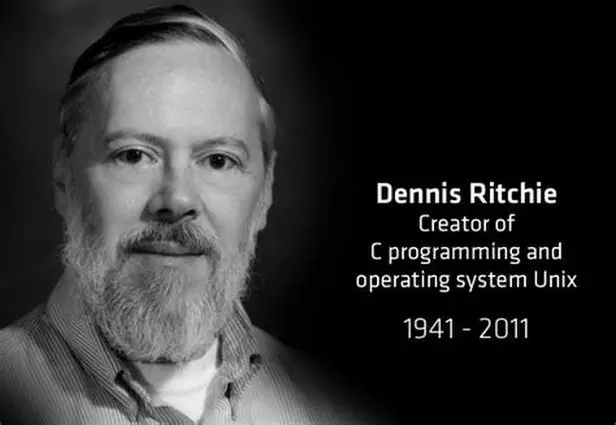
So, C language was developed by Dennis Ritchie, a computer scientist at Bell Labs, in 1972.
Dennis MacAlistair Ritchie might not be a household name for everyone, but within the world of computer science, he is regarded as a legend. Along with his colleague Ken Thompson, Ritchie was working on the Unix operating system—a project that itself would go on to change the world. However, the programming languages available at that time weren’t cutting it for writing a portable and efficient operating system.
So Ritchie, with his quiet brilliance and pragmatic mindset, decided to create something new: C.
The Journey from B to C
Interestingly, C didn’t just drop out of the sky. It evolved over time from another language called B, which itself was a simplified version of BCPL (Basic Combined Programming Language).
Here’s a quick timeline:
- BCPL (1966): Developed by Martin Richards, BCPL was created for writing system software.
- B (1969): Ken Thompson simplified BCPL and created B to write early versions of Unix.
- C (1972): Dennis Ritchie improved upon B, adding data types, structures, and other features to make it more powerful and flexible.
The final result? C was born—a language that was powerful enough to write an entire operating system (Unix), yet simple enough to be portable across various systems.
Bell Labs: The Birthplace of C
Bell Labs, short for Bell Telephone Laboratories, wasn’t just any research center. It was a hotbed of innovation, producing everything from the transistor to the Unix operating system—and of course, the C language.
Ritchie, working in this environment of intellectual freedom and experimentation, had the tools and the motivation to build something groundbreaking. And he did.
It’s worth noting that C language was developed by Ritchie not as a product, but as a solution—a tool to solve real engineering problems. That mindset, of solving rather than selling, is what made C so adaptable and long-lasting.
Features That Made C Stand Out
When Dennis Ritchie introduced C, it wasn't just another language—it was a leap forward. Let’s look at what made it so special:
- Portability: One of C’s biggest strengths is that you can write code once and run it almost anywhere.
- Efficiency: It allows close-to-hardware programming without being as difficult as assembly.
- Simplicity: Though powerful, its syntax is relatively straightforward.
- Structured Programming: C encourages the use of functions and blocks, making code easier to manage.
- Modularity: Programs can be broken down into reusable modules.
These weren’t just technical triumphs; they represented a new way of thinking about software—something scalable, maintainable, and efficient.
Impact of C: Beyond Unix
C’s original purpose may have been to rewrite Unix, but its legacy didn’t stop there. Once people saw what C could do, it became the go-to language for system programming. Over the years, C has influenced almost every major programming language that came after it.
Some of the languages that owe their existence or syntax to C include:
- C++ – An extension of C with object-oriented features.
- Java – Though higher-level, it follows many C conventions.
- C# – Developed by Microsoft, borrowing heavily from C and C++.
- Objective-C – Used primarily by Apple.
- Go, Rust, and Swift – Modern languages that still respect C’s philosophy of efficiency and control.
Even Python, which looks very different, is implemented in C under the hood!
Human Side of Ritchie: Quiet Genius
Unlike some tech icons who bask in the spotlight, Dennis Ritchie was known for his humility. He didn’t chase fame or fortune. In fact, when he passed away in 2011—just a few days after Steve Jobs—it went largely unnoticed by the mainstream media.
But in the programming world? It was a moment of mourning. Tributes poured in from developers and engineers who understood just how foundational Ritchie’s contributions were. He didn’t just create a language—he created a bridge to modern computing.
Why Learn C Today?
You might be thinking: “Okay, cool origin story—but is C still relevant?”
The answer is a resounding yes.
Here’s why:
- Foundation Language: Learning C gives you a deep understanding of how computers work.
- Gateway to Other Languages: Knowing C makes it easier to learn languages like C++, Java, and even Python.
- Used in Real World: Operating systems, embedded systems, game engines, and even some databases still rely on C.
- Career Boost: Understanding C can set you apart in job interviews, especially for systems programming, embedded development, or roles that require optimization.
If you’re planning to get serious about programming, especially with a focus on low-level computing, C is the best place to start.
Learn C Programming with Uncodemy
If this article has sparked your interest, and you're wondering where to begin—look no further. Uncodemy offers an industry-relevant C Programming course that covers:
- Core C concepts like loops, functions, pointers, and arrays
- Practical system-level programming skills
- Real-world projects and assignments
- Interview preparation and resume guidance
Whether you’re a student, fresher, or tech enthusiast, Uncodemy’s C Programming course in noida
is a hands-on gateway into the world of software development. The platform focuses on learning-by-doing, ensuring you don’t just memorize syntax—you learn how to think like a programmer.
So if you're curious about how things work under the hood, this course is where you start building that knowledge.
Conclusion: A Timeless Contribution
To wrap it up—C language was developed by Dennis Ritchie not for fame, but out of necessity and brilliance. It wasn't just about creating a language; it was about building a tool that could adapt, evolve, and empower generations of programmers.
Today, whether you're scrolling through social media, checking your bank account online, or running complex algorithms—there’s a good chance C is somewhere in the background, quietly doing its job.
In a world obsessed with the newest trends, C stands as a reminder that elegance, simplicity, and power never go out of style.
So the next time you write your first printf("Hello, World!");, take a moment to appreciate the journey. You're not just writing code—you’re stepping into a legacy built by a humble genius who changed the world, one line at a time.
Want to build your own C legacy?
📘 Check out Uncodemy’s C Programming Course and get started on your journey into the heart of computer science.