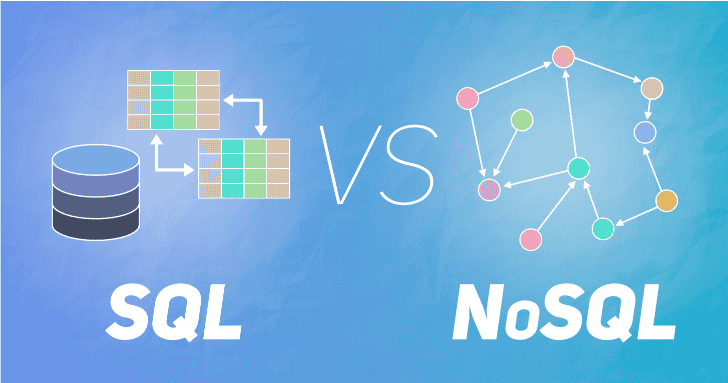
Confused Between SQL and NoSQL? Learn the Key Differences, Advantages, Use Cases, and Real-World Examples
When it comes to working with databases, one of the most common questions developers, students, and professionals face is: Should I use SQL or NoSQL?
Both SQL and NoSQL are powerful in their own ways. While SQL has been around for decades and forms the backbone of countless applications, NoSQL has gained popularity for its flexibility and scalability in modern big data and real-time applications.
In this guide, we’ll break down the differences between SQL and NoSQL databases, their advantages, disadvantages, use cases, and real-world examples so you can decide what fits your needs.
What is SQL?
SQL (Structured Query Language) databases are relational databases that store data in rows and tables. Data is highly structured, meaning it follows a fixed schema.
Some popular SQL databases include:
MySQL
PostgreSQL
Oracle Database
Microsoft SQL Server
SQL is widely used for applications where data integrity, consistency, and complex queries are important.
What is NoSQL?
NoSQL (Not Only SQL) databases are non-relational databases designed to store and manage large amounts of unstructured, semi-structured, or rapidly changing data.
Types of NoSQL databases:
1. Document-based (e.g., MongoDB)
2. Key-value stores (e.g., Redis)
3. Wide-column stores (e.g., Cassandra, HBase)
4. Graph databases (e.g., Neo4j)
NoSQL is often used in applications that demand scalability, flexibility, and fast data access.
Key Differences Between SQL and NoSQL
Feature
SQL (Relational)
NoSQL (Non-relational)
Data Structure
Tables (rows & columns)
Key-value, Document, Graph, Column
Schema
Fixed schema
Dynamic, flexible schema
Scalability
Vertical scaling
Horizontal scaling
Query Language
SQL
Varies (JSON, APIs, proprietary query languages)
Best For
Structured data, complex queries
Unstructured, big data, real-time apps
Examples
MySQL, PostgreSQL, Oracle
MongoDB, Cassandra, Redis, Neo4j
Advantages of SQL Databases
Strong data integrity with ACID properties
Suitable for complex queries and joins
Mature and well-documented technology
Widely supported and trusted
Advantages of NoSQL Databases
Scalability for handling large, growing datasets
Flexibility to store different types of data
High performance for real-time and big data apps
Handles unstructured and semi-structured data easily
Use Cases of SQL
Banking and financial systems
Enterprise resource planning (ERP) software
Inventory management
Applications requiring high data consistency
Use Cases of NoSQL
Social media applications
Real-time analytics
E-commerce product catalogs
IoT applications
Big data platforms
Real-World Examples
SQL Example: Amazon uses SQL databases to manage its inventory, payments, and order processing where structured and consistent data is necessary.
NoSQL Example: Facebook and Instagram rely heavily on NoSQL databases like Cassandra to store billions of posts, comments, and likes in real-time.
Which One Should You Choose?
Use SQL if your data is structured, consistency is crucial, and you need complex queries.
Use NoSQL if your data is unstructured, your application needs scalability, or you’re working with real-time data.
In many real-world applications, companies actually use both SQL and NoSQL databases depending on the task.
FAQs on SQL vs NoSQL
Q1. Is NoSQL faster than SQL? NoSQL can be faster for unstructured data and real-time applications, but SQL is better for structured data and complex queries.
Q2. Can SQL and NoSQL be used together? Yes, many companies use a hybrid approach, combining SQL for structured operations and NoSQL for scalability.
Q3. Is NoSQL replacing SQL? No. SQL remains essential for many industries, while NoSQL serves newer, large-scale use cases.
Q4. Which is easier to learn, SQL or NoSQL? SQL is generally easier to start with due to its standardized query language. NoSQL learning depends on the type of database (document, graph, key-value, etc.).
Q5. Which database should I learn first? If you’re starting out, learn SQL first because it’s foundational. Then move to NoSQL as per project requirements.
Conclusion
SQL and NoSQL are not rivals but complementary technologies. SQL shines in structured, consistent environments, while NoSQL thrives in unstructured, scalable, and real-time applications.
If you’re preparing for database design, interviews, or software projects, mastering both SQL and NoSQL will give you a clear edge in the tech world.