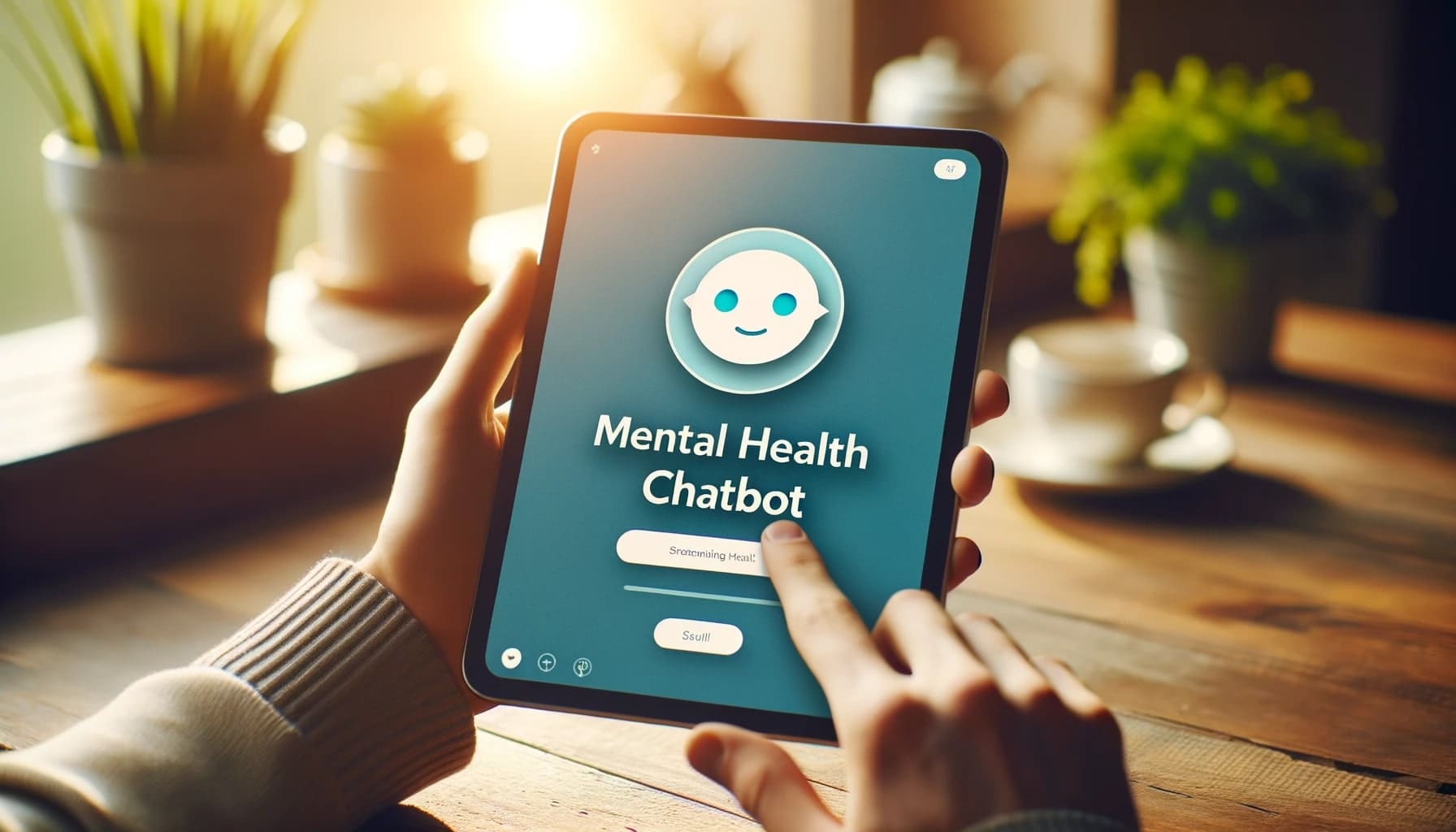
Now picture something that doesn't say "you're overreacting," doesn't interrupt, and doesn't pass judgment. Imagine typing, "I feel like I'm falling apart today," and having something respond, "I'm sorry you're carrying so much right now," in place of quiet. Would you like me to lead you in a little grounding exercise?
It's not magic. It cannot take the place of genuine human care. However, it's something. Additionally, there are instances when something is just what individuals need.
Because of this, Uncodemy students are really excited about the prospect of developing a chatbot for mental health that uses sentiment analysis and artificial intelligence. Learning Python and natural language processing isn't enough. It's about understanding how technology can genuinely care.
A Student’s Question That Changed the Vibe
I clearly recall a lesson when we were all expected to come up with concepts for chatbots. Shopping bots, weather bots, and customer support bots were the most common responses. Then, almost in a whisper, one student remarked: "What if we created a bot for anxious people? Someone they could confide in when they feel like they're going to drown.
The shift in the room was palpable. All of a sudden, the assignment had nothing to do with code. It had to do with humans. about genuine emotions. And it's moments like that that distinguish education at Uncodemy. Students are asking the more important question, "What can I build that actually matters?" rather than merely memorizing syntax.
What Makes This Bot Different
Here’s what separates a mental health chatbot from the dozens of “fun” chatbots out there: it’s not about jokes or small talk. It’s about listening.
Someone types:
“I failed my exam. I’m so stupid.”
A generic chatbot would spit out:
“I don’t understand. Can you rephrase?”
However, a sentiment analysis-trained chatbot for mental health can identify the mood underlying the phrases. It sees more than simply "exam" and "dumb." It senses the text's melancholy. And it responds with a milder response: "You seem to be terribly disappointed in yourself at the moment. That is what makes you human, not foolish. Would you like me to give you a little exercise to help you change your viewpoint?
That one change—from icy automation to real comfort—makes the difference between a bot that people rely on and one that they forsake.
Teaching Tech to Be Kind
Here’s where things get interesting for students. Writing code that says “if sad → say sorry” is easy. But that doesn’t feel real. People can tell when words are hollow.
So, students start thinking differently. They ask:
- What words sound warm instead of robotic?
- How would I want to be spoken to if I was crying at 3 AM?
- How do I balance being supportive without pretending to be a therapist?
Suddenly, programming isn’t just loops and functions. It’s empathy, turned into dialogue. And that shift—thinking like a human first, coder second—is what makes this project so powerful.
A Day in the Life of This Bot
Let’s imagine how people might use it:
Morning Stress:
“I can’t even get out of bed.”
Bot: “Some mornings feel heavier than others. Want to try a 1-minute breathing exercise together before you start your day?”
Afternoon Panic:
“I bombed my meeting. My boss hates me.”
Bot: “It’s tough to bounce back after a meeting that doesn’t go well. That doesn’t erase all the work you’ve done. Want me to share a quick tip for resetting your mindset?”
Late-Night Spiral:
“I don’t want to do this anymore.”
Bot: “I need to pause here. It sounds like you’re in real pain. You are not alone. If you’re thinking about hurting yourself, please reach out to [helpline number]. Your safety matters.”
Notice the last one. That’s important. The bot doesn’t overstep. It knows when it’s time to step back and redirect to real human help. That’s what makes it responsible.
Why Students Love This Project
Let’s be real: most coding projects are forgettable. To-do lists, calculators, quiz apps. They’re fine, but they don’t stick.
A mental health chatbot? That sticks.
When Uncodemy students build it, they walk away with more than technical skills. They walk away with:
- Confidence in AI (you actually see models detect emotions).
- A portfolio project with meaning (interviewers remember it).
- A sense of purpose (you built something that could actually make someone’s day better).
Imagine sitting in a job interview and saying:
“I built a chatbot that detects when someone is anxious or upset and responds with comfort. It even knows when to hand over to human help.”
That’s the kind of project people remember.
The Messy Parts Nobody Tells You
It’s not all smooth. Students run into things like:
- Sarcasm trips the bot up. (“Great, just what I needed” often gets marked as positive.)
- Privacy worries. You’re handling sensitive feelings, so security matters.
- Ethical boundaries. You can’t pretend the bot is therapy—it has to be clear about what it can and can’t do.
But wrestling with those problems? That’s real-world practice. That’s what makes this project more than just an assignment.
Why Uncodemy Pushes for This
Projects like these are not considered "side tasks" at Uncodemy. The point is them. We don't merely provide you syntax exercises and wish you luck. We support initiatives that are meaningful and force you to consider the users of your work.
Indeed, machine learning models are taught to you. Yes, you learn how to process natural language. More significantly, though, you discover how to make those tools meaningful. You receive feedback, make adjustments, and chuckle when your bot says something strange. Eventually, it will seem as though it is paying attention.
You're not simply leaving with code when you're finished. You're taking a tale with you.
Bigger Than Code
The truth is that technology is not the focus of this effort. People are the focus.
Yes, you will study chatbot frameworks and sentiment analysis. In reality, though, you'll learn how to code kindness.
It's uncommon. You become a better person as well as a better developer with that kind of talent.
Because someone might put a message into a chatbot one day while they're feeling lonely in their room. Additionally, your code will respond politely rather than silently.
Such a project is worthy of being constructed.