Central to data science would be the position of data scientist, which is regarded as the most general and visible profile. Data scientists are the people who can analyse big data, extract patterns and fashion solutions by utilising a combination of statistics and machine learning (with the domain knowledge thrown in). They do much more than just number crunching; they must be able to translate the numbers and important information into something meaningful that can be read and used by business leaders. Data scientists generally clean and prepare raw data, manipulate algorithms to predict future occurrences and develop models to address particular business issues. Their efforts also include a substantial amount of time in visualising their discoveries, wherein insights are rendered in a manner that can guide decision-making. The range and complexity of their tasks require highly competent data scientists to possess excellent skills in using programming languages, such as Python or R, have the skills to use the data visualisation tool, and be able to explain their work to both technical and non-technical recipients.
A data analyst is another important figure in the data science ecosystem. In contrast with the data scientists who are usually concerned with predictive modelling and sophisticated solutions, data analysts mostly deal with the interpretation of the available data and presenting the reports that represent the current situation of the operations. They work with databases, create dashboards and generate in-depth reports used by managers to get a good idea of trends and performance data. The data analysts interface between raw data and the business decision-makers, ensuring that information is made available and is meaningful. They should be skilled at querying data with SQL, be familiar with spreadsheet applications and proficient at using visualisation software like Tableau or Power BI. Although their positions might not necessarily require complicated machine learning knowledge, they could effectively digest and present conclusions that will be used by the organisation to make decisions.
But equally important are data engineers, who are the backbone of data science infrastructure. Whereas data scientists and analysts are concerned with drawing insights, data engineers are concerned with making the data in question usable, reliable, and accessible. They develop and manage data pipelines, databases, and storage on behalf of other professionals so that others can utilise clean and structured data. The analytical work of scientists and analysts would be very close to impossible without the work of data engineers. They work with any mass processing systems, enact ETL (extract, transform, load) procedures and ensure that data that is spread across many systems runs smoothly into a singular system. Their profession requires them to be knowledgeable in such areas as big data, including Hadoop and Spark, database management systems, such as SQL and NoSQL, and even programming languages such as Java, Scala, or Python. Data engineers form the core component of the technical hierarchy of the entire data science life cycle.
The recent years of developing artificial intelligence and machine learning have also promoted specialised positions such as machine learning engineers. Although data scientists can explore machine learning algorithms, it is the job of machine learning engineers to design, build, and launch machine learning models at scale. They are the ones who take the concept models and ensure they are ready to be used in the real-world context. To illustrate, a machine learning engineer can build recommendation systems on e-commerce websites, bank fraud detection algorithms, or chatbots' natural language processing systems. They need not just robust programming and mathematical capabilities but also be familiar with software engineering principles to ensure that their models can fit organically into other systems. They sit on the border between data science and software development and are key stakeholders in the development of AI-powered apps.
Besides these technicalities, the BI developers also have a unique role to play in the sense that they are focused on developing systems that enable businesses to visualise and analyse their data effectively. BI developers are often accused of creating dashboards, setting reporting, and offering executives and managers access to information in real time so they can form their strategy upon it. Their job analogous to that of data analysts, but BI developers are more likely to work on the technical part of tools visualisation, adapting them to the requirements of their organisations. They ensure the key performance indicators are being adequately adhered to and that the decision-makers are never kept in the dark around the ongoing operations. The primary competency required in the job involves the ability to use BI tools such as Microsoft Power BI, QlikView, or Tableau, as well as knowledge of databases.
The data architect is another profile becoming more applicable. Data architects also draw the blueprint on how data is to be gathered, stored, and handled within an organisation. They set the standards of data management and guarantee that the data infrastructure is compliant with not only the immediate business ambitions but the long-term flexibility as well. Similar to the physical world architects, who verify that the form is erected, data architects lay out the digital terrain over which data passes and make sure mechanisms are correlated and streamlined. They frequently work in the same capacity as data engineers, but at a more strategic level, as they are involved in planning and systems design, and not the day-to-day management of pipelines. They should also be knowledgeable in database design, offering cloud services and data governance practices since they are expected to make sure that data systems in organisations are reliable and secure.
Data governance specialists and data stewards are also increasingly becoming significant as the privacy and compliance of data become important. These professionals make sure that the data is clean, consistent, and improves regulatory adherence, like GDPR or other local laws on privacy. Their role is to establish policies of data use, metadata maintenance and data quality oversight in systems. With more scrutiny being mounted on how organisations manage customer information, such capacities have shifted to become necessary. The capacity to strike a balance between data demands and moral values is becoming a bridge-defining role in contemporary data science teams.
Alongside these central roles, some domain-specific experts come into the field with experience of how to apply data science to specific industries. To give some examples, data scientists working in healthcare could specialise in patient data, predictive diagnostics and treatment recommendations, whereas data scientists working in finance could specialise in risk modelling, fraud detection, or algorithmic trading. Such professionals are knowledgeable about data science methods as well as well-versed in a particular industry problem and objective. Their dual expertise ensures that solutions are not only technically sound but also aligned with real-world applications.
Although it is defined as a set of particular responsibilities, it is better to say that the most effective data science teams work in collaboration, and there is a high level of communication among roles. Data engineers are concerned with data flow and quality, which enables data analysts and scientists to derive insights. Machine learning engineers put sophisticated models to use, and BI developers/architects make sure the outputs are available to decision-makers. This ecosystem shows that data science represents not a single career path but an interconnected field with diverse career opportunities that are also available to individuals with varying levels of expertise and interests.
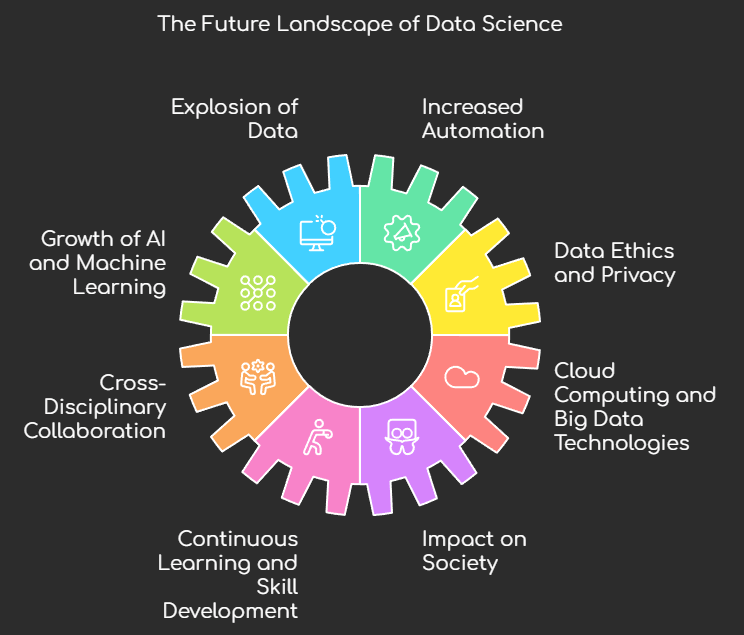
These positions will only become more in demand in the years to come as organisations turn to the power of data to find a way through uncertainty and competition. The pandemic highlighted the increased shift toward digital transformation in every industry, and data has now become the main enabler of innovation, efficiency, and customer interaction. As newer technologies like generative AI, Internet of Things (IoT), and super-advanced automation continue to evolve and introduce entirely new possibilities, new but mixture-based roles may add or augment older roles, yet demand new sets of skills. This means continuous learning and upskilling are a necessity for aspiring professionals.
In conclusion, data science is not a single job but an ecosystem of interconnected roles, each contributing unique value to the process of data-driven decision-making. Whether you aspire to become a data scientist, data analyst, data engineer, machine learning engineer, or BI developer, building the right technical foundation is essential. Uncodemy's Data Science course in Delhi equips aspiring professionals with industry-relevant skills, hands-on projects, and practical experience to prepare for these diverse career opportunities. As organisations continue to rely on data for innovation and growth, professionals who continuously upskill will be best positioned for long-term success in this dynamic field.