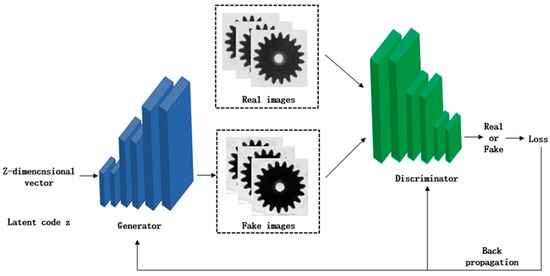
Artificial Intelligence (AI) and Deep Learning have truly revolutionized various fields over the past decade, particularly in generative modeling. One of the most exciting developments in this area is the emergence of Generative Adversarial Networks (GANs), which empower machines to create images, videos, and even music that closely mimic real-world data.
Among the different types of GANs, Deep Convolutional GANs (DCGANs) are particularly noteworthy, as they are among the most effective and widely adopted architectures. They shine in computer vision tasks, allowing machines to generate stunningly realistic images.
In this blog, we’ll dive into the fundamentals of DCGANs: a detailed explanation of Deep Convolutional GANs. We’ll break down what they are, how they function, their architecture, benefits, applications, and the challenges they face. For those eager to delve into deep learning and generative models, a structured program like the Deep Learning Course in Noida is a fantastic way to get started and master concepts like DCGANs.
What exactly is a GAN?
Before we jump into DCGANs, let’s first grasp the basics of Generative Adversarial Networks (GANs). A GAN consists of two neural networks that are in a constant tug-of-war:
- Generator (G): This network aims to create fake data (like images) that are as realistic as possible.
- Discriminator (D): This one’s job is to tell the difference between real data and the fake data produced by G.
This rivalry pushes the generator to create increasingly convincing outputs, while the discriminator gets better at identifying fakes. Over time, the generator learns to produce data that closely resembles real-world patterns.
What is a DCGAN?
What exactly is a DCGAN? Well, it stands for Deep Convolutional Generative Adversarial Network, and it’s a special kind of GAN that swaps out fully connected layers for convolutional and convolutional-transpose layers. This tweak makes DCGANs particularly good at creating high-resolution, structured images.
So, what sets GANs apart from DCGANs? Here are the key differences:
- GANs rely on fully connected networks.
- DCGANs utilize deep convolutional layers, which makes them more suited for image-related tasks.
- DCGANs are better at capturing the spatial hierarchies found in images.
Architecture of DCGAN
Now, let’s dive into the architecture of a DCGAN. It has two main parts:
1. The Generator
- It starts with a random noise vector (think of it as a latent space).
- This vector is then processed through several transposed convolutional layers (also known as deconvolution layers).
- Finally, it upsamples that noise into a structured image.
2. The Discriminator
- This component takes in either real or fake images.
- It employs standard convolutional layers along with batch normalization.
- The output is a probability indicating whether the input image is real or generated.
Core Principles of DCGAN Design
When it comes to the core principles of DCGAN design, here’s what you need to know:
- Pooling layers are replaced with strided convolutions in the discriminator and fractionally strided convolutions in the generator.
- Batch normalization is used to keep the training stable.
- Fully connected hidden layers are removed to allow for deeper architectures.
- The generator uses ReLU activation, except for the output layer, which uses Tanh.
- The discriminator employs Leaky ReLU activation.
Working of DCGANs Step by Step
Let’s break down how DCGANs work step by step:
- Input Noise Vector: The generator kicks things off with a random vector from the latent space.
- Image Generation: It then transforms this vector into a fake image using convolutional-transpose operations.
- Real vs Fake Check: The discriminator steps in to evaluate both real and generated images.
In terms of adversarial training:
- The generator’s goal is to trick the discriminator.
- Meanwhile, the discriminator aims to accurately classify what’s real and what’s fake.
- For optimization, both models adjust their parameters using loss functions like Binary Cross-Entropy.
- The process keeps going until the generator creates images that are so realistic, the discriminator struggles to tell them apart from real ones.
Advantages of DCGANs
- High-Quality Image Generation: DCGANs excel at creating images that are not only realistic but also rich in detail.
- Efficient Training: Thanks to their convolutional structures, training is more stable compared to traditional GANs.
- Feature Learning: DCGANs are great at picking up useful feature representations that can be applied to other tasks, like classification.
- Versatility: They can be used in various fields beyond just images, including audio and video generation.
Applications of DCGANs
1. Image Generation
DCGANs can produce lifelike faces, stunning landscapes, and even objects that don’t exist in reality.
2. Art and Creativity
Artists leverage DCGANs to craft one-of-a-kind paintings, textures, and artistic styles.
3. Data Augmentation
DCGANs can create synthetic data to enhance datasets for training machine learning models.
4. Fashion Industry
Designers tap into DCGANs to invent new clothing styles and forecast fashion trends.
5. Healthcare
DCGANs can generate medical images for rare diseases, aiding in the training of diagnostic models.
6. Video Game Development
They can create textures, environments, and even characters, enriching the gaming experience.
Challenges of DCGANs
Even with their strengths, DCGANs come with their own set of challenges:
- Mode Collapse: Sometimes, the generator ends up producing a limited range of outputs instead of a diverse array.
- Training Instability: Training GANs and DCGANs can be tricky, and they might struggle to reach convergence.
- High Computational Requirements: Training demands a lot of processing power and GPU resources.
- Ethical Concerns: There’s a risk of misuse with generated data, such as in the creation of deepfakes.
DCGAN vs Other GAN Variants
Feature
GAN
DCGAN
WGAN
StyleGAN
Architecture
Fully Connected
Convolutional
Wasserstein Distance
Progressive Growing
Image Quality
Basic
High
More Stable
Ultra-realistic
Training Stability
Low
Medium
High
High
Use Cases
General
Images, Data Augmentation
Stable training, diverse data
Human faces, art
Why should you learn about DCGANs?
- Building Block for Generative Models: DCGANs serve as a crucial foundation for more sophisticated architectures like StyleGAN and BigGAN.
- Real-World Applications: These models are making waves in industries such as healthcare, gaming, and design.
- Job Prospects: Positions like AI Engineer, Computer Vision Specialist, and Deep Learning Engineer are increasingly looking for expertise in generative models.
- Practical Experience: Working with DCGANs allows learners to create projects that highlight the creativity and innovation of AI.
If you're eager to delve deeper, consider enrolling in structured programs like the Deep Learning Course in Noida, which offers hands-on experience, industry-relevant projects, and job placement support.
Career Paths After Mastering DCGANs
- AI Engineer – Develop smart systems using generative models.
- Deep Learning Specialist – Engage with cutting-edge architectures in computer vision and NLP.
- Computer Vision Engineer – Utilize DCGANs for visual recognition and generation tasks.
- Data Scientist – Leverage generative models for data augmentation and spotting anomalies.
- Research Scientist – Play a role in advancing the development of new GAN variants.
The Future of DCGANs
Even though newer models like StyleGANs and Diffusion Models are gaining traction, DCGANs still hold a vital place in deep learning research and education. Their blend of simplicity, effectiveness, and adaptability ensures they will remain significant for both academic exploration and practical use. For both newcomers and seasoned professionals, mastering DCGANs lays the groundwork for diving into the world of advanced generative AI.
Conclusion
Deep Convolutional GANs (DCGANs) are truly one of the standout breakthroughs in the realm of deep learning. By merging the strengths of convolutional neural networks with the innovative approach of generative adversarial training, DCGANs can produce incredibly lifelike images and grasp intricate features from data.
These powerful tools have paved the way for a variety of applications, from art and entertainment to healthcare and fashion—fields that seemed out of reach just a few years back. Yet, we must also tackle challenges like training instability and the potential for ethical misuse with care and responsibility.
For those eager to build a solid foundation in deep learning and generative AI, getting a grip on DCGANs is essential. Enrolling in structured programs, such as the Deep Learning Course in Noida, can equip you with the skills, hands-on experience, and job-oriented guidance necessary to thrive in this dynamic field.
FAQs on DCGAN Basics: Deep Convolutional GANs Explained
Q1. What sets DCGAN apart from standard GANs?
DCGANs swap out fully connected layers for convolutional layers, which makes them far more effective at generating images.
Q2. Where can I find DCGANs in action in the real world?
They’re utilized in art generation, fashion design, healthcare imaging, gaming, and even data augmentation.
Q3. What are the main hurdles faced by DCGANs?
The primary challenges include training instability, mode collapse, and hefty computational demands.
Q4. Should I learn DCGANs if I want to work with newer models like StyleGAN or Diffusion Models?
Absolutely! DCGANs lay the groundwork for grasping more advanced generative models.
Q5. How can I kick off my learning journey with DCGANs?
Begin by mastering the basics of GANs and convolutional neural networks, then dive into practicing with DCGAN implementations. Programs like the Deep Learning Course in Noida offer structured, hands-on learning to help you master DCGANs.