Artificial Intelligence (AI) has truly transformed how we create, analyze, and handle data, particularly in the realm of generative models. One of the standout breakthroughs in recent years is the emergence of DDPM Models: Denoising Diffusion Probabilistic Models. These models have captured a lot of attention due to their remarkable ability to produce high-quality, lifelike images that outshine earlier generative techniques like GANs and VAEs.
From driving innovations in Stable Diffusion and DALL·E 2 to empowering creative fields with AI-generated art, DDPMs have changed the game for what machines can achieve. In this article, we’ll dive into what DDPMs are all about, how they function, their essential components, applications, advantages, challenges, and why they’re seen as the future of generative AI.
What Are DDPM Models?
DDPM (Denoising Diffusion Probabilistic Models) is a kind of generative model that creates data (like images) by gradually eliminating noise from a random distribution. Unlike GANs, which depend on adversarial training, DDPMs take a probabilistic route where data is progressively tainted with noise and then denoised step by step to either reconstruct the original or generate entirely new samples.
To put it simply, think of starting with a completely noisy image. The model learns to reverse the noise process, transforming randomness into a coherent, realistic image.
The Intuition Behind Diffusion Models
Diffusion models reflect natural processes, such as the diffusion of gases or the blurring of images, where information spreads out. DDPMs turn this process on its head:
1. Forward Process (Adding Noise):
- Begin with a real image.
- Gradually introduce Gaussian noise over several steps until the image becomes pure noise.
2. Reverse Process (Denoising):
- Train a neural network to reverse this noisy process step by step.
- Slowly rebuild a clean image from the noise.
This meticulous denoising process is what gives diffusion models their impressive stability and ability to generate a wide range of high-resolution, photorealistic images.
How Do DDPM Models Work?
Let’s break down how DDPMs function into three main parts:
1. Forward Diffusion Process
- This is where data distribution transforms into noise distribution.
- At each timestep, a little bit of Gaussian noise gets added.
- After enough steps, the data starts to look just like random noise.
2. Reverse Denoising Process
- The model is trained to figure out the original data from its noisy counterpart.
- It learns the conditional probabilities needed to reverse the noise at each step.
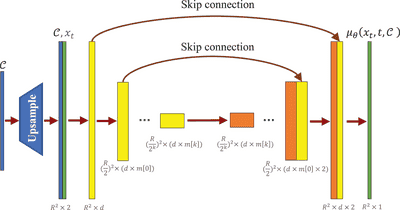
- Neural networks, particularly U-Nets, are commonly used for this denoising task.
3. Sampling
- To create new images, you kick things off with random noise.
- Then, you apply the reverse denoising process step by step.
- The end result? A fresh, realistic image that aligns with the patterns it learned.
Key Components of DDPM
- Noise Scheduler – This decides how much noise gets added at each step.
- Neural Network (often U-Net) – It learns to denoise images at various noise levels.
- Loss Function (usually MSE) – This measures how close the denoised image is to the original.
- Sampling Algorithm – It defines how new images are crafted from pure noise.
Advantages of DDPM Models
1. High-Quality Image Generation
These models produce incredibly detailed and realistic images, often outshining GANs in quality.
2. Stable Training Process
Unlike GANs, there’s no adversarial competition, which leads to more reliable results.
3. Diversity in Outputs
They can generate a wide range of samples, even from similar prompts.
4. Scalability
DDPMs work efficiently across various datasets and domains.
5. Wider Applications
From text-to-image generation to super-resolution, DDPMs shine in multiple areas.
Applications of DDPM Models
1. Text-to-Image Generation
They power models like Stable Diffusion and DALL·E 2, allowing AI to create stunning art from text prompts.
2. Image Inpainting
They can seamlessly fill in the missing parts of an image.
3. Super-Resolution
These models enhance low-resolution images to high-definition quality.
4. Medical Imaging
They generate synthetic medical scans for research, all while respecting patient privacy.
5. Fashion & Design
DDPMs are great for creating new clothing designs, textures, and product prototypes.
DDPMs vs GANs vs VAEs
Feature
DDPMs
GANs
VAEs
Image Quality
Very High
High
Medium
Training Stability
Stable
Often Unstable
Stable
Mode Collapse
Rare
Common
Rare
Sampling Speed
Slow
Fast
Fast
Use Cases
Text-to-Image, Super-Resolution
Realistic Images, Deepfakes
Data Compression, Latent Representation
Limitations of DDPM Models
1. Slow Sampling
Creating images involves several iterative steps, which makes it slower than GANs.
2. High Computational Cost
It demands powerful GPUs and takes longer to train.
3. Data Hungry
It requires large datasets to train high-quality models.
4. Ethical Concerns
There’s a risk of misuse for generating fake images or deepfakes.
The Future of DDPM Models
The development of DDPMs is steering AI into exciting new territories. Future improvements are expected to:
- Speed up sampling with optimized algorithms.
- Combine DDPMs with transformers for more efficient designs.
- Broaden their use to include video generation, 3D modeling, and virtual reality.
- Introduce ethical AI measures to curb misuse.
For those looking to learn, mastering diffusion models is a crucial step toward a career in AI research, computer vision, and creative fields.
Why Learn DDPM Models?
The growing need for generative AI professionals underscores the importance of being skilled in diffusion models, GANs, and deep learning frameworks.
For students and professionals eager to enhance their expertise, courses like the Artificial Intelligence Course in Noida offer practical training in generative AI, covering DDPMs, text-to-image models, and advanced deep learning. With hands-on projects and placement assistance, this course is a fantastic stepping stone to becoming an AI expert.
Conclusion
DDPM Models: Denoising Diffusion Probabilistic Explained represent a significant advancement in the world of generative AI technology. By reversing the process of adding noise, these models can create stunningly realistic, intricate, and varied images that surpass older models like GANs and VAEs in both quality and stability.
From fueling innovations like Stable Diffusion to transforming sectors such as healthcare, fashion, and gaming, DDPMs are raising the bar for how machines generate data. While there are still hurdles to overcome, like slow sampling speeds and hefty computational demands, ongoing research is making strides to tackle these issues.
For both learners and professionals, now is an ideal moment to dive into the world of generative AI. With the right training—like the Artificial Intelligence Course in Noida —you can gain hands-on knowledge and pave the way for a future in one of the most thrilling areas of AI innovation.
The future of creativity, design, and automation is set to be influenced by diffusion models, and those who grasp their concepts will be at the forefront of the next wave of AI evolution.
FAQs on DDPM Models
Q1. What are DDPM models in simple terms?
DDPMs are generative models that begin with random noise and progressively eliminate it to produce realistic images.
Q2. How are DDPMs different from GANs?
Unlike GANs, which operate on a generator-discriminator framework, DDPMs utilize a probabilistic denoising approach, resulting in more stable training and superior output quality.
Q3. What are the main applications of DDPMs?
They find use in text-to-image generation, medical imaging, super-resolution, and entertainment.
Q4. What are the limitations of DDPMs?
They demand significant computational resources, large datasets, and tend to be slower in image generation.
Q5. Can DDPMs be misused?
Absolutely, like other generative models, they pose ethical dilemmas such as the potential for deepfake creation or biased outputs.
Q6. Where can I learn DDPMs professionally?
You can enroll in structured training programs like the Artificial Intelligence Course in Noida, which covers DDPMs, GANs, and diffusion-based generative models comprehensively.