What is Deep Learning?
Let’s start with the basics. Deep learning is a subset of machine learning, which is itself a subset of artificial intelligence (AI). The word “deep” in deep learning refers to the multiple layers in a neural network. These layers help machines “learn” and make decisions – kind of like how our brain works with neurons.
If you’re curious to explore how these concepts are taught step-by-step with practical implementation, enrolling in an Artificial Intelligence course in Greater Noida can help you build a strong foundation in machine learning and neural networks.
How Does Deep Learning Actually Work?
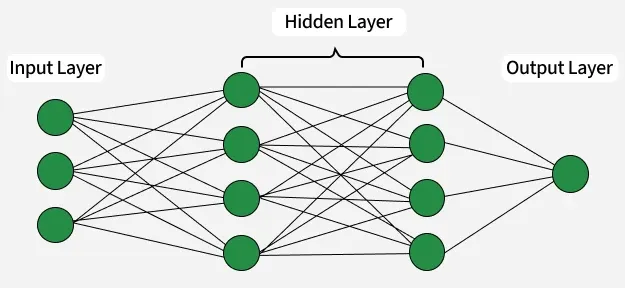
At the heart of deep learning are neural networks, especially something called Artificial Neural Networks (ANNs). These networks are inspired by the human brain. They're made up of layers:
•Input Layer – where the data enters.
•Hidden Layers – where the real magic happens (lots of calculations and transformations).
•Output Layer – where we get the result.
Each “neuron” in the network connects to others, passing information and adjusting weights, which helps the model learn patterns. The more data it sees, the better it gets. That’s why deep learning thrives on big data.
Why is Deep Learning a Big Deal?
Deep learning isn’t just cool tech –it’s changing everything. From Netflix recommendations to face unlock on your phone, deep learning is powering it behind the scenes. Its biggest strength is its ability to understand unstructured data like images, videos, audio, and natural language – which traditional ML algorithms usually struggle with.
Popular Deep Learning Algorithms
Let’s name-drop some stars of deep learning:
1. Convolutional Neural Networks (CNNs)
Used mostly in image processing. For example, Instagram filters that detect your face – yup, that’s CNN in action.
2. Recurrent Neural Networks (RNNs)
Best for sequence-based data, like text or time series. Think predictive text, voice assistants, or stock price forecasting.
3. Generative Adversarial Networks (GANs)
These are wild. They can actually generate new content – from deepfake videos to AI-generated art.
4. Long Short-Term Memory (LSTM)
A special type of RNN that’s great at remembering long-term dependencies. Perfect for language translation or speech recognition.
Use Cases of Deep Learning in the Real World
Let’s get into the juicy part – how deep learning is being used in real life. You’ll be surprised how much of it you’re already interacting with daily.
1. Self-Driving Cars
Companies like Tesla use deep learning to process images from cameras, identify lanes, pedestrians, traffic lights, and make real-time driving decisions. The car is basically learning how to “see” and drive.
2. Healthcare – Diagnosing Diseases
Deep learning models are trained to read X-rays, MRIs, or even retina scans. They can detect conditions like cancer, diabetic retinopathy, or brain tumors faster and more accurately than traditional methods.
3. Voice Assistants – Alexa, Siri, Google Assistant
When you say, “Hey Siri, what’s the weather like?”, deep learning algorithms understand your speech, convert it into text, search for the answer, and speak it back. All this happens in seconds, thanks to deep learning.
4. Social Media – Tagging and Filtering
Ever wondered how Facebook automatically tags you in a photo? That’s CNN doing facial recognition. Also, when Instagram blurs sensitive content or TikTok recommends videos – that’s deep learning doing its job.
5. Fraud Detection in Banking
Banks use deep learning to spot unusual patterns in your transactions. If someone tries to use your card from another country or makes strange purchases, the system flags it –preventing fraud.
6. Language Translation
Tools like Google Translate are powered by NLP (Natural Language Processing) models based on deep learning. They’re not just word-to-word translators anymore –they understand context and tone too.
7. Personalized Recommendations
Netflix, Spotify, Amazon – all of them use deep learning to analyze your behavior and suggest movies, songs, or products you’ll probably love. That’s how they keep you hooked.
8. Chatbots & Customer Support
Many companies use AI chatbots trained with deep learning to answer FAQs, take orders, or even resolve complaints. Some of them are so good, you can’t even tell they’re not human.
9. Agriculture
Yes, deep learning is used in crop monitoring, soil health prediction, and even identifying plant diseases using drone images or sensors.
10. Deepfake Technology
As scary as it sounds, deep learning is what makes deepfake videos possible. It can swap faces, mimic voices, or create entire fake people. It’s both fascinating and concerning.
Challenges of Deep Learning
It’s not all smooth. Deep learning has some major limitations too:
•Needs tons of data to perform well.
•Requires high computational power – good GPUs or cloud resources.
•Can be a black box – hard to explain how it made a decision.
•Risk of bias – if the training data is biased, the results will be too.
So, while it's powerful, it's important to use it responsibly.
Tools and Frameworks Used in Deep Learning
If you’re someone curious about trying deep learning, here are some tools you’ll often hear about:
~TensorFlow – Developed by Google, very powerful and flexible.
~PyTorch – Facebook’s library, more Pythonic and great for beginners.
~Keras – High-level API for TensorFlow; super beginner-friendly.
~OpenCV – Useful for computer vision applications.
~Scikit-learn – Although more for ML, it's still helpful alongside deep learning.
Who Can Learn Deep Learning?
Honestly? Anyone.
You don’t have to be a math wizard. If you have a basic understanding of Python, a good laptop, and the patience to learn – you’re good to go. There are so many courses online (free and paid), and tools like Google Colab let you train models without even installing anything.
Final Thoughts
Deep learning might sound like a complex buzzword thrown around in tech circles, but at its core, it’s a fascinating, evolving field that is slowly becoming a part of our everyday lives. Whether you're asking your voice assistant to play a song, scrolling through perfectly curated reels, or watching YouTube recommend your next video before you even finish the current one–deep learning is behind it all.
It’s not just about coding or algorithms. It’s about mimicking how the human brain learns from experience–and using that power to teach machines. That’s the magic. What once required human intuition, judgment, or decision-making is now being handled by models that learn, adapt, and grow. And the possibilities? Endless.
But let’s be honest–deep learning isn’t always simple. It takes effort, clarity, and the right guidance to understand how neural networks work, why layers matter, or how backpropagation changes everything. But that's why platforms like Uncodemy exist–to simplify this for you. We break down the heavy stuff into bite-sized, relatable lessons that anyone can follow.
At Uncodemy, we don’t just teach; we build confidence. We show you how to take theory and turn it into real-world applications–like object detection in images, chatbots that actually sound human, or even tools that detect diseases in medical scans. These are not just academic exercises–they are skills that employers value and the world truly needs.
What’s exciting is that deep learning is still growing. It’s not a saturated space. It’s a space that’s looking for thinkers, doers, and problem-solvers. That means you. The one who's curious enough to read this far. The one who's maybe a bit overwhelmed, but still eager to learn. You belong here.
And here's the truth: the more you explore deep learning, the more you’ll realize it’s less about being a tech genius and more about asking the right questions. It’s about experimenting, failing sometimes, tweaking, and trying again. That’s the journey of every developer and data scientist out there.
As we wrap this up, remember–learning deep learning is like planting a seed. It takes time to grow, but once it does, it can power entire industries. And you can be the one leading that change. Whether you're dreaming of working in AI research, building smart apps, or launching a startup, deep learning is the tool that can bring your ideas to life.
So, don’t overthink it. Start where you are. Learn with intention. Practice with purpose. And trust that with Uncodemy guiding you, you're not just keeping up with the future–you’re shaping it💻💪🏻