Difference Between Array and Linked List: A Complete Guide
When working with data structures, one of the most common comparisons is between arrays and linked lists. Both are used to store collections of elements, but they work differently in terms of memory management, performance, and flexibility. If you’re preparing for interviews or improving your programming skills, understanding this difference is essential.
In computer science, Array and Linked List are fundamental ways of storing and accessing data.
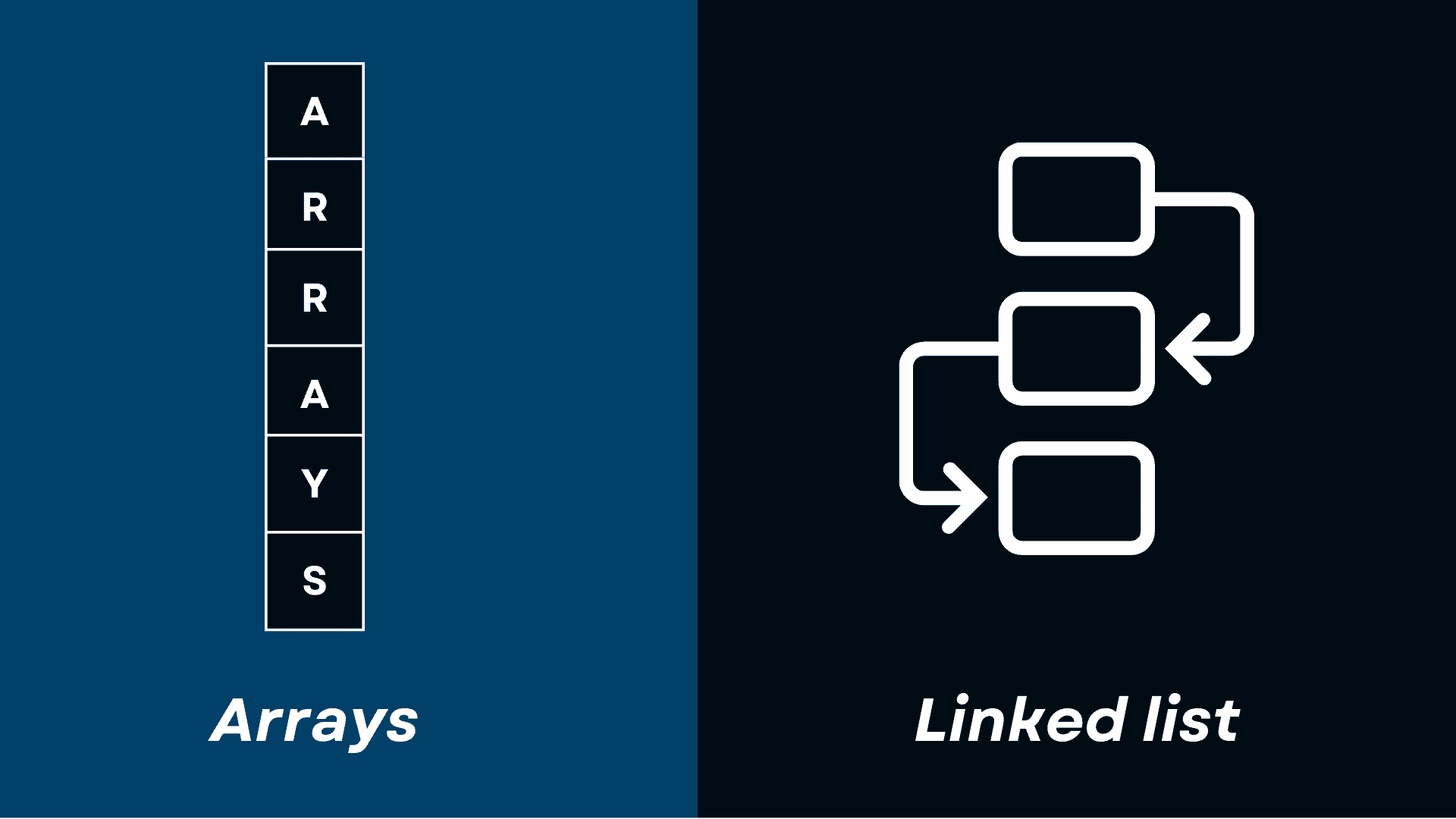
Array: A collection of elements stored in contiguous memory locations.
Linked List: A sequence of nodes where each node contains data and a reference (or pointer) to the next node.
They are like two different ways of arranging books:
Array: Books are placed side-by-side in a fixed shelf (contiguous memory).
Linked List: Books are placed anywhere, but each has a note pointing to where the next book is.
2. What is an Array?
An array is a fixed-size sequential collection of elements of the same type.
Example in C:
c
CopyEdit
int numbers[5] = {10, 20, 30, 40, 50};
Here, all numbers are stored together in memory, making access fast.
Key Characteristics of Arrays:
Stored in contiguous memory.
Fixed size after declaration.
Index-based access (random access).
Efficient for searching by index.
3. What is a Linked List?
A linked list is a collection of nodes where each node contains:
1. Data
2. Pointer to the next node.
Example in C:
c
CopyEdit
Copy Code
struct Node {

    int data;

    struct Node* next;

};
If you want to store {10, 20, 30}, you create three nodes and link them.
Key Characteristics of Linked Lists:
Stored in non-contiguous memory.
Flexible size (can grow or shrink dynamically).
Accessing elements requires traversal from the head node.
Can easily insert or delete elements without shifting others.
4. Array vs Linked List: Comparison Table
Feature
Array
Linked List
Memory Allocation
Contiguous
Non-contiguous
Size
Fixed
Dynamic
Access Time
O(1) (direct access)
O(n) (sequential)
Insertion/Deletion
Slow (need shifting)
Fast (just change pointers)
Memory Usage
Less (only data)
More (extra pointer storage)
Cache Friendliness
High
Low
Implementation
Easy
More complex
Best Use Case
When size is known and fast access is needed
When frequent insertions/deletions are required
5. Example: Access Time
If you have an array:
c
CopyEdit
Copy Code
int arr[] = {5, 10, 15, 20};

printf("%d", arr[2]); // Directly gets 15

This is O(1) because it jumps straight to index 2.
For a linked list:
c
CopyEdit
Copy Code
Node* temp = head;

for(int i = 0; i < 2; i++) {

    temp = temp->next;

}

printf("%d", temp->data);
You must traverse from the first node, making it O(n).
6. Advantages & Disadvantages
Array Advantages:
Fast random access.
Better memory locality (improves CPU caching).
Simple implementation.
Array Disadvantages:
Fixed size (cannot grow easily).
Insertion/deletion in the middle is slow.
Linked List Advantages:
Dynamic size.
Efficient insertion/deletion.
Linked List Disadvantages:
Extra memory for pointers.
Slower access time.
Poor cache performance.
7. Which One Should You Use?
Use Array when:
You need fast access by index.
Size is known beforehand.
Memory efficiency is important.
Use Linked List when:
Data size changes frequently.
Frequent insertions/deletions in the middle.
Memory fragmentation is not a big concern.
8. Real-Life Analogy
Think of Array as people sitting in consecutive seats in a theater — you can easily find the 5th person without counting. Linked List is like people holding hands in a chain — to find the 5th person, you must start from the first and follow the chain.
9. Conclusion
Both arrays and linked lists are important. Arrays give speed and simplicity, while linked lists provide flexibility. For interview preparation, practice coding problems that involve both — such as reversing an array, inserting into a linked list, and merging lists.
💡 Pro Tip: If you want to master arrays, linked lists, and other data structures with hands-on projects, check out the Data Structures & Algorithms Course by Uncodemy. It covers real-world problems, coding challenges, and interview preparation in detail.