Difference Between Stack and Queue in C++
Mr. Bambam Kumar Yadav/ 3 days ago - 15
- 11 min read
What is a Stack?
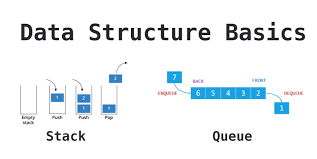
Okay, so a stack is a basic way to organize data, and it works like this: last in, first out. Think of it like a stack of books. The last book you put on top is the first one you grab when you need one. You can only add or remove stuff from the top. That means you can only get to the most recent thing you added. It's pretty handy when you need to undo something or reverse a process.
Here's how a stack works:
- Think of it like a stack of plates. You only put plates on top, and you only take plates from the top.
- That means you can only get to the last thing you put in.
- It's helpful when you need to undo something or go back a step.
What is a Queue?
So, a queue is all about first in, first out, or FIFO. It's like waiting in line for tickets – whoever gets there first, gets served first. Then, the next person moves up, and it keeps going like that.
Here are the main things to know about queues:
- Stuff goes in at the back and comes out at the front.
- You always take out the oldest thing first, so things stay in the order they came in.
- It's good for when you need to do things in the order they happen.
Comparing Stack and Queue in C++
One of the major lessons you’ll gain in Uncodemy’s C programming course is that, while both data structures organize data linearly, their logic and use cases differ greatly.
| Feature | Stack | Queue |
|---|
| Principle | LIFO (Last-In, First-Out) | FIFO (First-In, First-Out) |
| Data Entry | At the top only | At the rear only |
| Data Removal | At the top only | At the front only |
| Access Pattern | The most recent item is always on top | The oldest item is always at the front |
| Analogy | Stack of plates, undo in editor | Waiting line, call center queue |
| Key Operations | Add (push), Remove (pop), View (peek) | Add (enqueue), Remove (dequeue), View (front) |
| C++ Standard Library | std::stack | std::queue |
Real-World Analogies for Clarity
Okay, here's a real-life example of a stack:
Imagine a pile of trays in a cafeteria. You put new trays on the top, and people grab them from the top too. So, the newest tray is always the first one used.
Here's one for a queue:
Think of a bus stop line. Whoever gets there first gets on the bus first, no matter how many people show up later.
When to Use Stack vs. Queue
Use a stack if:
- You wanna reverse stuff or undo things, like in a browser's back button or a text editor.
- You're working out math stuff, mainly with operations inside operations.
- You're dealing with functions that call themselves, since the call stack works this way.
Use a queue if:
- You wanna be fair and keep things in order, like when you're planning tasks or dealing with customer support requests.
- You're handling resource buffers in programs (think print spoolers or input/output requests).
- You're going through data level by level, like with breadth-first search in graphs.
Memory and Efficiency Considerations
Stacks and queues both work well, using little memory and doing insertions and removals in quick time. They differ mainly in where stuff gets added or taken away:
Stack: Just one access point (the top), which cuts down on fuss and bother.
Queue: Two points (front and back), which keeps things easy but makes sure processing happens in order.
In Uncodemy’s C class, you’ll see how these choices affect how things perform. Also, you'll see how messing up can cause problems, like stack overflow (too much on a stack) or queue underflow (taking from an empty queue).
Stack and Queue Variants and Their Real-World Applications
Knowing the regular stack and queue is just the start. In actual situations and more complex C++ coding (like what you learn in Uncodemy’s C programming course), you'll see some handy variations:
Double-Ended Queue (Deque)
A deque lets you add and remove stuff from either end—the front or the back. That makes it super handy for things that need both LIFO and FIFO, like sliding window problems, checking if something reads the same backward and forward, and some ways of storing temporary data.
Priority Queue
This kind of queue gives each item a priority, so things get taken care of based on how important they are, not when they showed up. Think about emergency rooms or customer service that has to deal with urgent stuff first, no matter when it comes in. In C++, there's a ready-made tool called std::priority_queue for this.
Circular Queue
A circular queue loops the end of the queue back to the beginning. It makes good use of memory. It's really good for when you have a set amount of space, such as buffering in online or video streaming, where it’s better to overwrite old stuff than to stop when the buffer is full.
Stack and Queue in Recursion and Scheduling
Okay, here's a more human way to say that:
Recursion and the Stack: In C/C++, when you use recursion, each function call makes use of the call stack to keep track of where it is and what's going on. If you want to write recursive code without bugs and be smart about memory, you gotta know how the stack works.
Queues for Scheduling: Operating systems often use queues to juggle multiple tasks at once. This helps make sure everyone gets a fair share of time, like in round-robin scheduling.
Stacks for Figuring Out Math and Code Structure
Think about how computers handle tricky math problems or check if your code makes sense. Stacks are like their secret weapon, helping them keep track of parentheses and ensuring everything is in the right order. This is super important when you're building tools that understand code.
Queues for Keeping Data Streams Smooth
Today's streaming services and phone companies use queues to manage tons of incoming data. Queues make sure everything is processed in order, so nothing gets lost.
Why They Matter in Coding and Job Hunting
Lots of computer algorithms use stacks and queues, especially for sorting or searching. You'll probably be asked about them in coding interviews. Knowing your way around stacks and queues—which you can learn in Uncodemy’s C programming course—can really give you a leg up.
Conclusion: Lay the Groundwork for Good Coding
Knowing the difference between stacks and queues can really help you write cleaner and better code in C++. Whether you're building something new, tackling coding problems, or getting ready for interviews, these ideas—which are a key part of Uncodemy’s C programming course—will be super useful. If you get how and when to use each one, you'll be set for a great future in programming.
Frequently Asked Questions (FAQs)
Q1: Are stacks and queues only relevant in academic settings?
A: Not at all! They drive key processes in computer systems, application development, and problem-solving in interviews and real-world projects.
Q2: Which one is easier to implement in C++?
A: Both are straightforward to implement, especially using the Standard Template Library (std::stack, std::queue). Understanding their core logic—covered in Uncodemy’s C programming course—is more important than memorizing code.
Q3: Why do some algorithms prefer stacks over queues?
A: Algorithms requiring reversal, backtracking, or nested data favor stacks for their LIFO nature, while those needing orderly, fair processing use queues.
Q4: Can stacks and queues be used together?
A: Yes, many advanced algorithms combine both for optimal performance—for example, certain tree traversals and scheduling tasks.
Q5: How does Uncodemy's C programming course help with these data structures?
A: The course provides a hands-on, project-based approach to understanding and implementing stacks, queues, and their variants—preparing students for both practical development and interview success.