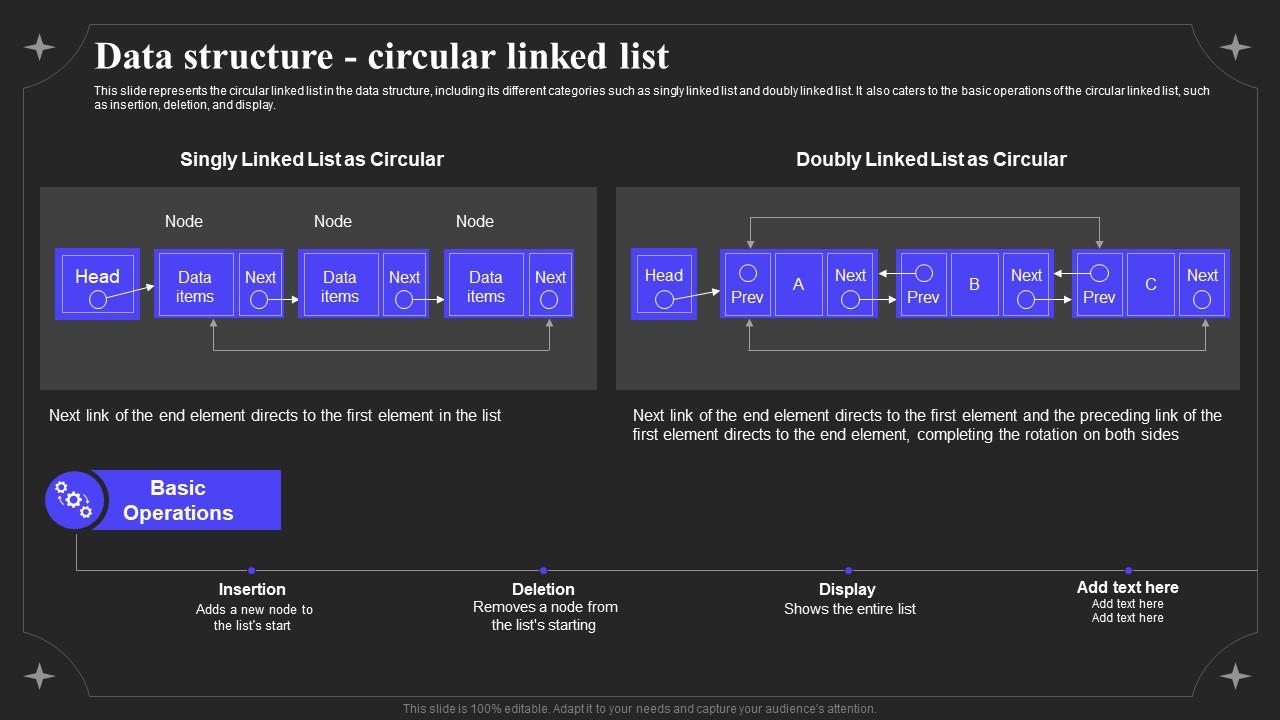
When you first start learning data structures, linked lists often feel like a tricky topic. And when it comes to the doubly linked list, the idea of connecting nodes in two directions might sound a bit overwhelming at first.
But here’s the thing once you crack it, the doubly linked list becomes one of the most flexible tools in your data structures toolbox.

In this blog, we’ll break down:
By the end, you’ll not only understand doubly linked lists you’ll feel confident using them.
Want to master DSA with clarity and coding support?
Join Uncodemy’s Data Structures Course learn from industry experts with live sessions and hands-on practice.
A Doubly Linked List (DLL) is a type of linked list where each node contains three parts:
1. Data
2. Pointer to the next node
3. Pointer to the previous node
This allows you to traverse the list in both directions forward and backward.
Here's a simple text-based visualization:
NULL <- [10 | * | *] <-> [20 | * | *] <-> [30 | * | *] -> NULL
Each [data | prev | next] box shows a node.
Copy Code
struct Node {
int data;
struct Node* prev;
struct Node* next;
};Copy Code
struct Node* createNode(int data) {
struct Node* newNode = (struct Node*)malloc(sizeof(struct Node));
newNode->data = data;
newNode->prev = NULL;
newNode->next = NULL;
return newNode;
}Always allocate memory dynamically to create a new node.
1. Insert at the Beginning
Copy Code
void insertAtBeginning(struct Node** head, int data) {
struct Node* newNode = createNode(data);
newNode->next = *head;
if (*head != NULL)
(*head)->prev = newNode;
*head = newNode;
}2. Insert at the End
Copy Code
void insertAtEnd(struct Node** head, int data) {
struct Node* newNode = createNode(data);
if (*head == NULL) {
*head = newNode;
return;
}
struct Node* temp = *head;
while (temp->next != NULL)
temp = temp->next;
temp->next = newNode;
newNode->prev = temp;
}3. Insert After a Given Node
Copy Code
void insertAfter(struct Node* prevNode, int data) {
if (prevNode == NULL) return;
struct Node* newNode = createNode(data);
newNode->next = prevNode->next;
prevNode->next = newNode;
newNode->prev = prevNode;
if (newNode->next != NULL)
newNode->next->prev = newNode;
}1. Delete From Beginning
Copy Code
void deleteFromBeginning(struct Node** head) {
if (*head == NULL) return;
struct Node* temp = *head;
*head = (*head)->next;
if (*head != NULL)
(*head)->prev = NULL;
free(temp);
}2. Delete From End
Copy Code
void deleteFromEnd(struct Node** head) {
if (*head == NULL) return;
struct Node* temp = *head;
while (temp->next != NULL)
temp = temp->next;
if (temp->prev != NULL)
temp->prev->next = NULL;
else
*head = NULL;
free(temp);
}3. Delete a Specific Node
Copy Code
void deleteNode(struct Node** head, struct Node* delNode) {
if (*head == NULL || delNode == NULL) return;
if (*head == delNode)
*head = delNode->next;
if (delNode->next != NULL)
delNode->next->prev = delNode->prev;
if (delNode->prev != NULL)
delNode->prev->next = delNode->next;
free(delNode);
}Forward Traversal
Copy Code
void printForward(struct Node* head) {
struct Node* temp = head;
while (temp != NULL) {
printf("%d ", temp->data);
temp = temp->next;
}
}Backward Traversal
Copy Code
void printBackward(struct Node* tail) {
struct Node* temp = tail;
while (temp != NULL) {
printf("%d ", temp->data);
temp = temp->prev;
}
}| Feature | Benefit |
| Bidirectional traversal | Traverse both forward and backward |
| Efficient deletion | Deleting a node is faster without head ref |
| Better for complex data | Ideal for complex data manipulations |
Interview Tip
Common question:
"What’s the difference between singly and doubly linked lists?"
Answer:
Singly linked lists have only a forward pointer, while doubly linked lists have both forward and backward pointers. DLLs allow easier deletion and bidirectional traversal but use more memory.
Q1. Why use a doubly linked list instead of a singly linked list?
It allows two-way traversal and efficient deletion from both ends without needing a previous pointer.
Q2. Is DLL used in real applications?
Yes, DLLs are heavily used in memory-intensive applications like cache systems, music players, and undo/redo features.
Q3. How much extra space does a DLL take?
Each node requires an additional pointer (prev), which doubles the pointer memory usage compared to singly linked lists.
Q4. What is the time complexity for insertion and deletion?
Both operations take O(1) time if you already have a reference to the node.
Q5. Are doubly linked lists implemented in STL?
Yes, in C++, the std::list container is a doubly linked list implementation.
Doubly Linked Lists are all about flexibility. While they may take up more memory than singly linked lists, they offer faster and more efficient operations for many real-world use cases. Whether you're building your own text editor or prepping for a tech interview, understanding DLLs will definitely give you an edge.
Ready to practice with real coding problems and guided projects?

Personalized learning paths with interactive materials and progress tracking for optimal learning experience.
Explore LMSCreate professional, ATS-optimized resumes tailored for tech roles with intelligent suggestions.
Build ResumeDetailed analysis of how your resume performs in Applicant Tracking Systems with actionable insights.
Check ResumeAI analyzes your code for efficiency, best practices, and bugs with instant feedback.
Try Code ReviewPractice coding in 20+ languages with our cloud-based compiler that works on any device.
Start Coding
TRENDING
BESTSELLER
BESTSELLER
TRENDING
HOT
BESTSELLER
HOT
BESTSELLER
BESTSELLER
HOT
POPULAR