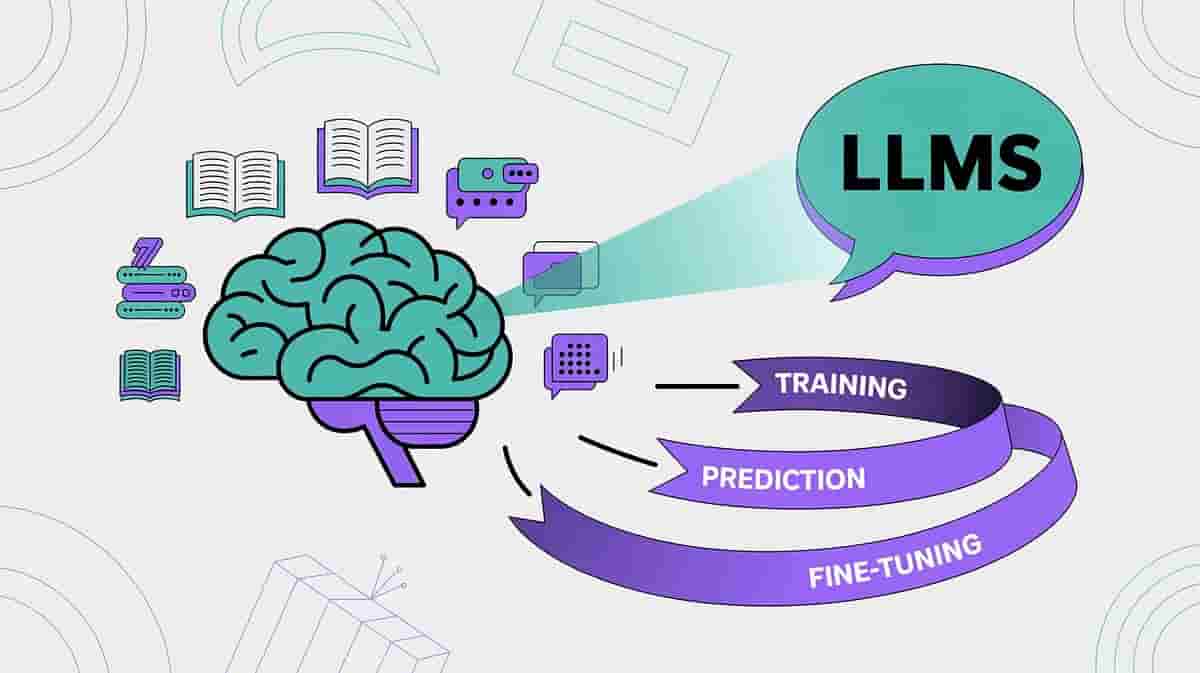
Whether you're a developer, a content strategist, a marketer, or someone simply curious about AI, staying up to date with the latest LLMs can give you a serious edge. Below is a rundown of some of the most groundbreaking and talked-about language models in 2026 that you should definitely know about.
1. GPT-4o by OpenAI
Let’s start with the obvious. GPT-4o, launched by OpenAI in 2024, continues to dominate conversations in 2026 – not just for its power, but for its multimodal capabilities. The "o" stands for omni, meaning this model doesn't just understand text but can seamlessly interpret and respond to audio, vision, and more. GPT-4o can take inputs from images, videos, and voice, and provide outputs in real time across all those formats.
What makes GPT-4o truly revolutionary is its ability to feel conversationally natural –it can express emotion, remember context, and even deliver real-time voice responses that sound more like a friend than a robot. It’s being widely used across industries, from customer service chatbots and AI assistants to creative content tools and enterprise automation.
Why it matters:
It blurs the line between human and machine communication, offering one of the most fluid and responsive AI experiences to date.
2. Claude 3 by Anthropic
Anthropic’s Claude 3 is another major player in the LLM space for 2026. Built with a strong emphasis on alignment and safety, Claude 3 is designed to follow human intent more carefully while minimizing the risk of generating harmful or biased content. It has a deep contextual memory and excels at tasks that require thoughtful, multi-step reasoning.
Named after Claude Shannon, the father of information theory, this model is seen as a "polite powerhouse." Businesses trust it for sensitive use cases such as legal summarization, policy drafting, and mental health chatbots because of its safe-by-design architecture.
Why it matters:
Claude 3 has built-in ethical guardrails and excels in high-trust environments where responsibility and accuracy matter more than flashy creativity.
3. Gemini 1.5 by Google DeepMind
Google made waves with Gemini 1.5 –a model that combines Google's traditional strengths in search and language understanding with cutting-edge AI architecture. Gemini 1.5 features massive memory recall, capable of processing up to 1 million tokens in a single prompt. That’s the equivalent of feeding the model multiple entire books or codebases at once.
In real-world terms, Gemini 1.5 can work as a legal analyst, a financial auditor, or a research assistant that never forgets anything. It’s also tightly integrated with Google Workspace, making it especially useful for people using Gmail, Docs, Sheets, or Meet in their daily workflow.
Why it matters:
With Gemini 1.5, Google is pushing the limits of context length, making it possible to do deep document analysis, software debugging, or academic research without breaking a sweat.
4. Mistral: Open-Source Challenger
Mistral is an open-source LLM that is gaining momentum in 2026, especially among developers and startups. Created by a French AI startup, it offers powerful performance while being lightweight and free to use. Mistral 7B and Mixtral (a mixture of expert models) have become favorites for companies looking to embed AI into their products without relying on big tech infrastructure.
The real draw here is transparency and control. You can host Mistral locally, customize it to your exact use case, and inspect its outputs – something that closed-source models don’t allow.
Why it matters:
Mistral makes powerful language models accessible to smaller players, and it’s pushing forward the open-source LLM movement with impressive speed.
5. LLaMA 3 by Meta
Meta has made a big splash in 2026 with the release of LLaMA 3 (Large Language Model Meta AI). These models are larger, smarter, and more efficient than ever before, and they’re open-source. That means developers and organizations can fine-tune them, repurpose them, and experiment freely.
LLaMA 3 is Meta’s attempt to democratize AI while still delivering high performance. It’s being used in chatbots, AI coding tools, social media analytics, and more. It's also gaining traction in academia for its ability to be studied and tested without black-box constraints.
Why it matters:
LLaMA 3 represents a step toward open, ethical AI development at scale – and it's available to everyone.
6. Command R+ by Cohere
Command R+ stands out for being retrieval-augmented – meaning it can pull in relevant information from external sources or databases to enhance its responses. This makes it ideal for enterprise search, customer support, and knowledge base queries.
Rather than relying solely on pre-trained information, it dynamically “fetches” the best context to answer a question. This dramatically improves accuracy for time-sensitive or domain-specific queries, such as technical troubleshooting or product documentation.
Why it matters:
Command R+ takes the idea of LLMs from guessing answers to finding facts, which is huge for businesses that rely on up-to-date information.
7. Perplexity AI: Answer Engine of the Future
Perplexity AI is more than just a language model; it’s an AI-native search engine powered by LLMs. In 2026, it's becoming a go-to tool for people who want better-than-Google answers with sources and citations. Perplexity uses multiple LLMs in the background and applies retrieval-augmented generation (RAG) to provide high-accuracy, citation-based answers in real time.
It’s being used in education, journalism, and research where sourcing matters just as much as speed. The clean interface and accurate, link-backed responses have made it a favorite for people who need trustworthy information.
Why it matters:
It brings together the power of LLMs and the reliability of search in one user-friendly tool.
8. xAI’s Grok by Elon Musk
Grok, developed by xAI (Elon Musk’s AI venture), is a bold and experimental model known for its personality and unfiltered responses. Integrated deeply with X (formerly Twitter), Grok brings real-time internet knowledge to users in a snappy, meme-filled style.
While it may not be as aligned or safety-guarded as Claude or GPT-4o, Grok is pushing boundaries on what an AI assistant can feel like – fun, sarcastic, and fully plugged into current internet trends.
Why it matters:
Grok shows us an alternative version of AI – one that’s raw, real-time, and a little rebellious.
9. Phi-3 by Microsoft
Phi-3 is Microsoft’s compact language model series that focuses on efficiency. These models are small, fast, and optimized for edge devices like smartphones and laptops. Phi-3 is perfect for people who want AI features baked directly into their apps, games, or productivity tools without requiring internet access or cloud computing.
This makes Phi-3 ideal for privacy-conscious users and companies building AI-enhanced features into hardware like tablets or smartwatches.
Why it matters:
It’s a glimpse into a future where every device –not just the cloud – has powerful AI running under the hood.
10. Reka Flash & Reka Edge
Reka, a newer entrant in the AI race, has developed Flash and Edge models that are blazing fast and surprisingly capable. Flash is designed for quick responses and low-latency environments like customer service or gaming, while Edge is tailored for on-device AI processing.
Despite being underdogs, these models are getting attention for their performance-to-cost ratio and adaptability in lightweight applications.
Why it matters:
Reka proves you don’t need to be a tech giant to build fast, responsive LLMs that people actually want to use.
Final Thoughts
As we move through 2026, it's evident that Large Language Models (LLMs) are not just a trend but a fundamental shift in how we interact with technology. From transforming content creation and automating customer support to improving healthcare analysis and redefining education, LLMs are reshaping the digital landscape with intelligence that keeps getting smarter.
What stands out in the current wave of LLM development is not just the rapid pace of innovation, but the growing diversity in models. Open-source initiatives are gaining momentum, allowing broader communities to experiment, fine-tune, and deploy AI solutions. At the same time, major tech players are focusing on safety, context-awareness, and real-time responsiveness-making these tools more useful and responsible.
For individuals, students, and professionals, now is the perfect time to explore these technologies. Whether you're in marketing, data science, software development, or even HR, the right LLM can make your work faster, more insightful, and more efficient. But with so many models available, it's equally important to stay updated and educated about the differences, use cases, and ethical implications of each.
At Uncodemy, we believe in empowering learners with practical knowledge of AI tools and real-world applications. Whether you're just starting out or looking to upskill, our programs are designed to help you navigate and benefit from advancements like LLMs. For aspiring professionals who want structured guidance and hands-on exposure, enrolling in an Artificial Intelligence course in Gurgaon can provide the right blend of theoretical foundations and real-world project experience. The future of AI isn’t just about understanding technology—it’s about knowing how to use it wisely.
In conclusion, 2026 is set to be a defining year for language models. The emerging LLMs mentioned are more than tools–they’re building blocks for a smarter, more connected future. Now is the time to get involved, stay informed, and grow with the technology that's shaping our world.