The work of the entry-level data analyst is at the centre of making sense of data. Companies streamline operations by relying on analysts to interpret raw data into meaningful data that can be used to make decisions concerning items and customers, operations and even strategy. A typical entry-level analyst will be involved in data collection activities; cleaning, organising, and processing data to eliminate data errors or anomalies; and finally applying statistical or analytical tools to identify patterns. The analytical tools at this level are usually diverse and consist of Excel to perform simpler analysis, SQL to query databases and present the results in Tableau or Power BI to cover the visualization components. Although these tasks can be described as technical, they are also creative in aspect as an analyst needs to know what questions one can ask the data and how to best communicate the findings to managers or members of the organization who may lack a technical background.
The list of industries where entry-level data analysts can find employment is growing at an incredibly fast pace in the Indian context. Certain industries like banking, financial services, and insurance (BFSI) have remained the largest employers because they process huge volumes of consumer and transaction data. Likewise, IT firms and consulting firms will find a need to hire analysts to facilitate client engagements worldwide. E-commerce and start-ups have also become significant organisations to sustain the staff due to the use of data in the refinement of customer experience and supply chain processes by platforms, such as Flipkart, Amazon India, Swiggy, and Zomato. In addition to these areas, manufacturing, health care, logistics, telecom, and even government organizations are developing analytics teams, understanding the role data can play in decision-making. This broad application provides young professionals with the flexibility to find a field that is appealing to them without having to sacrifice the ability to use their analytical skills.
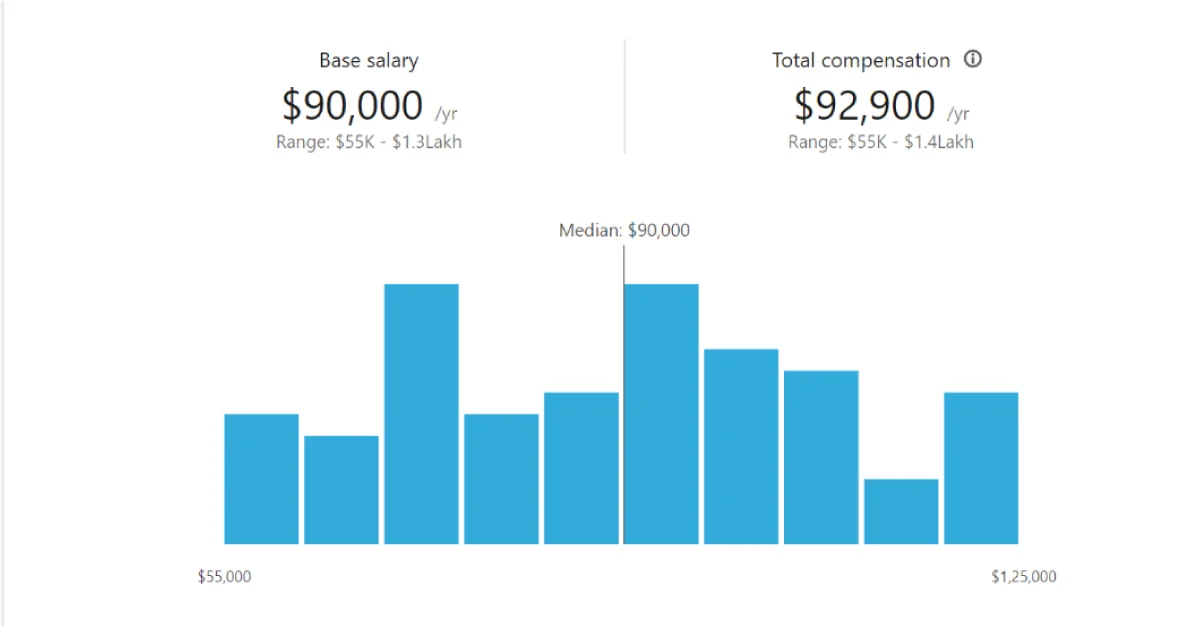
The salary expectations of entry-level data analysts in India are quite good particularly compared to other graduate salaries. Having an average of INR 3.5 lakh to INR 6 lakh per year, freshers can earn depending on the kind of education they have received, their skills and the company they are hired by. Multinational companies and large IT corporations normally have packages on the high end of this scale (usually starting around INR 5 lakh per annum), whereas smaller companies or startups may start as low as INR 3.5 to 4 lakh. But startups also tend to make up for a more rapid learning experience, higher levels of responsibility, and a quicker growth style. In the case of graduates of colleges like the IITs, NITs, or even the best business schools, an entry-level salary can be as high as INR 7-8 lakh per year. Place of work also affects the offer, in that metros such as Bengaluru, Hyderabad, Pune and Gurgaon tend to offer better packages because of the concentration of tech firms and overall living costs.
Another reason that makes the job of a data analyst in India so attractive is the career growth pattern of such professionals. These entry-level jobs are stepping stones to more senior jobs in data analyst, business intelligence analyst, or data scientist. After two to three years, further skill development will see a salary growth between 30 and 50 per cent among professionals. As an example, an analyst with a base salary of INR 4 lakh can soon advance to a post with a base pay of INR 6-8 lakh with some workforce. Advanced specialization in machine learning, predictive analytics, or data engineering may also increase salaries significantly to INR 12 lakh per year or higher in five to seven years of experience. This upward trend is accelerated when compared to most other disciplines, which makes analytics an appealing option to career-minded professionals.
In India, skills are key to getting a good entry-level analyst job. The recruiters also anticipate great prowess in Excel and SQL, as these programs lie at the heart of most data work. Python and R are becoming more widely viewed as tools for dealing with bigger datasets and statistical analysis. Skills in visualizing information with Power BI, Tableau, or Google Data Studio are also desirable; the ability to effectively communicate the results of your analysis is an essential asset on its own. Employers have a high appreciation of problem-solving and communication skills in addition to technical abilities. Analysts also need to be ready to pass their findings to business managers who are often unable to relate to numbers and so the skill to simplify complicated information is vital. Any student who creates portfolios using examples of real-world work, including data analysis tasks, development of dashboards, and so forth, will look better during the interview because they will be able to prove their competence and proactivity.
Entry-level analysts in India face stiff competition in the job market, but the opportunities are there as long as they have the right skills. Graduates with various educational backgrounds are becoming welcome employees, not just those with engineering or computer science backgrounds. Economics, statistics, mathematics and sometimes even social science graduates with good analytical skills and technical training are getting opportunities. Shifts in learning have also occurred because online learning platforms and bootcamps have allowed candidates to retrain in a short period, further eliminating some obstacles to entry. Although competition is very stiff, particularly in high-paying jobs with the best firms, one can enhance their chances of landing a good job by showing relevant experience in the field and constant learning.
Salary and learning opportunities are also affected by the type of organisation one is joining. Big IT service providers like TCS, Infosys, Wipro, recruit data analysts in large numbers and provide them with formal training coupled with well-defined career growth. Global organizations such as Deloitte, KPMG, and Accenture are also hiring analysts to work on client-oriented projects, with salaries a little bit higher and opportunities to operate in foreign economies. Startups, in comparison, can be lower-paying but offer an accelerated learning opportunity in many spheres of analytics, including data cleaning to complex modelling. This practical work experience may be invaluable to one's career development particularly for those individuals who wish to advance into senior or even specialised positions in a short period of time. The difference between working at a corporation or a startup boils down to personal preferences and it lies in giving preference to stability and structured development or to learning faster and experiencing more.
Another vital consideration in compensation in India is the perks and benefits associated with entry-level positions. Various firms provide performance-based bonus pay, health covers, transport allowance, and even stock shares of a startup. The MNCs usually offer the possibility to work abroad or in international teams or migrate to a foreign country after some years in the company, and this can greatly increase income potential. New work patterns are also emerging, with remote and hybrid working options becoming popular so that fresher programs can work together with companies in other cities without having to move. These and other extras are often ignored in such a way that they present a very significant supplement to total compensation and ought to be considered when weighing job offers.
On a larger scale, the entry-level data analysts in India are forecasted to be in increasing demand. As India is developing quickly in the digital realm, with growing acceptance of AI and the government's focus on data-oriented governance, more industries are realising the value of analytics. Other sectors that were not keeping up with technology updates such as agriculture, education, and working with government policy are now investing in data analytics to enhance their results. This growth will imply that there is work available not only with industry giants but also in new directions where their efforts can make a huge difference.
In conclusion, entry-level data analyst jobs represent one of the most promising starting points for a career in analytics. They combine the excitement of working with data, the security of strong salary potential, and the opportunity for rapid career growth. While salaries vary across regions and industries, they remain competitive compared to other entry-level roles, often surpassing average graduate wages.For individuals aiming to strengthen their foundational skills and improve employability, enrolling in a Data Analytics course in Greater Noida can provide structured training in tools such as Excel, SQL, Python, and data visualization platforms. Such professional guidance not only enhances technical competence but also builds practical exposure through real-world projects. Beyond pay, the exposure, learning opportunities, and clear career trajectory make these roles especially valuable for aspiring analytics professionals.