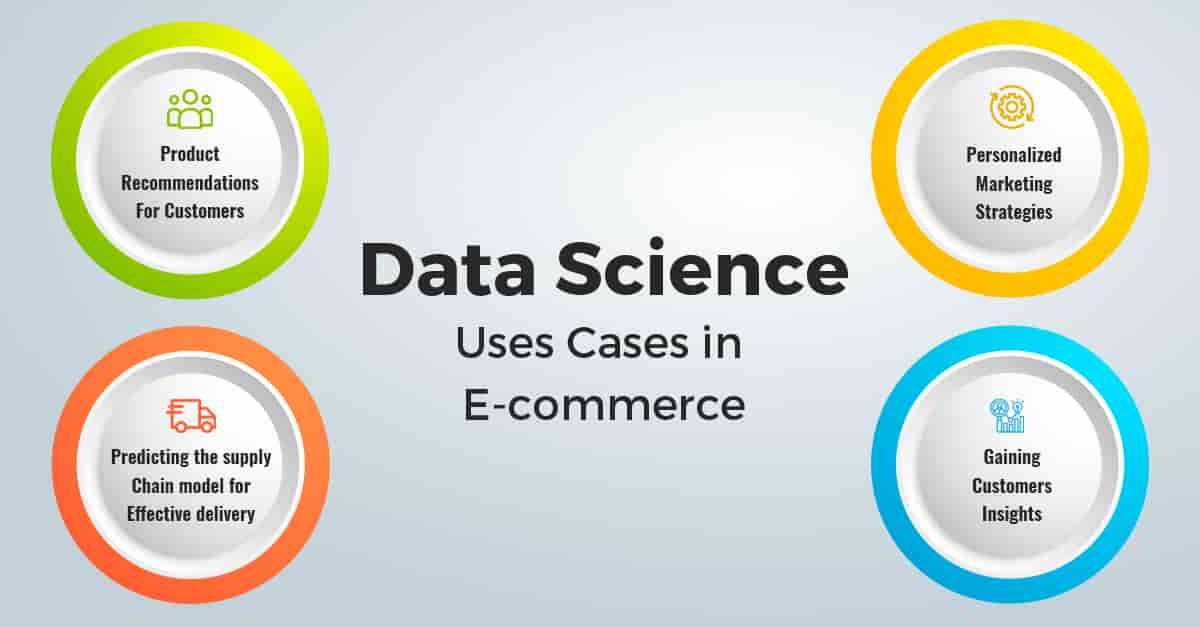
In essence, data science in e-commerce is all about the ability to deep-dive into large sets of customer and business data, seeking out useful patterns. These are browsing histories, clicks, reviews, wish lists, payment behaviour, as well as social media interactions. By use of advanced analytics, artificial intelligence, and machine learning algorithms, the e-commerce platforms convert this raw data into actionable insights. The idea is not to turn over products but the personalise experiences, establishing a sense of trust, and developing long-term loyalty.
Personalised recommendations are one of the most noticeable examples of data science applications in the e-commerce environment. This is what nearly every customer has felt when entering an online store to purchase a product and is offered a variety of other items that appear strangely relevant. These recommendations are not arbitrary. They are created by the recommendation engines based on the previous purchases, navigation, and even the actions of other users similar to them. Through collaborative filtering and content-based algorithms, the platforms can provide each buyer with a unique shopping experience. It not only helps to raise sales but also improves customer satisfaction as the person saves time and choice overload.
Customer segmentation is closely related to recommendations. Data science enables the platforms to classify shoppers into various segments according to their age, location, income, interests, or shopping patterns. Take an example of online boutique specialists; they can differentiate between customers who enjoy inexpensive casual items and those who would frequently purchase high-end, expensive brands. The platform can then personalise marketing campaigns, discount promotions and product releases based on this knowledge to specific segments. This translates into increased conversion rates because the customers believe that the store knows their unique needs.
In addition to personalisation, data science is critical for demand predictions. Inventory management is a delicate balancing act of having the right quantity of inventory in stores when it comes to e-commerce. Excessive stocks cause unnecessary wasteful storage expenses, and insufficient stocks cause loss of sales and dissatisfied customers. Through predictive analytics, the platforms will be able to determine which products are likely to be requested throughout a season or festival or even trend. As an example, data models may predict an increased sale of athletic shoes in the run-up to the New Year, when individuals make fitness resolutions. These insights would allow more effective supply chain management, with warehouses and delivery partners being ready to address demand, and efficiently too.
Dynamic pricing is another effective use of data science in e-commerce. As opposed to conventional retail outlets, where prices are not changed regularly, online platforms can do so instantaneously depending on demand and competition, as well as customer behaviour. The optimal price can be determined by machine learning algorithms by analysing competitor pricing, trends in the market, and even how much time a customer has spent on a certain product. This guarantees profitability and customers remain appealing. One example is the dynamic pricing model used by airlines and travel booking websites, which is now frequently replicated in the e-commerce industry (with electronics, clothing, and even groceries).
Another area transformed through data science is customer service. Natural language processing enables chatbots and virtual assistants to assist customers in answering their questions immediately, replacing the need to have human support teams. These systems train with the help of previous dialogues to increase the accuracy and compassion of answers. Also, sentiment analysis of reviews and social media posts assists platforms in knowing how customers feel about them. In case negative reviews concerning delays on deliveries begin to trend, businesses will have time to solve logistical problems before they snowball into larger issues. Data science will therefore guarantee that customer service becomes proactive instead of reactive.
Security and fraud detection are other important areas where data science makes a significant impact. Online shopping deals with personal data like credit card numbers, addresses, and personal information. Online stores are always at risk of fraudulent activities and online losses. A data science model will be trained to recognise abnormal actions in purchase behaviour, such as numerous large transactions on a new account or activities logged in at a variety of sites. Once they raise a red flag, they can be halted so that their authenticity can be cleared and this saves companies a lot of money besides fraudsters getting to defraud people. This builds a strong trust, which is the basis of any e-commerce relationship.
Data-driven decision-making also serves logistics and delivery, which is usually regarded as the backbone of e-commerce. The field of data science can be used to streamline entire cargo truck routes, making them cheaper to fuel and improving overall speeds. It can even forecast the probability of delivery delays caused by weather or traffic, or by a lack of availability in the supply chain. Companies such as Amazon leverage data to ensure that goods reach one or two-day delivery, which has become an industry norm. The continuous examination of the supply chain information enables businesses to ensure that products are delivered to customers both fast and at the most realistic operational cost.
Data science has also revolutionised marketing strategies in e-commerce. In the past, traditional advertising campaigns used to be based on guesswork and mass targeting. Recent advances enable platforms to deliver highly targeted ads based on online user behaviour. As an example, when a specific shopper has been viewing laptops but has not taken an action and purchased the laptop, they may receive personalised advertisements with offers on laptops on social media. Such retargeting campaigns rely on algorithms that boost the possibility of a conversion by reminding consumers of their abandoned purchases. Data science even allows A/B testing of ad campaigns, where organisations pit two fear approaches against each other to assess which one lands better with customers. This makes sure that marketing budgets are spent wisely and with effect.
Another advanced data science application in e-commerce is customer lifetime value prediction. Not all customers do not add the same value to a business- some customers make regular buys, refer to friends and acquaintances, whereas others make occasional purchases. Algorithms may determine which customers are likely to remain loyal in the long term by analysing purchase history and engagement. Businesses can subsequently develop loyalty systems, personalised offers or early access deals to these premium customers. This plan guarantees sustainable growth through tending the most profitable relationships.
Another aspect of data science that contributes to the shopping experience is search optimisation. The platform should be able to find relevant and accurate results in a few seconds when customers enter queries in the search box. Search algorithms employ natural language processing and machine learning to consider not only the words we type, but the intentions behind them. To illustrate, in the case of a query for something like running shoes, the system is able to draw gender-based, size-based, and popular brand-based results despite those words not being stated specifically. This level of intelligence would decrease frustration and enhance customer satisfaction.
The importance of data science in the analysis of trends cannot be overlooked. E-commerce websites always keep an eye on items that are becoming popular in various locations. These shifts can be identified by social media mentions, search engine trends, and customer reviews. As a new device, fashion trend, or cosmetics item goes viral, fast-acting companies can take advantage of the resulting boom in demand. This agility, fuelled by real-time analytics, enables e-commerce businesses to stay on top and to keep up with competition.
Product development is also affected by data science. Companies can determine the missing needs in their products through the analysis of customer reviews and responses. When a high proportion of clients are complaining about the durability of a particular backpack, the company could use the information to enhance the backpack. Likewise, when demand proves sustainable or consistent with environmentally-friendly packaging, then data-driven analysis can compel companies to innovate in sustainable ways. This interplay makes products grow with the customers to adapt to emerging tastes.
Ingesting data science into the check-out process, which can be the last step in the shopping experience, has been optimised as well. An examination of customer drop-off points can indicate the reasons buyers are dropping their carts. Is it because its shipping costs are expensive, its payment gateway is complicated, or its page loading is slow? Taking this into consideration, e-commerce systems can automate the purchasing process, integrate multiple payment options, or send reminders to make purchases. Such minor improvements may highly increase conversion rates.
The future of e-commerce data science is even more promising. With the increasing power of artificial intelligence, hyper-personalisation will not only restrict work on product recommendations but also affect the general purchasing process, including website design and pricing strategies. Data-driven insights will also lead to the mainstreaming of voice-assisted shopping and augmented reality try-ons. Ethical concerns like safeguarding the privacy of customers and preventing algorithmic bias will continue to be critical concerns. However, the overall trajectory points toward a more intelligent, efficient, and customer-centric e-commerce ecosystem.
In conclusion, data science is the invisible force that powers every aspect of e-commerce platforms. From personalized recommendations and predictive demand to fraud detection and supply chain optimization, its applications are vast and transformative.