How to Become an Ethical Hacker: The 2026 Career Guide
Pradyumn Singh / 2 months ago - 0
- 16 min read
- Become an Ethical Hacker
- Career in Ethical Hacking
- Cybersecurity
- Ethical Hacking
The cybersecurity landscape is becoming increasingly complex with each passing year. As organizations continue to face evolving threats from cybercriminals, there is a growing need for skilled professionals who can help protect sensitive data, systems, and networks. Among these professionals, ethical hackers (also known as white-hat hackers or penetration testers) are on the front lines, identifying vulnerabilities in security systems before malicious hackers can exploit them.
If you’re interested in pursuing a career in ethical hacking in 2026, you’re on the right path. With cyber threats on the rise and a continuously evolving digital world, ethical hackers are more important than ever. This guide will provide a detailed, 2500-word roadmap to help you understand how to become an ethical hacker, from the basics to the skills, certifications, and career progression you’ll need to succeed in this exciting and highly rewarding field.
What Is Ethical Hacking?
Before diving into how to become an ethical hacker, it’s essential to understand what ethical hacking is. In simple terms, ethical hacking involves legally hacking into computer systems, networks, or applications to find vulnerabilities that could be exploited by malicious hackers (black-hat hackers). Unlike cybercriminals, ethical hackers are hired by organizations to help protect their infrastructure from these malicious attacks.
Ethical hackers conduct penetration testing (pen testing), vulnerability assessments, and security audits. By doing so, they help businesses and government agencies identify weaknesses in their security before an attack happens. They use the same techniques as malicious hackers but do so with permission and the goal of improving security rather than exploiting it.
Key Responsibilities of an Ethical Hacker
- Conducting penetration tests: Ethical hackers simulate cyberattacks to evaluate the effectiveness of security defenses.
- Finding and reporting vulnerabilities: Once vulnerabilities are identified, ethical hackers document them and report the findings to their clients or employers.
- Suggesting improvements: Ethical hackers also provide recommendations for strengthening security, which may include patching vulnerabilities, improving security protocols, or implementing new defenses.
- Staying up-to-date with hacking techniques: As cyber threats constantly evolve, ethical hackers need to stay informed about new hacking techniques and vulnerabilities.
Why Should You Pursue a Career in Ethical Hacking in 2026?
There are several reasons why ethical hacking is one of the most exciting and lucrative career paths in cybersecurity. Here are some of the key benefits:
High Demand for Ethical Hackers
Cybersecurity is a growing field, and the demand for skilled ethical hackers is increasing. With cybercrime rates rising across the globe, businesses, government agencies, and even educational institutions are investing more in cybersecurity. Ethical hackers play a critical role in keeping organizations safe from these growing threats.
Lucrative Salaries
Ethical hacking is one of the highest-paying careers in the tech industry. In 2026, the average salary for ethical hackers can range from $70,000 to over $150,000 annually, depending on experience and location. Senior professionals and those with specialized skills may earn even more.
Job Security
As the frequency and sophistication of cyberattacks continue to grow, the demand for ethical hackers will only increase. The World Economic Forum has identified cybercrime as one of the most significant global risks. As a result, the need for cybersecurity professionals, particularly ethical hackers, is projected to remain strong.
Challenging and Engaging Work
Ethical hacking is an intellectually stimulating career that requires constant learning and adapting. Every day brings new challenges and opportunities to solve complex security problems. If you enjoy working on puzzles, finding vulnerabilities, and staying ahead of hackers, this career path will keep you engaged and motivated.
Opportunities for Career Growth
The cybersecurity field offers multiple career paths. Once you gain experience as an ethical hacker, you can advance to roles like security consultant, chief information security officer (CISO), security researcher, or even start your own cybersecurity consulting firm.
Skills Needed to Become an Ethical Hacker
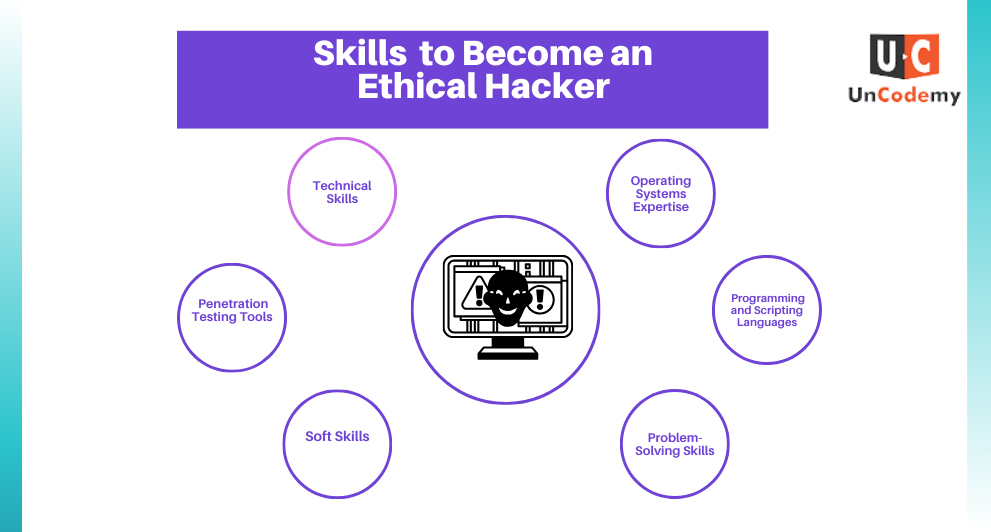
Essential Skills to Excel as an Ethical Hacker
To excel as an ethical hacker, you need a broad skill set that includes technical expertise, problem-solving ability, and communication skills. Here’s a breakdown of the most essential skills you’ll need:
1. Technical Skills
a. Networking Knowledge
Understanding networking fundamentals is crucial for ethical hackers. Knowledge of network protocols (such as TCP/IP, UDP, HTTP, FTP, and DNS) is essential for understanding how data travels across networks and where potential vulnerabilities may exist.
- OSI model (Application, Presentation, Session, Transport, Network, Data Link, and Physical layers)
- Firewalls, VPNs, and Proxy Servers
- Routing and Switching
- Network traffic analysis using tools like Wireshark
b. Operating Systems Expertise
Familiarity with multiple operating systems is essential for ethical hackers. Most businesses use Windows, Linux, and macOS, so you must be comfortable working with all of these platforms.
- Windows: Understanding security features, patch management, and common vulnerabilities in Windows systems is vital, as they are widely used in enterprise environments.
- Linux: Linux is a favorite among ethical hackers due to its open-source nature and the variety of hacking tools available for this operating system.
- macOS: Although less common, macOS is used in certain tech environments and understanding its security architecture can be an advantage.
c. Programming and Scripting Languages
Programming knowledge is essential for automating tasks, identifying vulnerabilities in code, and understanding how applications and systems work. Ethical hackers use programming languages like:
- Python: Widely used for scripting and automating penetration testing tasks.
- C/C++: Helps ethical hackers understand memory management issues such as buffer overflow vulnerabilities.
- JavaScript: Essential for identifying vulnerabilities like cross-site scripting (XSS) in web applications.
- SQL: Important for testing SQL injection vulnerabilities.
d. Cryptography
Cryptography is at the heart of cybersecurity, helping to secure sensitive data. Understanding cryptographic algorithms, encryption techniques, and hashing methods will allow you to find weaknesses in how organizations protect data.
- Encryption: Symmetric vs. asymmetric encryption, public key infrastructure (PKI)
- Hashing: MD5, SHA-1, SHA-256
- Digital signatures: How cryptography is used for authentication and integrity
e. Penetration Testing Tools
Ethical hackers rely on various tools to carry out their work, and mastering these tools is essential. Some common penetration testing tools include:
- Nmap: A network discovery tool used for scanning systems and identifying open ports.
- Metasploit: A framework for finding and exploiting vulnerabilities in systems.
- Wireshark: A packet-sniffing tool used for capturing and analyzing network traffic.
- Burp Suite: A suite of tools for testing web applications for security flaws.
- John the Ripper: A password cracking tool.
2. Analytical and Problem-Solving Skills
Ethical hacking requires critical thinking, creativity, and problem-solving skills. You need to be able to identify and exploit vulnerabilities, often in complex systems or code, and think like an attacker to stay one step ahead of malicious hackers.
3. Attention to Detail
Security vulnerabilities are often subtle and hidden deep within systems. Ethical hackers need to be meticulous and detail-oriented to catch these potential threats before cybercriminals do.
4. Soft Skills
In addition to technical skills, ethical hackers must also have strong soft skills:
- Communication: Ethical hackers need to clearly explain vulnerabilities and their potential risks to clients, colleagues, or managers.
- Teamwork: Many security initiatives are collaborative. Ethical hackers must be able to work as part of a larger security team.
- Report Writing: After completing tests, ethical hackers need to provide clear, concise reports detailing their findings, recommendations, and the potential impact of discovered vulnerabilities.
Steps to Become an Ethical Hacker in 2026
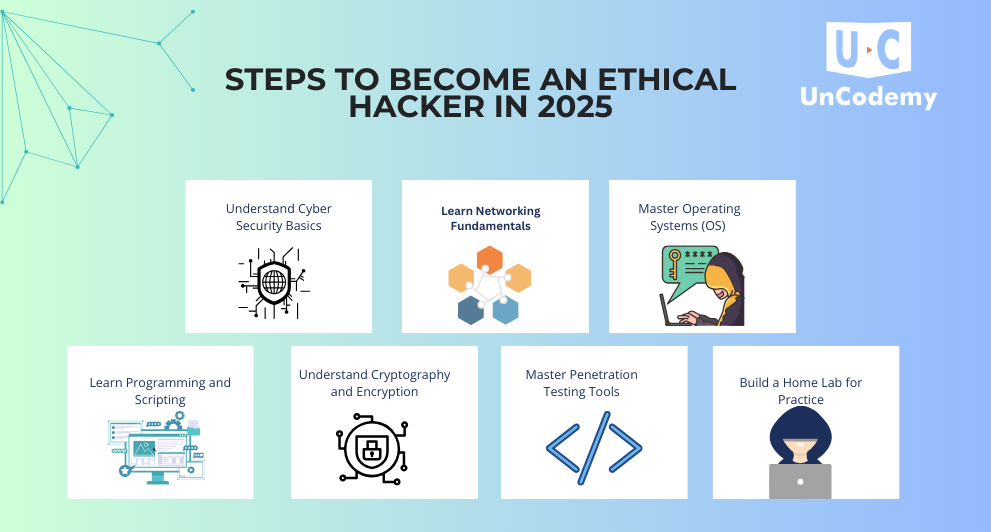
1. Understand Cyber Security Basics
Before diving into ethical hacking, you need to understand the basics of cybersecurity. Having a solid foundation in core concepts will help you better understand how ethical hacking fits into the broader security framework. Some fundamental concepts to focus on include:
- Cybersecurity principles: Confidentiality, integrity, and availability (CIA triad)
- Types of cyberattacks: Phishing, malware, DDoS, ransomware, SQL injection, and more
- Network security: Firewalls, VPNs, intrusion detection/prevention systems (IDS/IPS)
- Authentication and access control: Password policies, multi-factor authentication, and user permissions
- Data protection and encryption: How encryption secures sensitive data
You can get started with Uncodemy’s Ethical Hacking Course in Noida, which would give you a solid foundation in ethical hacking principles, tools, and techniques.
2. Learn Networking Fundamentals
Networking knowledge is essential for ethical hackers because the majority of cybersecurity attacks are network-based. Understanding how data travels across networks, the protocols involved, and how devices communicate is critical to identifying vulnerabilities.
- IP addressing and subnets
- TCP/IP stack
- DNS, DHCP, HTTP/HTTPS, and other networking protocols
- Router and switch configurations
- Common networking devices (e.g., firewalls, proxies, load balancers)
You can start with online courses like CompTIA Network+ or Cisco’s CCNA to build a strong networking foundation.
3. Master Operating Systems (OS)
An ethical hacker must be comfortable using multiple operating systems, as many tools and techniques are platform-dependent. Most ethical hackers work with Windows, Linux, and macOS, and it’s important to be proficient with all of them. Here’s why:
- Windows: Most commonly used OS in businesses. Learn Windows security features, registry settings, and exploit techniques.
- Linux: Preferred by penetration testers for its flexibility, command-line interface, and tools like Kali Linux.
- macOS: Used in specific environments and has unique security structures worth understanding.
4. Learn Programming and Scripting
Programming and scripting skills are crucial for ethical hackers, as they often need to automate tasks, analyze software, or find vulnerabilities in code.
- Python: For scripting and building security tools
- C and C++: For understanding low-level vulnerabilities
- JavaScript: For web app vulnerability testing
- SQL: For injection testing in databases
- Bash scripting: For automating tasks in Linux
5. Understand Cryptography and Encryption
Cryptography is vital for securing data, and ethical hackers need to understand how encryption works and where it might fail.
- Symmetric vs. asymmetric encryption
- Hashing algorithms: MD5, SHA-1, SHA-256
- Public key infrastructure (PKI)
- Digital signatures and certificates
Understanding cryptographic vulnerabilities and attacks like brute force and MITM is essential.
6. Master Penetration Testing Tools
Penetration testing (pen testing) is a core responsibility of ethical hackers. Familiarize yourself with tools to help find and exploit vulnerabilities:
- Nmap
- Wireshark
- Metasploit
- Burp Suite
- John the Ripper
- Kali Linux
7. Build a Home Lab for Practice
A home lab is an excellent way to gain hands-on experience with tools and techniques.
- Virtualization software: VMware or VirtualBox
- Vulnerable machines: Hack The Box, TryHackMe, OWASP WebGoat
- Penetration testing tools: Kali Linux, Metasploit, Burp Suite
8. Obtain Ethical Hacking Certifications
Certifications validate your skills and improve your chances of employment. Top certifications for 2026:
- Certified Ethical Hacker (CEH)
- Offensive Security Certified Professional (OSCP)
- CompTIA Security+
- Certified Penetration Tester (CPT)
- GIAC Web Application Penetration Tester (GWAPT)
9. Participate in Capture the Flag (CTF) Challenges
CTF competitions help improve your skills through hands-on, gamified tasks.
- Hack The Box
- TryHackMe
- Root Me
10. Stay Updated and Network
Cybersecurity evolves rapidly. Stay informed and connected:
- Follow blogs: KrebsOnSecurity, The Hacker News, Dark Reading
- Join communities: Stack Overflow, Reddit’s r/netsec, InfoSec Twitter
- Attend events: DEFCON, Black Hat, RSA Conference
11. Apply for Jobs and Build a Portfolio
Once skilled, start applying for roles like penetration tester or vulnerability assessor. Build a strong portfolio that includes:
- Penetration test reports
- CTF accomplishments
- Personal tools and scripts
By following these steps and committing to continuous learning, you can successfully become an ethical hacker in 2026. Whether you’re just starting or looking to level up, this roadmap will guide you toward a rewarding cybersecurity career.
Conclusion
Becoming an ethical hacker in 2026 is a rewarding and dynamic career path. By acquiring the right skills, gaining hands-on experience, and earning the necessary certifications, you can position yourself as a highly sought-after cybersecurity professional. As the demand for ethical hackers continues to rise, so do the opportunities for growth and advancement in this field.
The road to becoming an ethical hacker may be challenging, but with dedication, persistence, and a love for problem-solving, you can make a significant impact in the fight against cybercrime. Keep learning, stay curious, and embrace the exciting opportunities that lie ahead in the world of ethical hacking.
Frequently Asked Questions (FAQs)
What is ethical hacking?
Ethical hacking involves legally testing systems, applications, and networks for security vulnerabilities. Ethical hackers, or white-hat hackers, identify weaknesses to prevent malicious hackers from exploiting them, improving overall security for organizations.
Do I need a degree to become an ethical hacker?
While a formal degree can help, it isn’t essential. Practical experience, certifications like CEH or OSCP, and hands-on skills are more important. Many ethical hackers come from non-technical backgrounds and transition by gaining knowledge through self-study and relevant certifications.
What certifications are best for aspiring ethical hackers?
Popular certifications include Certified Ethical Hacker (CEH), Offensive Security Certified Professional (OSCP), CompTIA Security+, and Certified Penetration Tester (CPT). These certifications validate your skills and knowledge, making you more attractive to employers in the cybersecurity field.
What skills are necessary to become an ethical hacker?
Key skills include networking knowledge (TCP/IP, DNS, HTTP), programming/scripting abilities (Python, JavaScript, SQL), understanding cryptography, penetration testing tools (Metasploit, Nmap), and familiarity with multiple operating systems (Linux, Windows). Soft skills like problem-solving and communication are also crucial.
How do I get practical experience in ethical hacking?
Gain hands-on experience by setting up a home lab with virtual machines, using platforms like TryHackMe, Hack The Box, and OverTheWire, and participating in Capture The Flag (CTF) challenges. Real-world experience helps refine your skills and learn new techniques.
Is programming essential for ethical hacking?
Yes, programming is crucial for ethical hackers. Learning languages like Python, C, C++, and JavaScript helps automate tasks, create tools, and identify vulnerabilities in software. Knowledge of SQL is also essential for testing database vulnerabilities like SQL injection.
How long does it take to become an ethical hacker?
It depends on your prior experience and learning pace. For beginners, it may take 1–2 years to develop the necessary skills and certifications. For those with a tech background, it could take 6–12 months to build expertise in ethical hacking.
Can someone without a tech background become an ethical hacker?
Absolutely! Many ethical hackers start with a non-technical background in fields like IT support, software development, or network administration. With the right certifications, self-study, and practical experience, transitioning into ethical hacking is entirely possible.
What tools do ethical hackers use for penetration testing?
- Nmap (network scanning)
- Metasploit (exploitation framework)
- Wireshark (packet analysis)
- Burp Suite (web application testing)
- Kali Linux (penetration testing distribution)
How do I stay updated with the latest cybersecurity trends?
- Follow cybersecurity blogs like KrebsOnSecurity and The Hacker News
- Join forums and communities like Reddit’s r/netsec
- Attend conferences like DEFCON and RSA
- Stay current with new tools and techniques through newsletters and courses



















