Understanding Resume Parsing and Its Importance
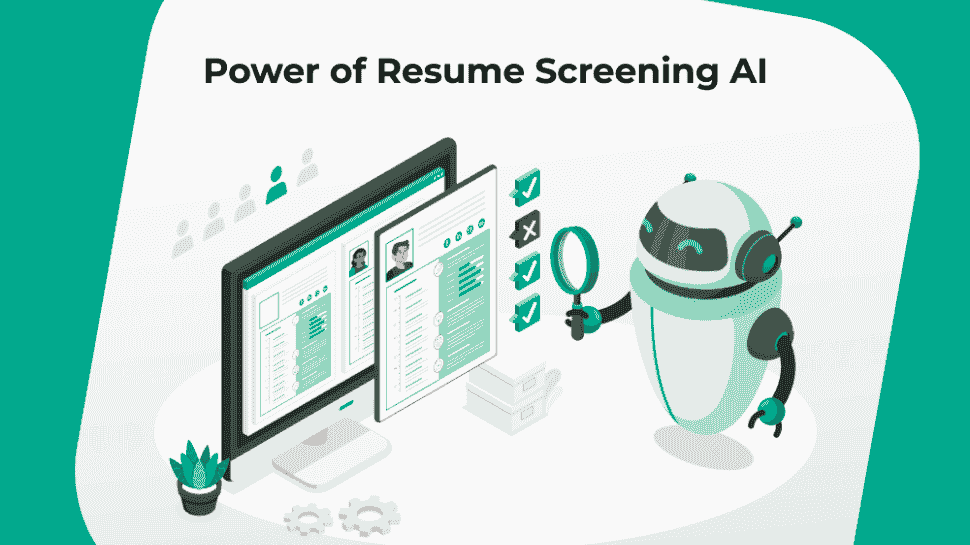
Resume parsing is the process of automatically extracting relevant details from a candidate’s resume–such as name, contact information, education, skills, work experience, and achievements–and structuring them into a digital format. Instead of a recruiter reading through hundreds of resumes manually, AI parsing can filter the data and present it in a clean, standardized format.
This not only saves time but also reduces human bias, as AI focuses on skills and qualifications rather than superficial details. For job seekers, resume parsing ensures that their applications are not overlooked simply because their resume format was different from others.
Core Objectives of the Recruitment App
When designing a recruitment app with AI resume parsing, the main goals should be:
1. Simplify the hiring process – Save recruiters’ time by automating resume analysis.
2. Improve candidate experience – Make applying for jobs smoother and more transparent.
3. Ensure fairness – Minimize bias by evaluating candidates based on skills, not appearance or resume design.
4. Create a reliable talent database – Organize parsed resumes for quick matching with job openings.
Key Features of the Recruitment App
To achieve these objectives, the app should include both recruiter-friendly and candidate-friendly features:
1. AI Resume Parsing
The heart of the app. Using natural language processing (NLP) and machine learning, the AI should scan resumes in different formats (PDF, Word, etc.) and extract structured data.
2. Candidate Profiles
Parsed information can be used to automatically build candidate profiles, saving job seekers the hassle of filling long forms. Recruiters can view profiles in a standardized format.
3. Job Matching Algorithm
AI should match candidate skills and experience with job descriptions, giving recruiters a ranked list of the most relevant applicants.
4. Smart Filters
Recruiters can filter candidates by years of experience, specific skills, education, or certifications.
5. Chatbot Assistance
An AI-powered chatbot can guide candidates during application and answer recruiters’ FAQs, making the app interactive and user-friendly.
6. Real-Time Analytics
Recruiters can track the number of applicants, shortlisted candidates, and time-to-hire metrics. Candidates can track their application status.
7. Bias Reduction Tools
The AI can anonymize resumes by hiding names, photos, or gender to focus purely on skills and qualifications.
8. Notifications & Reminders
Both recruiters and applicants should get updates–such as interview reminders, application confirmations, or job posting alerts.
Design Considerations for the App
Designing a recruitment app with AI resume parsing is not just about technology. It’s also about making the experience intuitive, transparent, and fair. Some important aspects include:
1. User-Friendly Interface
Recruiters should see clean dashboards with easy filters.
Candidates should be able to upload resumes and apply with a few taps.
2. Data Security & Privacy
Since resumes contain sensitive personal information, strong encryption and compliance with laws like GDPR must be ensured.
3. Cross-Platform Accessibility
The app should be available on both mobile and web platforms.
4. Scalability
As the number of users grows, the system should still work smoothly without delays.
Step-by-Step Process to Build the App
Step 1: Define the Scope
Decide the target audience: Is the app for large enterprises, small businesses, or job seekers directly? The features will vary depending on the audience.
Step 2: Choose Technology Stack
Frontend: React Native or Flutter for mobile, React.js for web.
Backend: Node.js, Django, or Ruby on Rails.
Database: PostgreSQL or MongoDB.
AI & NLP: Python libraries such as spaCy, TensorFlow, or Hugging Face models for parsing resumes.
Step 3: Build AI Resume Parser
Train AI models with large datasets of resumes to recognize patterns. For example, the AI should learn that “B.A.”, “Bachelor of Arts,” and “BA” all mean the same educational qualification.
Step 4: Develop Candidate & Recruiter Modules
Candidate module: resume upload, profile creation, job application.
Recruiter module: dashboard, filters, candidate database, job posting.
Step 5: Implement Job Matching Algorithm
Use AI to compare candidate profiles with job descriptions and provide a compatibility score.
Step 6: Test the System
Testing should cover:
Accuracy of parsing across different resume formats.
Fairness in job matching.
User experience on both candidate and recruiter sides.
Step 7: Deploy and Maintain
Launch the app, gather feedback, and update features regularly. AI models should be continuously trained with new data to stay accurate.
Advantages of Using AI Resume Parsing
1. Efficiency – Resumes are processed in seconds, saving recruiters days of manual effort.
2. Fairness – Reduces unconscious human bias.
3. Consistency – All resumes are analyzed using the same criteria.
4. Improved Candidate Experience – Applicants feel confident their resumes are evaluated fairly.
5. Better Hiring Decisions – Recruiters can focus on high-potential candidates rather than scanning irrelevant resumes.
Challenges and How to Overcome Them
1. Data Privacy Concerns
Ensure compliance with privacy laws and provide transparency to candidates.
2. AI Bias
If training data has bias, the AI may replicate it. Developers must carefully curate datasets.
3. Complex Resume Formats
Some resumes use tables, graphics, or unusual layouts. The parser should be trained to handle diverse designs.
4. Resistance to Change
Recruiters used to traditional methods may hesitate to adopt AI. Offering tutorials and demos can help ease the transition.
Role of Platforms like Uncodemy
Educational platforms such as Uncodemy are essential in making these ideas a reality. By offering hands-on training in AI, machine learning, and app development, they prepare students and professionals to design innovative recruitment solutions. Learners can gain real-world skills by working on projects like building AI resume parsers, which are highly relevant in today’s job market.
Through guidance from experts and exposure to industry-standard tools, platforms like Uncodemy bridge the gap between theory and practice. The result is a new generation of developers capable of building apps that solve real challenges.
Final Thoughts
The idea of designing a recruitment app with AI resume parsing is more than just a technical project–it’s a vision of making hiring smarter, faster, and more humane. Traditional hiring processes often overwhelm both recruiters and job seekers. Recruiters spend days or even weeks going through stacks of resumes, while candidates anxiously wait to hear back, unsure if their application was even seen. By integrating AI-powered resume parsing into a recruitment app, we can reduce this gap and make the entire process more efficient, transparent, and fair.
The beauty of AI resume parsing lies in its ability to bring order to chaos. Every candidate presents their resume differently–some focus on design, others on detailed descriptions, while some keep it plain and short. Human recruiters may miss important details while rushing through dozens of applications, but AI can extract relevant data consistently, no matter how the resume looks. This ensures that every candidate gets a fair chance and that recruiters don’t waste time on irrelevant information. It’s not about replacing humans; it’s about giving them tools that amplify their decision-making.
From a recruiter’s perspective, such an app is a huge time saver. Instead of reading hundreds of resumes line by line, they can focus on interviewing the top candidates who actually match the role requirements. For candidates, it brings peace of mind–knowing that their qualifications and skills are being fairly evaluated without getting lost in formatting issues. This shift creates a more balanced, merit-based hiring environment.
Of course, challenges exist. Data privacy must be taken seriously, since resumes contain sensitive personal information. Bias in AI must be carefully addressed by training models on diverse datasets. And, importantly, recruiters and HR teams must be comfortable adopting such a system instead of fearing it will replace them. With proper training and transparent communication, these challenges can be overcome.
What makes this journey exciting is that building such an app isn’t limited to big tech companies anymore. Thanks to learning platforms like Uncodemy, students and professionals can actually gain the skills to create real-world solutions like this. Uncodemy focuses on practical, industry-driven learning, where learners work on hands-on projects that prepare them for challenges they will face in the workplace. For someone interested in AI, app development, or human resource technology, this kind of project aligns closely with AI Resume Parsing and Recruitment Systems, offering the perfect blend of technical knowledge and real-world problem-solving.
In the bigger picture, recruitment apps powered by AI parsing represent the future of hiring. They demonstrate the principles of Ethical and Inclusive Artificial Intelligence, showing how technology can be designed not just for convenience but also for fairness and inclusivity. By reducing human error and unconscious bias, such apps can help organizations build more diverse and capable teams. For candidates, it makes the job-seeking experience less stressful and more empowering.
In the end, technology should always serve people–and this is a prime example of how AI and thoughtful design can bring people closer to the right opportunities. With guidance, skills, and innovation fostered by platforms like Uncodemy, developers have the chance to turn this vision into a reality.