How to Reverse a String: Different Programming Approaches
Whether you are learning your first programming language or prepping for a technical interview, string reversal is one of those classic problems you cannot avoid. It looks simple on the surface, but the variety of ways to solve it makes it an excellent playground for learning programming concepts. This article will take you through different ways to reverse a string using various languages and approaches, from the beginner friendly to the more advanced. By the end, you will not only know how to reverse a string but also understand the logic behind each method.
And if you are serious about mastering programming, check out the Full Stack Development Course by Uncodemy. It gives you hands on training in real world projects and builds a strong foundation in logic and problem solving.
How to Reverse a String: Different Programming Approaches
Mr. Bambam Kumar Yadav3 days ago
15 comments
11 min read
What Does It Mean to Reverse a String?
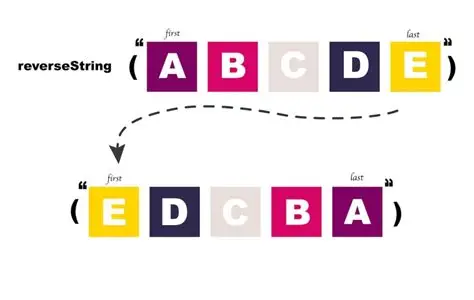
Before we dive into code, let us understand what string reversal means. A string is just a sequence of characters. Reversing it means flipping the order of characters. For example:
Original: hello Reversed: olleh
It sounds simple enough, but depending on the language and constraints (like not using inbuilt functions), the implementation can vary.
Why is String Reversal Important?
You may think, why care about reversing a string when it looks so basic? Well, it teaches you a lot:
Working with character arrays and string manipulation
Understanding memory management in some languages
Practicing loops and recursion
Learning about stack behavior
Handling null values and edge cases
Plus, it is frequently asked in job interviews to test how you think and optimize code.
Method 1: Using a Loop (Iterative Method)
This is the most basic and widely used method, especially if you are just starting with programming. The idea is to loop through the string from the last character to the first and build a new string.
In C
Copy Code
c

CopyEdit

#include <stdio.h>

#include <string.h>

int main() {

    char str[100], rev[100];

    int len, i, j;

    printf("Enter a string: ");

    fgets(str, sizeof(str), stdin);

    str[strcspn(str, "\n")] = '\0'; // Remove newline

    len = strlen(str);

    j = 0;

    for (i = len - 1; i >= 0; i--) {

        rev[j++] = str[i];

    }

    rev[j] = '\0';

    printf("Reversed string: %s\n", rev);

    return 0;

}
Why This Works
We read the original string using fgets()
We calculate its length
We loop from the last character to the first and store it in another array
This is a clear and easy to understand approach, perfect for beginners.
Method 2: Swapping Characters In Place
This approach saves memory by not using another string. Instead, it reverses the string in the same memory space by swapping the characters at the start and end until they meet in the middle.
In Python
Copy Code
python

CopyEdit

def reverse_string(s):

    s = list(s)

    start = 0

    end = len(s) - 1

    while start < end:

        s[start], s[end] = s[end], s[start]

        start += 1

        end -= 1

    return ''.join(s)

print(reverse_string("uncodemy"))
Why This Works
It uses the two pointer technique
Efficient in terms of memory
Perfect when you are allowed to modify the input
This is a common interview method, especially when they say do it without extra space.
Method 3: Using Recursion
If you want to test your understanding of recursive calls, try reversing a string recursively.
In Java
Copy Code
java

CopyEdit

public class ReverseString {

    public static String reverse(String str) {

        if (str == null || str.length() <= 1) {

            return str;

        }

        return reverse(str.substring(1)) + str.charAt(0);

    }

    public static void main(String[] args) {

        String input = "hello";

        System.out.println("Reversed: " + reverse(input));

    }

}
Why Recursion Is Interesting
It breaks the problem into smaller parts
reverse(str.substring(1)) processes the rest of the string
+ str.charAt(0) appends the first character at the end
This is great for understanding the call stack and is often used as a conceptual problem.
Method 4: Using Stack
A stack follows the Last In First Out principle. So when you push each character into a stack and then pop them out, the string is reversed automatically.
If you are allowed to use inbuilt features of the language, this becomes a one liner. But do not use this in interviews unless specifically allowed.
In Python
Copy Code
python

CopyEdit

print("Uncodemy"[::-1])
In JavaScript
Copy Code
javascript

CopyEdit

let str = "Uncodemy";

let rev = str.split("").reverse().join("");

console.log(rev);
These shortcuts are great for scripting but are less preferred in formal tests because they do not show your understanding of logic.
Method 6: Using StringBuilder or StringBuffer
In Java, StringBuilder and StringBuffer come with a built-in method called reverse() which makes reversal quick and thread safe.
Java Code
Copy Code
java

CopyEdit

public class ReverseUsingBuilder {

    public static void main(String[] args) {

        StringBuilder sb = new StringBuilder("Uncodemy");

        System.out.println("Reversed: " + sb.reverse().toString());

    }

}
Great for Java developers and especially useful when handling mutable strings in applications.
Comparing All Approaches
Method
Memory Efficient
Easy to Understand
Best for Interviews
Iterative (Loop)
Moderate
Yes
Yes
Two Pointer Swap
Yes
Yes
Yes
Recursion
No (Stack usage)
Conceptual
Sometimes
Stack
No
Clear logic
Sometimes
Built-in Functions
Yes
Easiest
No (unless allowed)
StringBuilder / Buffer
Yes
Convenient
No
Each method serves its own purpose depending on the situation. In competitive coding, you are expected to know all and choose wisely.
Real Life Uses of String Reversal
Reversing a string is not just about practice. It is used in:
Palindrome checking (a string that reads the same forward and backward)
URL shortening algorithms
Encoding and decoding systems
Compiler design for parsing strings
Data security and reversing encrypted keys
So next time you reverse a string, know that you are touching a real world application logic.
What to Remember While Reversing a String
Do not forget to handle null and empty strings
Always consider whether you are allowed to use extra space
Watch out for off by one errors in loops
Be careful when working with multibyte characters (like emojis or special languages)
Choose recursion only when performance is not a concern
These little details can make your code clean, efficient, and interview ready.
Learning String Reversal with Uncodemy
If this topic excites you and you want to go deeper into programming, Uncodemy offers one of the best Full Stack Development Courses. It covers:
C and C++ programming basics
Data Structures and Algorithms
Real world projects
Mock interviews and resume building
Their course is well structured, beginner friendly, and completely focused on building a career in tech. You get mentorship, live doubt sessions, and assignments that include problems like reversing a string, palindrome checks, and more.
Final Thoughts
String reversal is a foundational topic that opens doors to understanding how programming works. It teaches you how to handle memory, loops, conditions, recursion, and data structures. The beauty of this problem lies in its simplicity and the variety of solutions it offers.
From using a basic loop to advanced recursion or built-in methods, you now have several tools under your belt. The next time you see a problem involving strings, you will know exactly how to approach it.
And remember, learning never stops. So go ahead, experiment with these methods, test their performance, and keep pushing your skills forward.
For a structured learning path and real world training, do not forget to check out Uncodemy’s Full Stack Development Course. It could be the stepping stone to your programming career.