Picture yourself at a crossroads while driving. You see a sign that says, "Turn left for the city center, turn right for the airport." Without even thinking, you make a decision based on your destination. This everyday decision-making process is exactly what if-else in C programming does for your code – it helps your program make intelligent choices based on different conditions.
Every programmer, whether they're just starting out or have years of experience, relies heavily on conditional statements. The if else in C is like the brain of your program, enabling it to think, evaluate situations, and respond accordingly. It's the difference between a static program that does the same thing every time and a dynamic, intelligent application that adapts to different scenarios.
What is If Else in C Programming?
The if else in C is a fundamental control structure that allows your program to execute different blocks of code based on whether certain conditions are true or false. Think of it as your program's decision-making mechanism – it evaluates a condition and then chooses which path to follow.
At its core, if else in C works by testing a condition. If that condition evaluates to true (any non-zero value), the program executes one set of instructions. If the condition is false (zero), it can execute a different set of instructions or skip the block entirely.
The beauty of if else in C lies in its simplicity and power. With just a few lines of code, you can create programs that respond intelligently to user input, handle different scenarios, and make complex decisions automatically.
Basic Syntax of If Else in C
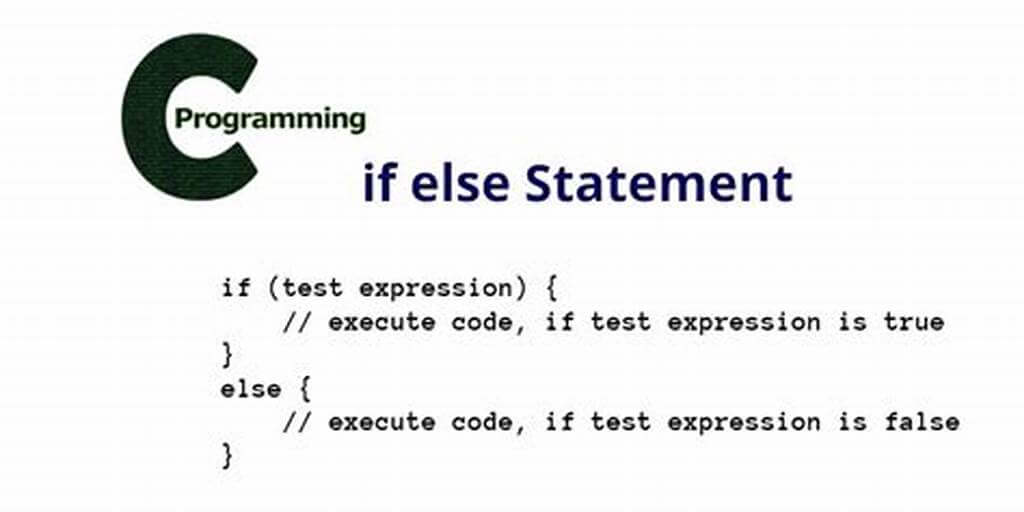
Understanding the syntax of if else in C is crucial for writing effective conditional statements. Here's the fundamental structure:
                    if (condition) {
                        // Code to execute if condition is true
                    }
                    else {
                        // Code to execute if condition is false
                    }
The condition inside the parentheses can be any expression that evaluates to true or false. This could be a simple comparison, a variable check, or even a complex logical expression combining multiple conditions.
Let's look at a practical example of if else in C:
                        #include

                        int main() {
                            int age = 18;

                            if (age >= 18) {
                                printf("You are eligible to vote!\n");
                            }
                            else {
                                printf("You are not old enough to vote yet.\n");
                            }

                            return 0;
                        }
This simple example demonstrates how if else in C can make decisions based on data. The program checks if the age is 18 or older and responds accordingly.
Different Forms of If Else in C
The versatility of if else in C becomes apparent when you realize there are several ways to structure your conditional statements, each serving different purposes.
Simple If Statement Sometimes you only need to execute code when a condition is true, without needing an alternative action:
                        if (temperature > 30) {
                        printf("It's hot outside! Stay hydrated.\n");
                    }
If-Else Statement This is the classic two-way decision structure we've already seen:
                        if (score >= 60) {
                        printf("You passed the exam!\n");
                    }
                    else {
                        printf("You need to study more.\n");
                    }
If-Else If Ladder. When you need to check multiple conditions in sequence, the if else in C can be extended:
Nested If-Else.You can place if else statements inside other if else statements for complex decision-making:
                    if (weather == "sunny") {
                    if (temperature > 25) {
                        printf("Perfect beach weather!\n");
                    }
                    else {
                        printf("Sunny but a bit cool.\n");
                    }
                }
                else {
                    printf("Maybe stay indoors today.\n");
                }
Practical Examples of If Else in C
Let's explore some real-world applications of if else in C that you might encounter in everyday programming:
Example 1: Simple Calculator
                    #include

                    int main() {
                        char operator;
                        float num1, num2, result;

                        printf("Enter an operator (+, -, *, /): ");
                        scanf("%c", &operator);

                        printf("Enter two numbers: ");
                        scanf("%f %f", &num1, &num2);

                        if (operator == '+') {
                            result = num1 + num2;
                            printf("%.2f + %.2f = %.2f\n", num1, num2, result);
                        }
                        else if (operator == '-') {
                            result = num1 - num2;
                            printf("%.2f - %.2f = %.2f\n", num1, num2, result);
                        }
                        else if (operator == '*') {
                            result = num1 * num2;
                            printf("%.2f * %.2f = %.2f\n", num1, num2, result);
                        }
                        else if (operator == '/') {
                            if (num2 != 0) {
                                result = num1 / num2;
                                printf("%.2f / %.2f = %.2f\n", num1, num2, result);
                            }
                            else {
                                printf("Error: Division by zero!\n");
                            }
                        }
                        else {
                            printf("Invalid operator!\n");
                        }

                        return 0;
                    }
Example 2: Number Classification
                #include

                int main() {
                    int number;

                    printf("Enter a number: ");
                    scanf("%d", &number);

                    if (number > 0) {
                        printf("%d is a positive number.\n", number);

                        if (number % 2 == 0) {
                            printf("It's also an even number.\n");
                        }
                        else {
                            printf("It's also an odd number.\n");
                        }
                    }
                    else if (number < 0) {
                        printf("%d is a negative number.\n", number);
                    }
                    else {
                        printf("The number is zero.\n");
                    }

                    return 0;
                }
These examples showcase how if else in C can handle different types of decision-making scenarios, from simple binary choices to complex multi-level conditions.
Common Operators Used with If Else in C
Understanding the operators that work with if else in C is essential for writing effective conditional statements:
Comparison Operators:
== (equal to)
!= (not equal to)
< (less than)
> (greater than)
<= (less than or equal to)< li>
>= (greater than or equal to)
Logical Operators:
&& (logical AND)
|| (logical OR)
! (logical NOT)
Here's how you can combine these operators with if else in C:
                    int age = 25;
                    char gender = 'M';
                    int income = 50000;

                    if (age >= 21 && age <= 65 && income> 30000) {
                        printf("Eligible for premium insurance.\n");
                    }
                    else if (age >= 18 || income > 20000) {
                        printf("Eligible for basic insurance.\n");
                    }
                    else {
                        printf("Not eligible for insurance.\n");
                    }
Enhancing Your Skills with Uncodemy C Programming Course in Noida
If you're serious about mastering concepts like if else in C and other fundamental programming constructs, structured learning can make a significant difference. The Uncodemy’s C programming course in Noida offers comprehensive training that covers not just the syntax of if else in C, but also best practices, real-world applications, and advanced techniques.
The hands-on approach of Uncodemy’s C programming course in Noida ensures you don't just memorize syntax but truly understand how to apply if else in C effectively in various programming scenarios. With experienced instructors and practical projects, you'll gain confidence in writing clean, efficient conditional statements.
Best Practices for If Else in C
Writing effective if else in C statements goes beyond just getting the syntax right. Here are some best practices that will make your code more readable and maintainable:
Keep Conditions Simple and Clear
                    // Good
                    if (age >= 18) {
                        // code here
                    }

                    // Less readable
                    if (!(age < 18)) {
                        // code here
                    }
Use Meaningful Variable Names
                    // Good
                    if (isUserLoggedIn) {
                        // code here
                    }

                    // Less clear
                    if (flag) {
                        // code here
                    }
Avoid Deep NestingInstead of deeply nested if else in C statements, consider using early returns or restructuring your logic:
                    // Instead of deep nesting
                    if (user != NULL) {
                        if (user->isActive) {
                            if (user->hasPermission) {
                                // do something
                            }
                        }
                    }

                    // Better approach
                    if (user == NULL) return;
                    if (!user->isActive) return;
                    if (!user->hasPermission) return;

                    // do something
Common Mistakes with If Else in C
Even experienced programmers sometimes make errors when working with if else in C. Here are some common pitfalls to avoid:
Using Assignment Instead of Comparison
                    // Wrong - this assigns 5 to x instead of comparing
                    if (x = 5) {
                        printf("This will always execute!\n");
                    }

                    // Correct
                    if (x == 5) {
                        printf("This executes only when x equals 5\n");
                    }
Forgetting Braces While C allows single statements without braces, it's safer to always use them:
                            // Risky
                    if (condition)
                        statement1;
                        statement2; // This always executes!

                    // Better
                    if (condition) {
                        statement1;
                        statement2;
                    }
Misunderstanding Logical Operators
                    // Wrong way to check if x is between 1 and 10
                    if (1 < x < 10) {
                        // This doesn't work as expected
                    }

                    // Correct way
                    if (x > 1 && x < 10) {
                        // This works correctly
                    }
Advanced Techniques with If Else in C
Once you're comfortable with basic if else in C, you can explore more advanced techniques:
Ternary Operator The ternary operator provides a concise way to write simple if else statements:
                    // Traditional if else
                    if (a > b) {
                        max = a;
                    }
                    else {
                        max = b;
                    }

                    // Using ternary operator
                    max = (a > b) ? a : b;
Switch Statement Alternative For multiple conditions checking the same variable, consider using switch statements instead of long if else chains:
                    // Instead of long if-else chain for menu selection
                    switch (choice) {
                        case 1:
                            printf("Option 1 selected\n");
                            break;
                        case 2:
                            printf("Option 2 selected\n");
                            break;
                        default:
                            printf("Invalid option\n");
                    }
Real-World Applications of If Else in C
The if else in C construct is fundamental to virtually every type of software application:
User Input Validation
                    if (password_length >= 8 && has_special_char && has_number) {
                        printf("Password is strong\n");
                    }
                    else {
                        printf("Password needs improvement\n");
                    }
Error Handling
                    FILE *file = fopen("data.txt", "r");
                    if (file == NULL) {
                        printf("Error: Could not open file\n");
                        return -1;
                    }
                    else {
                        // Process file
                        fclose(file);
                    }
Game Logic
                    if (player_score > high_score) {
                        printf("New high score!\n");
                        high_score = player_score;
                    }
                    else if (player_score > 0) {
                        printf("Good game!\n");
                    }
                    else {
                        printf("Better luck next time!\n");
                    }
Performance Considerations
While if else in C is generally efficient, there are some performance considerations worth noting:
Order MattersPlace the most likely conditions first in if-else chains:
                    // If most users are adults, check this first
                    if (age >= 18) {
                        // Most common case
                    }
                    else if (age >= 13) {
                        // Less common
                    }
                    else {
                        // Least common
                    }
Avoid Redundant Checks
                    // Inefficient
                    if (x > 0 && x < 100) {
                        if (x > 50) {
                            // We already know x > 0
                        }
                    }

                    // More efficient
                    if (x > 0 && x < 100) {
                        if (x > 50) {
                            // Direct check
                        }
                    }
Building Your C Programming Foundation
Mastering if else in C is just the beginning of your C programming journey. These conditional statements form the backbone of program logic and decision-making. The more comfortable you become with if else in C, the more complex and interesting programs you'll be able to create.
Consider practicing with various scenarios: user input validation, menu systems, mathematical calculations, and simple games. Each project will deepen your understanding of how if else in C can be applied in different contexts.
For those seeking structured learning and hands-on experience, programs like the Uncodemy C programming course in Noida provide the perfect environment to practice and master these concepts under expert guidance. The combination of theoretical knowledge and practical application ensures you develop both understanding and confidence in using if else in C effectively.
Remember, every expert programmer started with these fundamental concepts. Take your time to understand them thoroughly, practice regularly, and don't hesitate to experiment with different approaches. Your investment in mastering if else in C will pay dividends throughout your programming career.
Frequently Asked Questions
Q: What's the difference between = and == in if else in C?
A: The single = is assignment (stores a value), while == is comparison (checks if values are equal). Always use == in if conditions to compare values.
Q: Can I use if else in C without curly braces?
A: Yes, but only for single statements. However, it's best practice to always use braces to avoid errors and improve code readability.
Q: How many conditions can I chain with if else in C?
A: There's no specific limit, but for readability and performance, consider using switch statements when checking multiple values of the same variable.
Q: What happens if I don't include an else clause?
A: The program simply continues to the next statement after the if block. The else clause is optional and only needed when you want alternative actions.
Q: How does Uncodemy C programming course in Noida help with conditional statements?
A: Uncodemy C programming course in Noida provides hands-on practice with if else in C through practical projects, expert guidance, and real-world applications to build strong programming fundamentals.
Q: Can I nest if else statements indefinitely?
A: Technically yes, but deep nesting makes code hard to read and maintain. Consider restructuring with functions or early returns for better code quality.
Q: What's the most common mistake beginners make with if else in C?
A: Using assignment (=) instead of comparison (==) in conditions is the most frequent error, followed by forgetting braces around multi-statement blocks.
Q: When should I use the ternary operator instead of if else in C?
A: Use the ternary operator for simple, single-value assignments. For complex logic or multiple statements, traditional if else in C is clearer and more maintainable.