If Statement in C Programming with Syntax and Examples
In the world of programming, making decisions is essential. Whether a program is determining if a user’s password is correct, checking if a number is positive or negative, or deciding whether to show an error message, decision-making logic is at the core of software behavior. This is where the if statement in C comes into play. For students enrolled in a C Programming Course in Noida, understanding the if statement is a foundational skill that opens the door to writing more dynamic, interactive, and intelligent programs.
If Statement in C Programming with Syntax and Examples
Mr. Bambam Yadav / 1 days
0
4 min read
This article offers a comprehensive and student-friendly exploration of the if statement in C, covering its syntax, types, examples, common mistakes, best practices, and real-world applications. Readers will walk away with a solid grasp of how this simple but powerful control structure works, along with practical insights into how to use it effectively.
Introduction to Conditional Statements
In programming, conditional statementsare used to perform different actions based on different conditions. Rather than always executing every line of code, programs often need to check whether certain conditions are true or false before deciding which actions to take.
The if statement in Cis the most basic and widely used conditional statement. It allows a program to execute a block of code only if a specified condition evaluates to true. If the condition is false, the code inside the if block is skipped.
Students in a C Programming Course in Noidaquickly learn that mastering the if statement is not just about understanding its syntax, but about developing logical thinking and problem-solving abilities that are transferable to all areas of programming.
Syntax of the If Statement in C
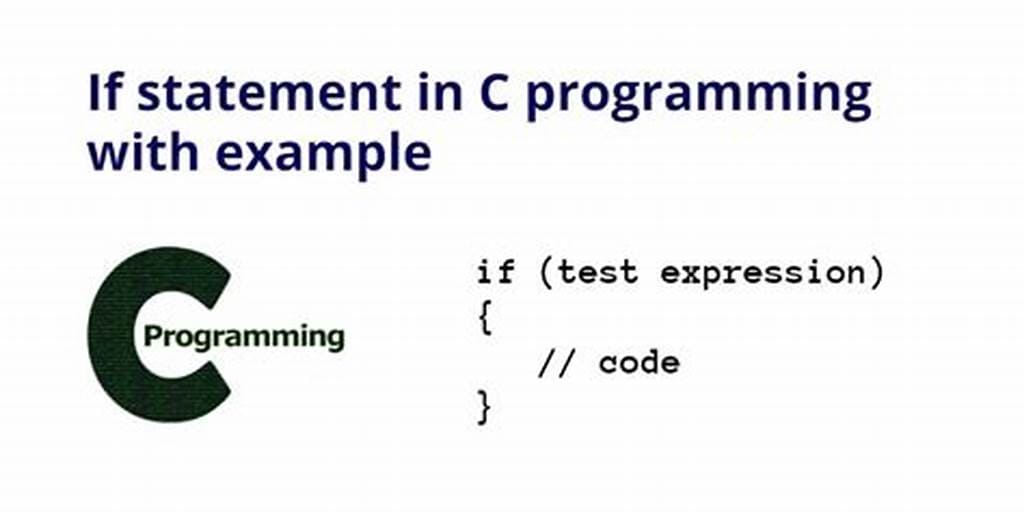
The basic syntax of the if statement in C is straightforward:
                                if (condition) {
                                    // code to execute if condition is true
                                }
Here, the condition is an expression that evaluates to either true (non-zero) or false (zero). If the condition is true, the code inside the curly braces {} is executed. If the condition is false, the program skips the block and moves to the next statement after the if block.
For example:
                                int num = 10;
                                if (num > 0) {
                                    printf("The number is positive.\n");
                                }
In this example, because num is greater than 0, the message "The number is positive." will be printed to the screen.
Types of If Statements in C
While the basic if statement is simple, C offers several variations that increase its flexibility and allow programmers to handle more complex decision-making:
Simple if statement
if-else statement
Nested if statement
if-else-if ladder
Each type builds on the basic if structure, allowing more sophisticated logic to be implemented.
Simple If Statement
The simple if statement executes a block of code only when the condition is true. If the condition is false, nothing happens.
Example:
                                int age = 20;
                                if (age >= 18) {
                                    printf("You are eligible to vote.\n");
                                }
Here, the message will be printed only if age is 18 or above.
If-Else Statement
The if-else statementadds an alternative path. If the condition is true, one block of code runs; if it is false, a different block runs.
Example:
                                int age = 16;
                                if (age >= 18) {
                                    printf("You are eligible to vote.\n");
                                } else {
                                    printf("You are not eligible to vote.\n");
                                }
This ensures that the program always outputs something, no matter the condition.
Nested If Statement
The nested if statement is used when one if statement is placed inside another. This is helpful when multiple related conditions need to be checked.
Example:
                                int num = 5;
                                if (num > 0) {
                                    if (num % 2 == 0) {
                                        printf("Positive even number.\n");
                                    } else {
                                        printf("Positive odd number.\n");
                                    }
                                }
In this case, the program first checks if the number is positive, then checks whether it is even or odd.
If-Else-If Ladder
The if-else-if ladderhandles multiple conditions by chaining several if-else blocks together.
Example:
                                int marks = 85;
                                if (marks >= 90) {
                                    printf("Grade A\n");
                                } else if (marks >= 75) {
                                    printf("Grade B\n");
                                } else if (marks >= 60) {
                                    printf("Grade C\n");
                                } else {
                                    printf("Grade D\n");
                                }
This structure is commonly used when multiple mutually exclusive options need to be tested.
Practical Examples for Students
To make the concepts clearer, let’s walk through a few practical examples that students might encounter in a C Programming Course in Noida.
Example 1: Checking Positive or Negative Number
                                #include
                                int main() {
                                    int num;
                                    printf("Enter a number: ");
                                    scanf("%d", &num);
                                    if (num > 0) {
                                        printf("Positive number.\n");
                                    } else if (num < 0) {
                                        printf("Negative number.\n");
                                    } else {
                                        printf("Zero.\n");
                                    }
                                    return 0;
                                }
This program checks if a number is positive, negative, or zero.
Example 2: Finding the Largest of Two Numbers
                                #include
                                int main() {
                                    int a = 5, b = 10;
                                    if (a > b) {
                                        printf("a is larger.\n");
                                    } else {
                                        printf("b is larger.\n");
                                    }
                                    return 0;
                                }
This example uses an if-else statement to compare two numbers.
Example 3: Checking Leap Year
                                #include
                                int main() {
                                    int year = 2024;
                                    if (year % 4 == 0) {
                                        if (year % 100 == 0) {
                                            if (year % 400 == 0) {
                                                printf("%d is a leap year.\n", year);
                                            } else {
                                                printf("%d is not a leap year.\n", year);
                                            }
                                        } else {
                                            printf("%d is a leap year.\n", year);
                                        }
                                    } else {
                                        printf("%d is not a leap year.\n", year);
                                    }
                                    return 0;
                                }
This nested if statement checks if a year is a leap year.
Common Mistakes with If Statements
Students learning the if statement in C often run into common mistakes:
Using = instead of ==: The = operator assigns a value, while == compares two values.
Forgetting braces {}:Omitting braces can lead to confusing bugs, especially when adding multiple lines inside the if block.
Improper condition expressions: Not understanding that C treats non-zero as true can result in unexpected behavior.
Unreachable else conditions:Writing conditions that overlap or conflict can make else blocks unreachable.
Instructors in a C Programming Course in Noidaguide students to carefully test and debug their code to catch these errors early.
Best Practices for Writing If Statements
To write clean and maintainable if statements, students should follow these best practices:
Keep conditions simple: Break complex conditions into smaller, clearer parts.
Use indentation consistently: Proper indentation improves readability.
Test all cases:Ensure that both true and false branches are tested with input data.
By adopting these practices, students can avoid common pitfalls and develop habits that will benefit them throughout their programming careers.
Real-World Applications
Understanding the if statement in Cis not just a theoretical exercise; it has countless real-world applications:
User authentication: Checking if usernames and passwords are correct.
Sensor monitoring:Determining if a device’s temperature is within safe limits.
File handling:Verifying whether a file exists before opening it.
Game development:Deciding win/lose conditions in a game.
Finance software:Applying different interest rates based on account balance.
For students in a C Programming Course in Noida, working on small projects or assignments that incorporate if statements helps solidify these concepts and prepares them for larger, real-world applications.
Learning Tips for Students
Learning how to use if statements effectively is a journey that takes practice. Here are some student-friendly tips:
Write lots of small programs: Simple programs focusing solely on if statements help build confidence.
Experiment with edge cases:Try unexpected inputs to see how the program behaves.
Debug step by step:Use print statements to check variable values and understand the program flow.
Pair programming:Collaborate with classmates to explore different problem-solving strategies.
Ask for feedback: Share code with instructors or peers to identify improvements.
Students enrolled in a C Programming Course in Noidabenefit from hands-on labs, mentorship, and structured exercises designed to deepen their understanding of these essential topics.
Conclusion
The if statement in Cis one of the most powerful and essential tools in a programmer’s toolkit. It enables programs to make decisions, respond to input, and behave dynamically based on varying conditions. For students taking a C Programming Course in Noida, mastering if statements is a vital step toward becoming confident and capable programmers.
This article has walked through the syntax, types, examples, common mistakes, best practices, and real-world relevance of the if statement in C, all presented in a student-friendly and professional tone. By practicing regularly, experimenting with different conditions, and learning from mistakes, students can build a strong foundation that will serve them well not just in C programming, but across any programming language or technical field they pursue.