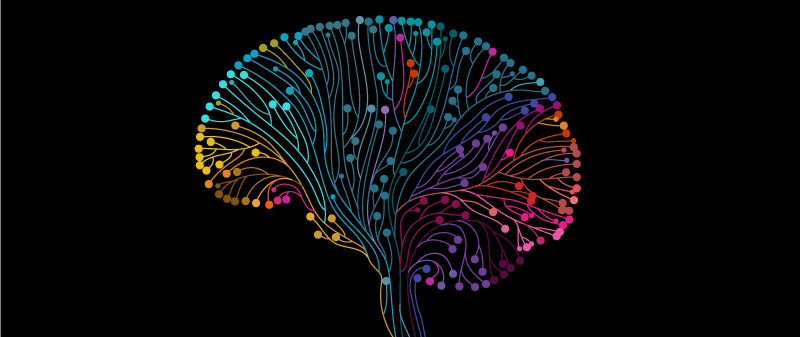
For those just starting out, the world of neural networks might feel a bit daunting at first,
but don’t worry! With the right approach, these concepts can be broken down into manageable
pieces. This blog aims to provide a friendly introduction to neural networks, covering their
essential components, pros and cons, applications, and so much more. By the time you finish
reading, you’ll have a solid grasp of how neural networks work and why they’re so important
in our data-driven age.
If you’re eager to dive deeper into this exciting field, consider checking out
the Data Science Course in Noida, which offers a thorough learning journey that includes Neural Networks, Deep Learning, and AI.
What Are Neural Networks?
Neural Networks are a fascinating branch of machine learning that takes inspiration from the
way our brains are structured and operate. Just like the neurons in our brains communicate
to process information, artificial neural networks are made up of interconnected nodes (or
neurons) organized in layers that learn and identify patterns from data.
These networks are especially effective at tackling non-linear problems where traditional
algorithms might hit a wall. They can automatically extract features from raw data, making
them ideal for complex tasks such as speech recognition, natural language processing, and
computer vision.
Why Should Beginners Dive into Neural Networks?
- Core AI Concept – Neural networks serve as
the backbone of cutting-edge AI technologies like ChatGPT, Siri, and self-driving cars.
- High Demand – Sectors such as finance,
healthcare, e-commerce, and entertainment are on the lookout for experts in neural networks.
- Problem-Solving Power – They tackle
real-world issues like fraud detection, disease diagnosis, and personalized recommendations.
- Career Growth – Gaining knowledge in
neural networks opens doors to careers in AI, machine learning engineering, and data
science.
Basic Structure of a Neural Network
To help beginners grasp neural networks, let’s break down their structure:
1. Input Layer
This layer takes in the raw data. For instance, in an image classification task, the input
layer might receive pixel values.
2. Hidden Layers
These layers carry out computations by applying weights, biases, and activation functions.
The term “hidden” refers to the fact that they aren’t directly visible.
3. Output Layer
This layer generates the final result. For example, in a spam detection system, the output
could be “Spam” or “Not Spam.”
Key Components of Neural Networks
- Neurons – The fundamental units of neural
networks that process information.
- Weights and Biases – Weights indicate the
significance of an input, while biases fine-tune the output.
- Activation Functions – Determine whether a
neuron should be activated. Common examples include ReLU, Sigmoid, and Tanh.
- Loss Function – Assesses the gap between
predicted and actual outputs.
- Backpropagation – The technique used to
adjust weights and biases to reduce errors.
Types of Neural Networks
- Feedforward Neural Networks (FNNs) – Data
flows in a single direction from input to output.
- Convolutional Neural Networks (CNNs) –
Perfect for analyzing images and videos.
- Recurrent Neural Networks (RNNs) – Best
suited for sequential data like speech and text.
- Radial Basis Function Networks (RBFNs) –
Employed for classification tasks.
- Generative Adversarial Networks (GANs) –
Designed for generating new data.
Applications of Neural Networks
Neural networks have found their way into a variety of industries:
- Healthcare – They help in spotting diseases through scans and predicting how patients will
fare.
- Finance – Used for detecting fraud, assessing creditworthiness, and forecasting stock
market trends.
- Retail & E-commerce – They provide personalized recommendations and help forecast
demand.
- Transportation – Essential for powering self-driving cars and predicting traffic patterns.
- Entertainment – They suggest content on platforms like Netflix, YouTube, and Spotify.
Advantages of Neural Networks
- Learning Non-Linear Patterns – They excel at understanding complex relationships within
data.
- Adaptability – Neural networks get better as they process more data.
- Automating Feature Engineering – They can identify key features directly from raw data.
- Broad Applications – Useful in everything from natural language processing to image
recognition.
- Scalability – They can efficiently handle large volumes of data.
Disadvantages of Neural Networks
- Black Box Nature – It can be tough to understand why they make
certain predictions.
- High Computational Cost – They need powerful hardware, like
GPUs, to function effectively.
- Large Data Requirement – They perform best when trained on
extensive datasets.
- Overfitting Risk – If not trained properly, they might memorize
data instead of generalizing.
- Energy Consumption – Training deep neural networks can use a lot
of energy.
Steps to Build a Simple Neural Network (For Beginners)
- Collect Data – Start by gathering and
preprocessing your dataset.
- Define Architecture – Decide on the number
of layers and neurons you’ll need.
- Initialize Weights and Biases – Kick
things off with random values.
- Choose Activation and Loss Functions –
Pick these based on the type of problem you’re tackling.
- Train the Model – Use backpropagation and
optimization techniques.
- Evaluate Performance – Check metrics like
accuracy, precision, or recall.
- Fine-Tune – Tweak hyperparameters to
enhance performance.
Challenges Beginners Face While Learning Neural Networks
- Mathematical Complexity – Concepts like
calculus, linear algebra, and probability can feel pretty overwhelming.
- Choosing the Right Model – Newcomers often
find it tough to decide between CNNs, RNNs, and others.
- Data Preprocessing – Neural networks
really depend on the quality of the data they’re fed.
- Hardware Limitations – Training these
models demands some serious computing power.
- Interpreting Results – Figuring out how
everything works under the hood can be quite a challenge.
Best Practices for Beginners
- Start Small – Tackle simple projects
first, like digit recognition with MNIST.
- Use Frameworks – Take advantage of tools
like TensorFlow, Keras, or PyTorch.
- Regularization Techniques – Implement
dropout or early stopping to avoid overfitting.
- Experiment – Don’t hesitate to try out
different architectures and parameters.
- Learn Continuously – Keep up with
research papers, blogs, and courses.
Future of Neural Networks
The future of neural networks looks incredibly bright, with exciting developments in:
- Explainable AI (XAI) – Making these
networks easier to understand.
- Neuromorphic Computing – Creating chips
that work like the human brain.
- Energy-Efficient Models – Cutting down on
computational costs and energy use.
- Integration with Quantum Computing –
Paving the way for faster and more efficient training.
- Healthcare Revolution – Tailoring
treatments through the power of neural networks.
Additional Point: Ethical Concerns in Neural Networks
While neural networks open up a world of possibilities, they also bring along some ethical
dilemmas that newcomers should keep in mind:
- Bias in Data – If the data used for
training is skewed, the network might yield biased outcomes. A case in point is facial
recognition systems, which can sometimes exhibit racial bias.
- Privacy Concerns – When neural networks
are trained on personal information, it can lead to serious privacy issues.
- Job Displacement – The rise of AI-driven
automation can result in the loss of certain job positions.
It’s crucial for aspiring professionals to not only grasp how to create neural networks but
also to apply them in a responsible manner.
Conclusion
Neural networks form the foundation of contemporary AI and hold the potential to transform
various industries. For beginners, getting a handle on their structure, uses, benefits, and
limitations is the first step toward becoming proficient in data science and AI. Although
the learning curve may be challenging, with dedication and the right support, anyone can
excel in this captivating field.
If you’re ready to move forward, check out Data Science Course in Noida
, where you’ll receive hands-on training in neural networks, deep
learning, and advanced AI techniques. This experience will not only deepen your theoretical
understanding but also arm you with practical skills to thrive in your career.
FAQs on Neural Networks for Beginners
Q1. What’s the easiest neural network for a newbie to dive into?
If you're just starting out, a Feedforward Neural Network is your best bet. It's
straightforward and pretty easy to wrap your head around.
Q2. Do I need to be a math whiz to learn about neural networks?
Not really! While having a grasp of basic linear algebra, probability, and calculus can be
beneficial, you can definitely start creating models with tools like TensorFlow or Keras
without being a math expert.
Q3. Which programming language should I use for neural networks?
Python is the go-to language for many, thanks to its extensive collection of machine learning
libraries like TensorFlow, PyTorch, and Keras.
Q4. Are neural networks just for large corporations?
Not at all! Small businesses are also leveraging neural networks for things like marketing,
customer support, and automating processes.
Q5. How long will it take me to learn neural networks?
With regular practice and dedication, beginners can start building simple neural networks in
about 3 to 6 months.
Q6. What’s the difference between machine learning and neural networks?
Machine learning is a broad field, while neural networks are a specific type of ML that mimic
how the human brain processes information.
Q7. Are neural networks and deep learning the same thing?
Not quite! Deep learning is a subset of machine learning that employs multi-layered neural
networks to tackle more complex challenges.
Q8. Can I land a job if I learn about neural networks?
Definitely! There are plenty of roles out there, like AI Engineer, Data Scientist, ML
Engineer, and Research Scientist, that are on the lookout for folks with neural network
skills.