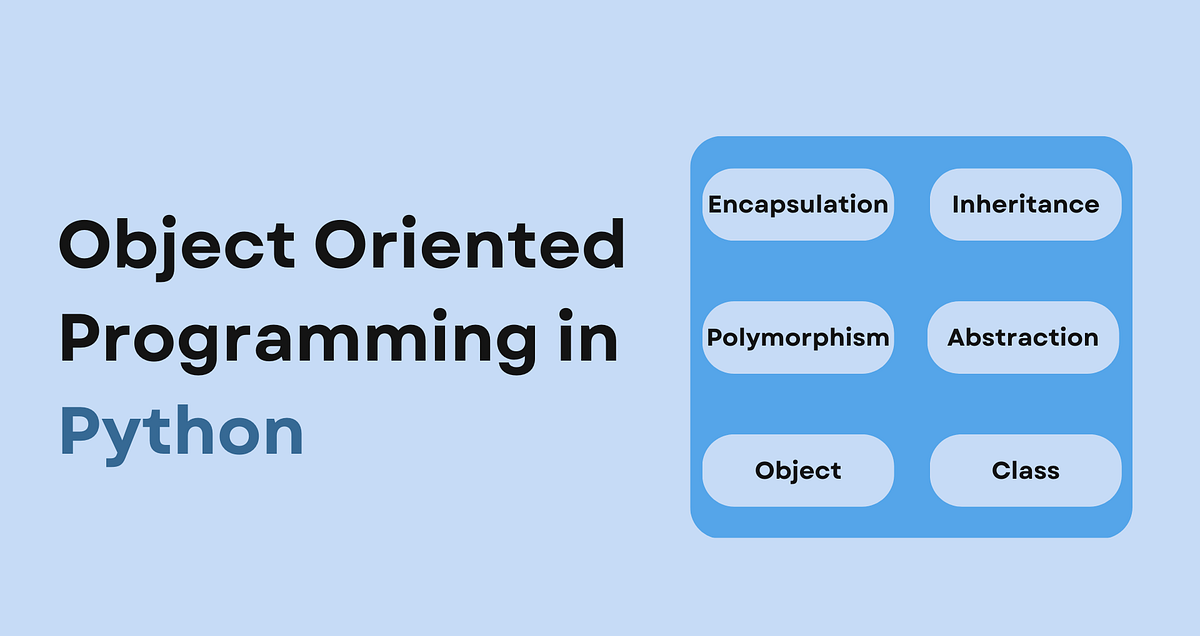
Python OOP helps code to be arranged by grouping information, together with procedures, into objects, encouraging modularity, reusability, and scale. This blog will familiarize you with object-oriented Python 2026, will cover its main concepts, explain why Python is an impressive choice to learn OOP, and outline the best learning routes to learn and become proficient at it, such as Uncodemy courses that will train you to acquire the skills.
What is Python Object-Oriented Programming?
Object-oriented (OOP) programming is a programming paradigm that relies on the idea of programming as a set of objects that contains data (also known as attributes) and procedures (also known as behaviors or functions). These are objects that represent the real world entities and enable designers to design a code that is closer to how human beings naturally see and communicate with the world.
In Python, OOP revolves around using classes as blueprints in order to instantiate objects (instances). The class also defines the attributes (data) and methods (behaviors) of any given object. This company assists in the handling of complexity in large codebases by designing programs into modular pieces that are based on real-world connections and reasonableness.
The four main concepts of the OOP in python are:
Encapsulation: The data and functions are combined into units and direct access limited to certain components of the object in order to safeguard both correctness and integrity.
Inheritance: The opportunity to make new classes extend properties and behavior of other classes, so as to encourage reuse of the code.
Abstraction: concealing the difficult implementation details and only exposing the required functionality.
Polymorphism: Enables objects of varying classes to be used as though they were an instance of a related parent class, with behaviours of their methods differing according to what the exact class of object is.
These can guide developers to create maintainable, scalable and reusable programs.
Knowing Why to learn Python as Object-Oriented Programming in 2026.
In 2026, Python will be a shining language thanks to its beautiful syntax, dynamic typing, large standard library, and rich ecosystem. It even supports any type of programming such as OOP, functional as well as procedural programming paradigm, which makes it a very versatile language.
The OOP features of Python enable the programmers to:
- Demonstrate real-life situations naturally and straightforwardly.
- Coupled with the support of inheritance, it is easy to create and extend classes.
- Use polymorphism in order to write flexible and modular code .
- Use strong capabilities and a friendly, diverse community.
Besides, Python is highly used in all sectors like web development, AI, machine learning, data science, automation, and game development. It is simple and easy to understand which makes it suitable both to a novice and to a professional.
Object-Oriented Python Main Ideas
Knowledge of basic principles of OOP is one of the most essential things to dominate Python programming in 2026.
Instances and Classes
Templates of creating objects are described as classes. They define the properties and the procedures that objects will possess but they do not have any data in them. The instantiation is a creation of specific objects (instances) based on a certain class with their own set of attributes values.
An example would be a Dog can have physical attributes such as name and age as well as methods such as bark(). The instantiation of this class using dog1 and dog2 will have instances of individual dogs with different names and ages.
Encapsulation
Encapsulation refers to the integration of features and functions in a given class in such a manner that the inner state of an object is hidden and is only to be altered by a regulated set of strategies. It practices data and code integrity and separation of code.
Encapsulation in python is usually represented by adding underscore characters before each attribute name to imply some form of privacy and accessor functions (getters and setters) are added to manipulate this attribute.
Inheritance
Inheritance enables one to develop other child classes that expand and reuse parent classes. It helps in reuse of codes and hierarchical organization.
An example is that a Dog class can be inherited by a GoldenRetriever class and new behavior or redefined inherited behavior can be included. This makes python code more efficient and less cumbersome.
Polymorphism
Polymorphism permits the use of different behaviors in different classes because of the object they are operating on and one interface can also support multiple underlying forms (data types).
The polymorphism in Python is possible due to method overriding in the subtypes or, through the Duck typing where the object is not defined by type, but the identity of the methods provided.
Abstraction
Abstraction considers that instead of allowing users all the complexities associated with implementation, it only allows them to use the interfaces they need. It reduces the complications in handling codes and assists in the processing of big applications.
Abstract base classes and conventions can be used by Python developers to achieve the abstraction, and assets a stark distinction between the interface and implementation.
Python Object-oriented: Features and Good Practices
By 2026 Python developer will adhere to the following best practices to make use of OOP:
- Choose a meaningful name of classes and methods, this makes the code more readable.
- Make classes goal-oriented and accountable to only one purpose.
- Be careful with inheritance to prevent enormously deep inheritance trees.
- Use encapsulation to hide data and to sustain invariants.
- Use polymorphism to make the code simpler and fewer conditionals.
- Implement dunder functions such as __init__ and __str__, to control the life cycle and as a representation of objects.
- Embrace unit testing to have objects behave as they should.
- Check PEP 8 to maintain and follow the same style and readability.
The Python Object-Oriented Programming with Uncodemy
The structured courses will guide those who are interested in further learning and working with OOP Python in 2026.
Uncodemy has Python courses conducted by experts and they have a thorough focus on object-oriented programs. Their classes include:
- Elements of Python such as data, control structures and functions.
- An in-depth study of OOP concepts of classes, objects, inheritance, polymorphism, and encapsulation.
- The applications and practice with Python frameworks and examples in the real world.
- Combination of web development, sophisticated python functionalities of data manipulation.
These career paths can allow the novice to obtain good and strong foot holds, and assist the intermediate programmer in perfecting their skills and applying them professionally. The curriculum at Uncodemy is constantly updated to reflect the emerging industry trends and best practices and keep its learners abreast with the changes happening in Python.
The question arises why students should enroll in object-oriented Python classes provided at Uncodemy.
Experienced Instruction: The professional instructors have experienced and practical knowledge of programming.
Project-Based Learning: Engaging projects aid in reinforcement of the ideas and creation of applicable abilities.
Flexibility: You can take self paced online programs.
Community Support: Community pool of peers and mentors will raise your learning power and also problem solving.
Career Oriented: The course materials are based on the industry needs, and students get ready to work in software development, data science and automation areas.
Conclusion
Object-oriented programming remains a paradigm in the making and continues dominating in Python development in 2026. Its tenant ideas of encapsulation, inheritance, abstraction, and polymorphism enable programmers to create code that is modular, reusable as well as scalable. Python is easy to learn and use, yet has OOP features and a diverse ecosystem, and this makes it a great language to start with in the specific field as well as a professional one.
Completing a well-designed course base, like the Uncodemy Python courses, will give one a pathway and advanced skills to learn the object-oriented programming language in python and also excel in a competitive job market.
You will not only increase your knowledge in the programming field, but when you learn OOPs concepts, you will also be ready to launch vast and sustainable systems in response to the current demands of modern software codes.