Your Gateway to some of the interesting Real-World Data Science
Mastery with ease
-
Mr. Irshad Khan / 3
days ago
- 15
- 11 min read
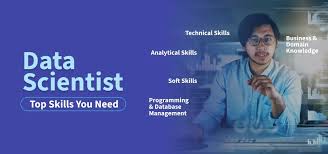
Whether you're a beginner looking to switch careers or a tech professional upskilling yourself for better opportunities, Uncodemy's Data Science course in Delhi offers a powerful blend of practical learning and hands-on experience. From live projects to industry-relevant tools used by global companies, you don't just learn data science—you gain the practical skills needed to apply it in real-world scenarios.
Let’s take a big step and deep dive into the world of practical skills you can actually learn through Delhi-based data science training, and discover how these skills can help you become more confident, skilled, and job-ready for today’s growing data science opportunities.
1. Python-based Programming: The true Language of Data Science that speaks
One of the most trending and also first skills that has ever been taught in this
particular DS class is the Python programming language, and for a good set of reasons. It’s
quite simple in different ways, versatile, and also quite widely used in the sector of data
analytics and machine learning areas that you are looking for.
What You Can Learn Practically:
Writing scripts and also at the same time, looking for functions in the Python
programming language.
Data cleaning using the pandas library
Mathematical computations using numpy functions and library
Visualizations with matplotlib, seaborn, and a set of tools
Automating all set of data tasks and preprocessing pipelines that will help you a
lot
Real-Life based Application:
You’re given a set of assignments like all types ranging from analyzing
e-commerce customer behavior or even looking for cleaning large Excel-based files with a missing
set of values. Many different classes simulate all business problems and then ask you to solve
them with code in ease, just like you would in a real job-based scenario.
2. Data Cleaning and Preprocessing areas
Anyone who is just working on some sort of data knows how clean the data is.
That’s why all of Delhi's top DS classes are just now ones that focus heavily on the data
wrangling kind of different process, which is just the process of often preparing the raw data
for analysis purposes.
What You Learn Practically now :
Handling all categories of missing data, removing duplicates, and also checking
some inconsistent formats
Feature scaling is important (standardization/normalization)
Encoding categorical variables helps a lot.
Outlier detection and treatment are crucial.
Time series formatting is essential.
Real-Life Application:
You’ll clean a particular HR data, sales-based logs, or sensor-based readings
before even building models. Often, you’re the one who has been handed a messy dataset and then
looks to be told, “Make it usable.” You will then learn through trial and error the best way to
master it with ease.
3. Exploratory set of Data Analysis (EDA)
EDA is like detective work, and it often tells you who you are looking for
patterns, some set of relationships, or even some categorical problems in data, just before you
apply this to all models.
What You Learn Practically is seen over here :
Creating graphs like histograms, scatter plots, and heatmaps helps you a lot.
Calculating statistical summaries is necessary.
Drawing insights from visual data stories helps in linking and engagingly telling
stories.
Using libraries in different sections, like seaborn and pandas_profiling
Real-Life Application:
You’ll then just be asked to generate the best insights from a specific company’s
sales data or even from customer churn data. For instance, “Why are all these users leaving our
trending platform?” You’ll now just explore age groups, product ratings, or even some sort of
login frequencies to find clues that help them.
4. SQL and available Databases
No matter how much you see this Python programming language,e you know, SQL is a
must-have skill for all data scientists.
What You Learn Practically from all of this:
Writing different types of SELECT queries to extract specific data that is
available
Joining tables, filtering rows, and aggregating values is a common practice.
Working with databases like MySQL or PostgreSQL is necessary nowadays.
Using Python to run SQL queries on large databases helps a lot.
Real-Life Application available:
You'll be given a particular set of relational databases from a particular bank,
store, or even some sort of hospital, and later then asked to generate another set of KPIs like
average transaction-based value or other kind of monthly customer count available. You may also
then write some sort of SQL queries inside other Jupyter Notebooks for real projects that are
present.
5. Statistics and Probability for Data Science is available here
No guessing games are seen with these data science courses, exclusively built on
statistical kinds of principles. Delhi DS is one of the classes that often explains some kind of
theory through real examples and case studies presented.
What You Learn Practically now :
Hypothesis testing is observed.
Confidence intervals and sampling techniques help many to get accurate results.
Probability distributions are in demand.
Correlation and causation are seen many times.
Real-Life Application:
You might have been one who worked on some sort of projects, such as this A/B
testing for marketing-based campaigns, or even for determining the high effectiveness of a new
product launch that you see. You’ll use some of the trending real company data to decide if
changes are statistically significant in that scenario.
6. Machine Learning (ML)
This is one of the core concepts in most data science work. And in the city of
Delhi, you don’t just have to learn ML models that help you build them from scratch as much as
possible.
What You Learn Practically from here:
Building supervised and unsupervised models in scikit-learn helps in analysis.
Splitting data into train/test sets and tuning hyperparameters is necessary.
Using techniques like linear regression, decision trees, SVM, KNN, and clustering
helps many to outshine
Creating some of the pipelines and later evaluating models using some of the best
possible accuracy, F1-score, precision, and recall as much as possible.
Real-Life Applications are as follows :
You’ll build models like those mentioned below:
Predicting different house prices from past sales data with ease
Classifying customers as churn/non-churn helps to analyze them in the right
position.
Clustering users based on app usage behavior is necessary.
Every student usually completes at least 3-4 capstone-based ML projects to
demonstrate skills to be corporate-ready.
7. Deep Learning and Neural Networks (Advanced) trending
Some of the Delhi DS courses also offer deep learning as an advanced module
course, and this is particularly for those students aiming for AI and computer vision roles to a
great extent.
What You Learn Practically from here:
Building neural networks using TensorFlow or PyTorch helps to go in the right
direction.
Image classification using CNNs is necessary.
Text generation and NLP models with RNNs and LSTMs are much more important.
Using transfer learning for tasks like face recognition or object detection is
necessary.
Real-Life Applications are as follows :
You’ll build projects like mentioned below :
Emotion detection from facial images helps many to succeed in the right way.
Sentiment analysis from tweets helps many.
Language translation bots are important.
These sets of courses are especially popular among all different types of
engineers and some of the research students who are just aiming for AI-based startups or even
some roles at MNCs like Google or Amazon.
8. Power BI and other Tableau (Data Visualization)
For a professional data scientist, it’s simply not just about crunching numbers
at all; you have to communicate different sets of insights clearly, which is where you can be
different on BI tools.
What You Learn Practically over here :
Creating interactive dashboards and also some of the engaging charts to a great
extent.
Using filters, slicers, and drill-downs helps a lot more times.
Publishing reports and also some of the ways, while you are
connectingdatabasesdatabase,s to a large extent.
Telling all the other visual data stories that can help business users act upon
is crucial.
Real-Life Applications are as follows :
You might be asked later to create:
A sales performance-based dashboard for a retail chain is quite important.
A customer segmentation dashboard for a particular telecom company is often
necessary.
A market share report using Excel and Power BI integration gives a clear idea.
Many institutes often provide some of the trending dashboard-building assignments
that mimic other types of company reporting systems.



















