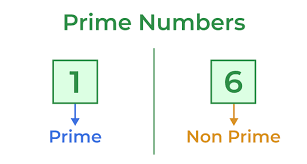
Prime Number Cost-Effective Methods in C
In C, a number can be tested to see whether it is prime in a number of ways with varying efficiency and complexity. These may be straightforward iterative algorithms like the Sieve of Eratosthenes, or more efficient algorithms based on the properties of the numbers, or using more sophisticated algorithms such as the Sieve of Eratosthenes.
Straightforward Iterational Solution
The simplest one would be to loop through 2 to the number itself to see whether it is divisible. A number is not prime in case there is a divisor that does not have a remainder when dividing the input number. The time complexity of this method is usually on the order of O (n) where the n is the input number.
N/ 2 minimization Optimization
The technique is an improvement over the basic solution: it does not have to search up all the way to the input number because of the divisor (n/2). The reason is that the divisor of no number can be bigger than its half (not including the given number). There are, as an example, the factors of 12; namely 1, 2, 3, 4, 6, and 12; and when these factors, (after 12div2, that is 6) are exhausted, nothing remains but the number 12 itself. This optimization yields the time complexity of O(n) too yet it operates about twice as fast as it does when one checks up to n-1. This method may be done using both for and while-loops, and has a temp variable or a flag to signal primality.
Square Root of n optimization (√n)
More effectively only divisors up to the square root of the input number ( sqrt(n) ) should be checked. Being an optimization problem, this is founded on the mathematical concept that given a number n that has a factor which is bigger than its square root, it also has a factor which is smaller than its square root. As an example, the number 64 can be kept with a factor 2 (the smallest one that is bigger than 1), whereas 64 is not larger than 2, which is the square root of 64 (or 8). This significantly cuts down the iterations; hence, the time complexity is O( 12 ). The space complexity of this method is O(1), because variables require only a constant number of auxiliary spaces.
Avoiding Even Iterations Optimization
Coupled up upon the square root technique, this optimization goes further to optimize by avoiding even figures in the tell of divisibility. All the even numbers except 2 are nonprime since 2 is the only even prime number. Thus, once it has been ensured that the result is divisible by 2, the loop is free to add 2 to itself (only even numbers need be checked) beginning at index 3 all the way to n-th root. Those also have an O(O(sqrt(n)) time complexity of the standard square root method can be almost 2 times faster.
Using Functions
Now the logic of the primality check can be put in a function and the program can be considered modular and reusable. A method may accept an integer and produce a boolean (or integer treated as a boolean) telling whether the number is prime or not. This saves the time complexity of O(n) in such an approach as the n/2 iteration, though it enhances the organization of the code.
Using Recursion
A similar technique, i.e. recursion, can be used to test integer primality where a function recursively calls itself to test divisibility. Although such a procedure makes the problem simpler by dividing it into smaller checks, it tends to be less efficient than the previous ones as calling function stacks add overhead, particularly in the case of bigger numbers. A recursive solution usually takes O(n) time complexity, and O(n) space complexity on the stack.
Eratosthenes sieve
The Sieve of Eratosthenes is very useful in computation of all the prime numbers up to a predetermined number. This algorithm does it by generating a boolean array all the numbers are candidates to be prime. It shall then recurrently label multiples of each prime number (beginning with 2) as not prime. The primes are the unmarked numbers. This approach is quite effective in identifying numerous primes in a range.
Uncodemy Courses
The courses available at Uncodemy cover many areas of IT training with C programming and data structures and algorithms being among them. Although the information given does not spell out any courses based on the topic of prime number algorithms, the Uncodemy course on "C With Data Structure And Algorithms" and another course titled," Object Oriented DataStructure & Algorithms Training" would most likely teach some of the preliminary details that are involved in carrying out the prime number checks.
as you will see, it is possible to promote applicable Uncodemy courses, including those dedicated to C programming, data structures, and algorithms, since the mission of Uncodemy to give people the necessary IT training and the knowledge of the industry may be related well to the delivery of educational materials, like C programming courses.