Whether you’re preparing for a college coding test, technical interview, or simply trying to
improve your logic-building skills, this article will provide a clear and practical guide.
We’ll also recommend a great programming course from Uncodemy to help you deepen your coding
knowledge further.
What is a Prime Number?
A prime number is a natural number greater than 1 that has no positive
divisors other than 1 and itself. In simpler terms, a number is prime if it is only
divisible by 1 and the number itself.
For example:
- 2 is a prime number because it is divisible only by 1 and 2.
- 5 is prime because its only divisors are 1 and 5.
- 6 is not prime because it has three divisors: 1, 2, and
3.
Note that 1 is not considered a prime number. This is a common
misconception, but it is excluded from the definition by convention.
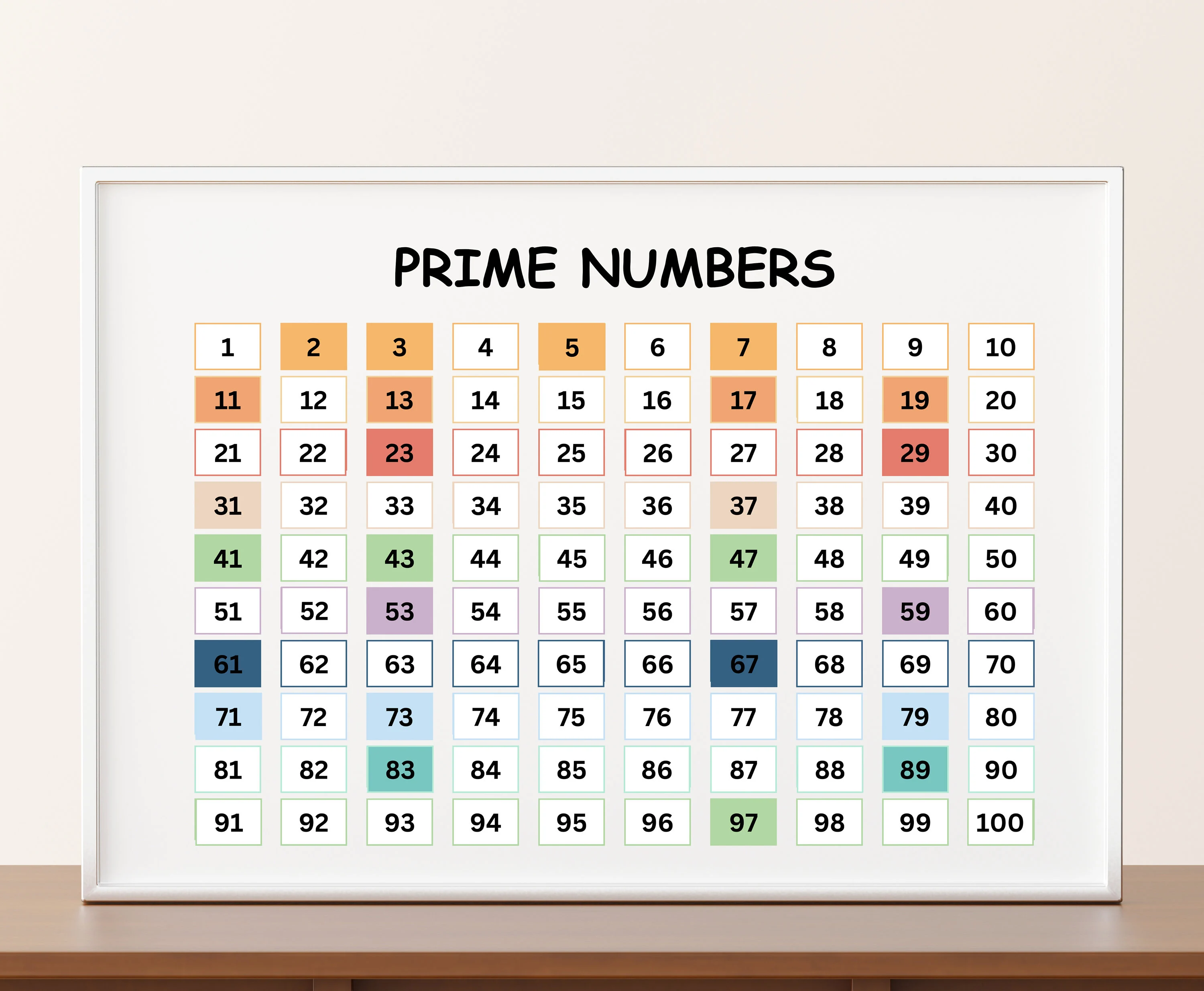
Prime Numbers Between 1 and 100
Before we dive into the code, let's first list all the prime no 1 to
100 manually. This gives us a benchmark to check if our program works
correctly.
Here’s the list:
2, 3, 5, 7, 11, 13, 17, 19, 23, 29, 31, 37, 41, 43, 47, 53, 59, 61, 67, 71, 73, 79,
83, 89, 97
There are 25 prime numbers between 1 and 100.
Logic to Find Prime Numbers from 1 to 100
To find prime numbers between 1 and 100 using programming logic, we need a method to check
whether each number in that range is prime. The logic can be summarized in the following
steps:
- Loop through numbers from 1 to 100.
- For each number, check how many numbers divide it.
- If the number has exactly two divisors (1 and itself), it's a prime number.
However, this brute-force method can be optimized.
Optimization Tip:
We don’t need to check all numbers up to n to determine if n is prime. Instead, we
can check only up to √n because if a number has a factor greater than its square root,
it must also have a corresponding factor smaller than the square root.
C Program to Display Prime Numbers from 1 to 100
Let’s now take a look at a C program that uses the optimized logic to print all the prime
numbers from 1 to 100.
Copy Code
c

CopyEdit

#include <stdio.h>

#include <math.h>


int main() {

    int i, j, flag;


    printf("Prime numbers from 1 to 100 are:\n");


    for(i = 2; i <= 100; i++) {

        flag = 1; // Assume i is prime

        for(j = 2; j <= sqrt(i); j++) {

            if(i % j == 0) {

                flag = 0; // i is not prime

                break;

            }

        }

        if(flag == 1) {

            printf("%d ", i);

        }

    }


    return 0;

}
Output:
css
CopyEdit
Prime numbers from 1 to 100 are:
2 3 5 7 11 13 17 19 23 29 31 37 41 43 47 53 59 61 67 71 73 79 83 89 97
Explanation of the Code
Let’s break this down step-by-step:
- #include <stdio.h> includes the standard input-output library.
- #include <math.h> allows us to use the sqrt() function to optimize our inner
loop.
- We start a for loop from 2 to 100 (since 1 is not prime).
- For each number i, we assume it is prime by setting flag = 1.
- Then, we check if any number j (from 2 to √i) divides i completely. If it
does, it's not a prime number, and we set flag = 0.
- After the inner loop, if flag is still 1, we print the number because it's a
prime.
This approach is far more efficient than checking every number up to i.
Importance of Learning Prime Number Programs
You might wonder why such a simple program holds importance. Here are a few reasons:
- Foundation for Algorithms: Prime numbers are the basis of many
algorithms, especially in number theory and cryptography.
- Improves Logical Thinking: Writing this kind of program strengthens
your problem-solving and logic-building abilities.
- Interview Favorite: It’s a frequently asked coding question in
interviews for entry-level software roles.
- Pattern Recognition: Helps you understand loops, conditional
statements, and nested structures clearly.
If you want to learn more about such fundamental programming techniques and enhance your
skills, consider taking a structured course.
Learn Programming with Uncodemy
If you're a beginner or even an intermediate programmer who wants to improve your C or C++
programming skills, Uncodemy offers highly-rated courses that cover
everything from the basics to advanced problem-solving.
Their course on C Programming for Beginners is perfect if you want to:
- Understand core programming logic.
- Master loops, conditionals, arrays, and functions.
- Solve practical problems like finding prime numbers, factorials, Fibonacci series, and
more.
By learning with Uncodemy, you'll gain both the theoretical knowledge and hands-on experience
needed to tackle real-world coding challenges. Check out their course to strengthen your
foundational coding skills and build confidence in writing optimized programs.
Common Mistakes to Avoid
While writing a program to find the prime no 1 to 100, beginners often
make some typical mistakes:
1. Starting from 1:
Remember, 1 is not a prime number. Always start from 2.
2. Not Breaking the Loop:
Once you know a number isn’t prime, break out of the loop immediately. It improves
efficiency.
3. Not Using Square Root Optimization:
Checking all the way to i in the inner loop makes the code slower. Use sqrt(i)
instead.
4. Forgetting to Include Math Library:
Using sqrt() without #include <math.h> causes compilation errors.
By keeping these in mind, your code will not only run correctly but also perform better.
Other Ways to Find Prime Numbers from 1 to 100
Besides the method shown above, there are other techniques that can be used to find primes:
1. Sieve of Eratosthenes:
A highly efficient algorithm for finding all primes smaller than a given number. It’s more
advanced but great for larger datasets.
2. Recursion:
You can write a recursive function to check if a number is prime and use that inside a loop.
3. Using Arrays:
You can store prime status in an array for further processing or usage.
Applications of Prime Numbers
Understanding prime numbers isn’t just for programming assignments—they are widely used in
real life too.
- Cryptography: Public key encryption algorithms like RSA are based on
large prime numbers.
- Hashing: Some hash functions use primes to reduce collision.
- Random Number Generation: Algorithms often use primes to improve
randomness.
- Digital Security: Protecting passwords and data through encryption
often involves large primes.
So, by mastering a simple program like printing the prime no 1 to 100,
you’re actually stepping into one of the most powerful areas of computing.
Final Thoughts
Understanding how to find prime numbers from 1 to 100 is an essential
exercise for anyone starting with programming. It not only teaches core concepts like loops
and conditionals but also prepares you for more complex logic-building problems.
The program we discussed uses an optimized method that checks divisibility only up to the
square root of each number, making it both simple and efficient. Whether you're practicing
for an exam, preparing for a coding interview, or learning for fun, this program is a
must-know.
And if you're looking to deepen your programming skills, don’t miss the Uncodemy's
C Programming Course, which offers structured learning and real-world problem
solving.
Start small, practice regularly, and you’ll be amazed at how quickly your coding confidence
grows.