Ever wondered how your smartphone camera app takes photos, records videos, and captures portraits all with the same "capture" button? That's method overriding in action. Different camera modes change the basic capture function with their unique behavior. In Python, overriding lets child classes modify inherited methods while keeping the same interface.
If you’re studying object-oriented programming, understanding Python override is like learning to customize your inheritance. You get all the benefits from your parent class, but you can adjust specific behaviors to fit your needs just right.
What is Python Override?
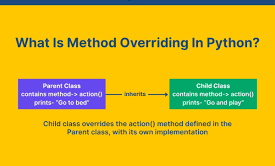
Method overriding is a feature found in any object-oriented programming language. It allows a subclass or child class to offer its own specific version of a method that one of its parent classes has already provided. You can think of Python override as giving your child class the ability to say, "Thanks for the blueprint, parent, but I'll do this step differently."
When we refer to Python override, we are really discussing how a child class replaces a parent class method with a new version. The great thing about this idea is that the method signature stays the same: it has the same name and the same parameters, but the behavior can change entirely.
For example, imagine you're creating a gaming application. All characters can "attack," but a warrior swings a sword, a mage casts a spell, and an archer shoots arrows. Python override allows you to define a general "attack" method in a Character parent class and then adjust it for each specific character type.
Why Python Override Matters in Modern Programming
In today's software development world, flexibility and maintainability are crucial. Python override offers both by letting you extend functionality without disrupting existing code. At Uncodemy's Python programming course in Noida, many students experience their "aha!" moments when they understand how Python override can clarify complicated inheritance structures.
Think about this: you are developing an e-commerce platform that needs to process transactions through various payment methods. Without Python override, you would need to write completely separate code for credit cards, PayPal, bank transfers, and digital wallets. With override, you create a common interface, allowing each payment method to implement its own processing logic.
The Fundamentals of Python Override
Before diving into practical examples, let's understand the core mechanism. When you call a method on an object, Python follows a specific lookup order called Method Resolution Order (MRO). It first checks if the current class has the method, then moves up the inheritance chain until it finds an implementation.
Here's a simple example that demonstrates Python override in action:
                    python
                    class Animal:
                        def __init__(self, name):
                            self.name = name

                        def make_sound(self):
                            return f"{self.name} makes a generic animal sound"

                        def move(self):
                            return f"{self.name} moves around"

                    class Dog(Animal):
                        def make_sound(self):  # Python override
                            return f"{self.name} barks: Woof! Woof!"

                        def move(self):  # Another Python override
                            return f"{self.name} runs on four legs"

                    class Bird(Animal):
                        def make_sound(self):  # Python override
                            return f"{self.name} chirps: Tweet! Tweet!"

                        def move(self):  # Python override
                            return f"{self.name} flies through the sky"

                    # Creating instances
                    buddy = Dog("Buddy")
                    tweety = Bird("Tweety")

                    print(buddy.make_sound())  # Buddy barks: Woof! Woof!
                    print(tweety.make_sound())  # Tweety chirps: Tweet! Tweet!
                    print(buddy.move())        # Buddy runs on four legs
                    print(tweety.move())       # Tweety flies through the sky
Notice how both Dog and Bird classes override the methods from Animal? Each animal responds to the same method calls but behaves according to its nature. That's the power of Python override!
Real-World Python Override Examples
Let's explore some practical scenarios where Python override shines. These examples mirror real-world programming challenges you'll encounter in your development journey.
Example 1: Vehicle Management System
                    python
                    class Vehicle:
                        def __init__(self, brand, model, year):
                            self.brand = brand
                            self.model = model
                            self.year = year

                        def start_engine(self):
                            return f"Starting {self.year} {self.brand} {self.model}"

                        def fuel_efficiency(self):
                            return "Standard fuel efficiency"

                        def maintenance_cost(self):
                            return 1000  # Base maintenance cost

                    class ElectricVehicle(Vehicle):
                        def start_engine(self):  # Python override
                            return f"Silently powering up {self.year} {self.brand} {self.model}"

                        def fuel_efficiency(self):  # Python override
                            return "Zero emissions, maximum efficiency"

                        def maintenance_cost(self):  # Python override
                            return 500  # Electric vehicles need less maintenance

                    class SportsCar(Vehicle):
                        def start_engine(self):  # Python override
                            return f"VROOOOOM! {self.year} {self.brand} {self.model} roars to life!"

                        def fuel_efficiency(self):  # Python override
                            return "Performance over efficiency"

                        def maintenance_cost(self):  # Python override
                            return 2500  # Sports cars are expensive to maintain

                    # Usage demonstration
                    tesla = ElectricVehicle("Tesla", "Model S", 2023)
                    ferrari = SportsCar("Ferrari", "488 GTB", 2022)

                    print(tesla.start_engine())      # Silently powering up 2023 Tesla Model S
                    print(ferrari.start_engine())   # VROOOOOM! 2022 Ferrari 488 GTB roars to life!
                    print(f"Tesla maintenance: ${tesla.maintenance_cost()}")    # Tesla maintenance: $500
                    print(f"Ferrari maintenance: ${ferrari.maintenance_cost()}") # Ferrari maintenance: $2500
Example 2: Employee Management System
Here's another scenario we frequently explore in our Python programming course:
                    python
                    class Employee:
                        def __init__(self, name, employee_id, base_salary):
                            self.name = name
                            self.employee_id = employee_id
                            self.base_salary = base_salary

                        def calculate_bonus(self):
                            return self.base_salary * 0.05  # 5% base bonus

                        def get_role_description(self):
                            return f"{self.name} is an employee"

                        def working_hours(self):
                            return "9 AM to 5 PM"

                    class Manager(Employee):
                        def calculate_bonus(self):  # Python override
                            return self.base_salary * 0.15  # 15% bonus for managers

                        def get_role_description(self):  # Python override
                            return f"{self.name} leads teams and makes strategic decisions"

                        def working_hours(self):  # Python override
                            return "Flexible hours with occasional overtime"

                    class Developer(Employee):
                        def __init__(self, name, employee_id, base_salary, programming_languages):
                            super().__init__(name, employee_id, base_salary)
                            self.programming_languages = programming_languages

                        def calculate_bonus(self):  # Python override
                            language_bonus = len(self.programming_languages) * 1000
                            return self.base_salary * 0.10 + language_bonus

                        def get_role_description(self):  # Python override
                            langs = ", ".join(self.programming_languages)
                            return f"{self.name} develops software using {langs}"

                    # Creating instances
                    alice = Manager("Alice Johnson", "MGR001", 90000)
                    bob = Developer("Bob Smith", "DEV001", 75000, ["Python", "JavaScript", "React"])

                    print(f"Alice's bonus: ${alice.calculate_bonus()}")  # Alice's bonus: $13500
                    print(f"Bob's bonus: ${bob.calculate_bonus()}")      # Bob's bonus: $10500
                    print(alice.get_role_description())  # Alice Johnson leads teams and makes strategic decisions
                    print(bob.get_role_description())    # Bob Smith develops software using Python, JavaScript, React
Best Practices for Python Override
Through years of teaching at Uncodemy's Python programming course in Noida, we have identified several best practices that make Python overrides more effective:
1. Maintain Method Signatures
Always ensure your overridden method has the same parameters as the parent method. Changing the signature breaks the contract that inheritance creates.
2. Use Super() When Appropriate
Don't completely reinvent the wheel. If the parent method does something useful, build on it using super().
3. Document Your Overrides
Clear documentation helps other developers understand why you are overriding a method and what the new behavior achieves.
4. Follow the Liskov Substitution Principle
Objects of a subclass should be replaceable with objects of the parent class without breaking the application.
Python Override vs Method Overloading
It's important to differentiate Python override from method overloading. Python override means replacing a parent class method in a child class. In contrast, method overloading involves having multiple methods with the same name but different parameters in the same class. Python doesn't support traditional method overloading like Java or C#, but you can get similar results by using default parameters or variable arguments.
Advanced Python Override Techniques
For more sophisticated applications, you might encounter multiple inheritance scenarios where Python override becomes more complex. Python uses the Method Resolution Order (MRO) to determine which method to call, following a depth-first, left-to-right search pattern.
                    python
                    class A:
                        def method(self):
                            return "Method from A"

                    class B(A):
                        def method(self):  # Python override
                            return "Method from B"

                    class C(A):
                        def method(self):  # Python override
                            return "Method from C"

                    class D(B, C):  # Multiple inheritance
                        pass

                    obj = D()
                    print(obj.method())  # Method from B (due to MRO)
                    print(D.__mro__)     # Shows the method resolution order
Conclusion
Python override is a key part of object-oriented programming that allows for flexible and maintainable code. It lets child classes customize inherited behavior while keeping interfaces consistent. This ability helps developers create detailed applications with clear and logical structures.
Whether you are building web applications, game engines, or data processing systems, mastering Python override will greatly improve your code quality and design patterns. The best way to learn is through practice. Start with simple examples and gradually move to more complex inheritance hierarchies.
At Uncodemy's Python programming course in Noida, we think that grasping concepts like Python override involves more than just memorizing syntax. It's about developing the programming mindset that will benefit you throughout your career. The more you practice these ideas, the more natural they will feel, and soon you will be designing elegant class hierarchies that would impress any senior developer.
Keep in mind that great programmers aren't born knowing these concepts; they are made through consistent practice and application. So, open your IDE, begin experimenting with Python override, and watch your object-oriented programming skills reach new heights!
Frequently Asked Questions (FAQs)
Q: What is the main purpose of Python override?
A: Python override allows child classes to provide specific implementations of methods inherited from parent classes, enabling customization while maintaining consistent interfaces.
Q: Do I always need to use super() when overriding methods?
A: No, super() is only needed when you want to extend the parent method's functionality rather than completely replacing it.
Q: Can I override private methods in Python?
A: Python doesn't have true private methods, but conventionally private methods (starting with underscore) can be overridden, though it's generally not recommended.
Q: What's the difference between Python override and method overloading?
A: Python override replaces a parent class method in a child class, while method overloading (not natively supported in Python) would involve multiple methods with the same name but different parameters.
Q: How does Python determine which method to call in multiple inheritance?
A: Python uses Method Resolution Order (MRO), which follows a depth-first, left-to-right search pattern to determine which method implementation to use.
Q: Can I override built-in methods like str or len?
A: Yes, you can override special methods (dunder methods) to customize how your objects behave with built-in functions and operators.