Python Pattern Programs: Top Examples from Beginner to Advanced
Python is not just a beginner-friendly language — it is a gateway to developing logical thinking, coding discipline, and problem-solving skills. Among the many topics that help in strengthening core logic in Python, pattern programs hold a special place.
Often found in interviews, coding rounds, and academic tests, pattern printing challenges your understanding of loops, conditionals, and nesting. It may look simple at first, but as the complexity grows, it pushes your ability to visualize and implement logic effectively.
Python Pattern Programs: Top Examples from Beginner to Advanced
Mr. Kunal Arora /4 days ago
0
4 min read
In this article, we’ll explore some of thetop Python pattern programs, frombeginner to advanced level, and understand how they help shape a strong programming foundation. If you’re someone looking to dive deep into Python, especially for job preparation or advanced development, make sure to check out an excellentPython advanced course in Noida — more on that later.
Why Practice Pattern Programs in Python?
Before jumping into the actual examples, let’s briefly understandwhy pattern programs matter:
Improves Logical Thinking:You need to visualize the output before writing code.
Strong Grasp of Loops and Conditionals:You use for and while loops extensively, often in nested form.
Enhances Debugging Skills: When the output doesn’t match the pattern, you must trace the flow.
Interview Friendly:Most IT job interviews include 1–2 pattern questions to test logical clarity.
Fun Way to Code: It’s almost like drawing with code!
🧩 Beginner-Level Pattern Programs
Let’s begin with easy patterns. These help you get comfortable with loops and output formatting.
1. Right-Angled Triangle (Stars)
                        n = 5
                        for i in range(1, n + 1):
                        print("*" * i)
Output:
                            *
                            **
                            ***
                            ****
                            *****
Concept:Straightforward use of string multiplication and a single for loop.
2. Number Triangle
                        n = 5
                        for i in range(1, n + 1):
                        for j in range(1, i + 1):
                        print(j, end=" ")
                        print()
Output:
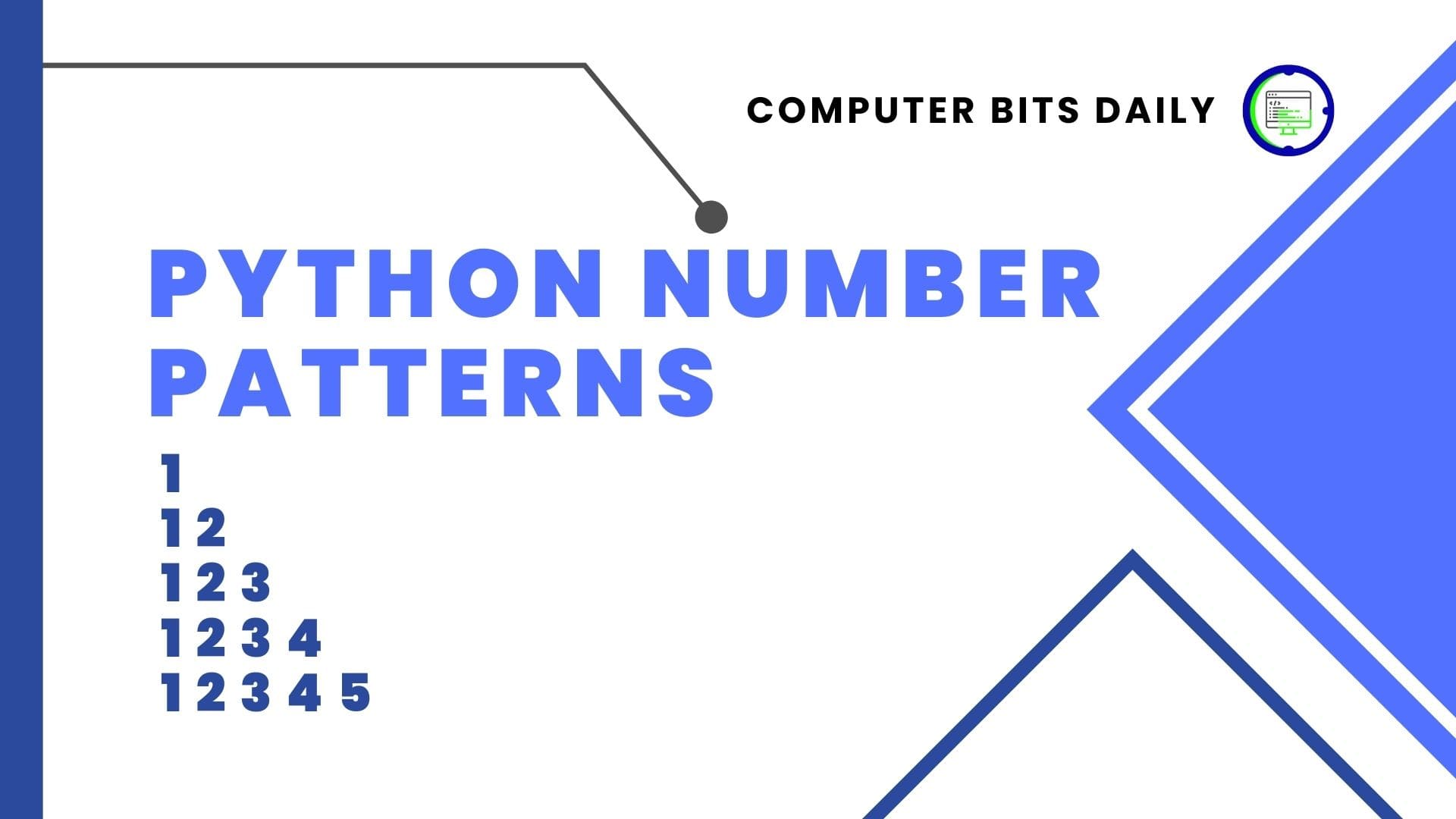
                        1
                        1 2
                        1 2 3
                        1 2 3 4
                        1 2 3 4 5
This builds your understanding of nested loops.
3. Reverse Star Pattern
                        n = 5
                        for i in range(n, 0, -1):
                        print("*" * i)
Output:
                        *****
                        ****
                        ***
                        **
                        *
Once comfortable, you can manipulate range() to print in reverse.
🔁 Intermediate-Level Patterns
When you move past the beginner level, patterns start demanding a better grasp of spacing, conditional logic, and loop control.
4. Pyramid Pattern
                        n = 5
                        for i in range(1, n + 1):
                        print(" " * (n - i) + "*" * (2 * i - 1))
Output:
                             *
                            ***
                           *****
                          *******
                         *********
Challenge: Adjusting space and star count per row.
5. Diamond Pattern
                        n = 5
                        # Upper half
                        for i in range(1, n + 1):
                            print(" " * (n - i) + "*" * (2 * i - 1))
                        # Lower half
                        for i in range(n - 1, 0, -1):
                            print(" " * (n - i) + "*" * (2 * i - 1))
Output:
                             *
                            ***
                           *****
                          *******
                         *********
                          *******
                           *****
                            ***
                             *
This introducessymmetric control,combining two loops with reverse logic.
6. Pascal’s Triangle (Up to N Rows)
                        def factorial(n):
                            return 1 if n == 0 else n * factorial(n-1)

                        n = 5
                        for i in range(n):
                            print(" " * (n - i), end="")
                            for j in range(i + 1):
                                print(factorial(i) // (factorial(j) * factorial(i - j)), end=" ")
                            print()
Output:
                            1
                           1 1
                          1 2 1
                         1 3 3 1
                        1 4 6 4 1
A classic pattern that also introducesmath logic in loops.
🧠 Advanced Pattern Programs
Now let’s go deeper. Advanced patterns combine math, symmetry, loops, and sometimes even recursion.
7. Butterfly Pattern
                        n = 5
                        for i in range(1, n + 1):
                            print("*" * i + " " * (2 * (n - i)) + "*" * i)
                        for i in range(n, 0, -1):
                            print("*" * i + " " * (2 * (n - i)) + "*" * i)
Challenging, but very rewarding once you get it right!
8. Zig-Zag Pattern
                        n = 9
                        for i in range(3):
                            for j in range(1, n + 1):
                                if (i + j) % 4 == 0 or (i == 1 and j % 4 == 0):
                                    print("*", end="")
                                else:
                                    print(" ", end="")
                            print()
Output:
                          *   *   *
                        * * * * *
                      *   *   *
This pattern requires a keep understanding of mod operations and positioning.
🌐 Want to Master Advanced Python Concepts?
If you’ve enjoyed these patterns and are curious to take your skills further, it's the right time toupgrade your Python proficiency.
For learners and professionals around Noida, there’s an excellent opportunity to explore anAdvanced Python Course in Noidaoffered by reputed training institutes. These programs go beyond pattern printing and cover:
Object-Oriented Programming (OOP)
File Handling and Exception Management
Web Scraping with BeautifulSoup
Working with APIs and JSON
Advanced Data Structures
Introduction to Data Science Libraries (NumPy, Pandas, Matplotlib)
Real-time project guidance
What makes thePython Advanced Course in Noida stand out is theinstructor-led hands-on training model. Whether you're preparing for a job switch, aiming to become a backend developer, or stepping into data science, these structured programs can give you the boost you need.
Many institutes also offerweekend and weekday batches, internship support, and evenplacement assistance. If you're serious about a future in tech, investing in a certified Python course is a great next step.
✍ Final Thoughts
Python pattern programs are much more than academic exercises. They lay the groundwork forloop control, visual logic, andproblem decomposition— all of which are essential for any aspiring developer.
Whether you're a student, a job seeker, or a tech enthusiast, mastering these pattern programs is a strong way to build logical skills. Start small, stay consistent, and move toward more complex structures. And when you feel ready, consider advancing your skills through aprofessional course,especially if you're near Noida — the tech learning hub of North India.
Let your code draw stars, shapes, and diamonds — and soon, you’ll be shaping your future with Python.