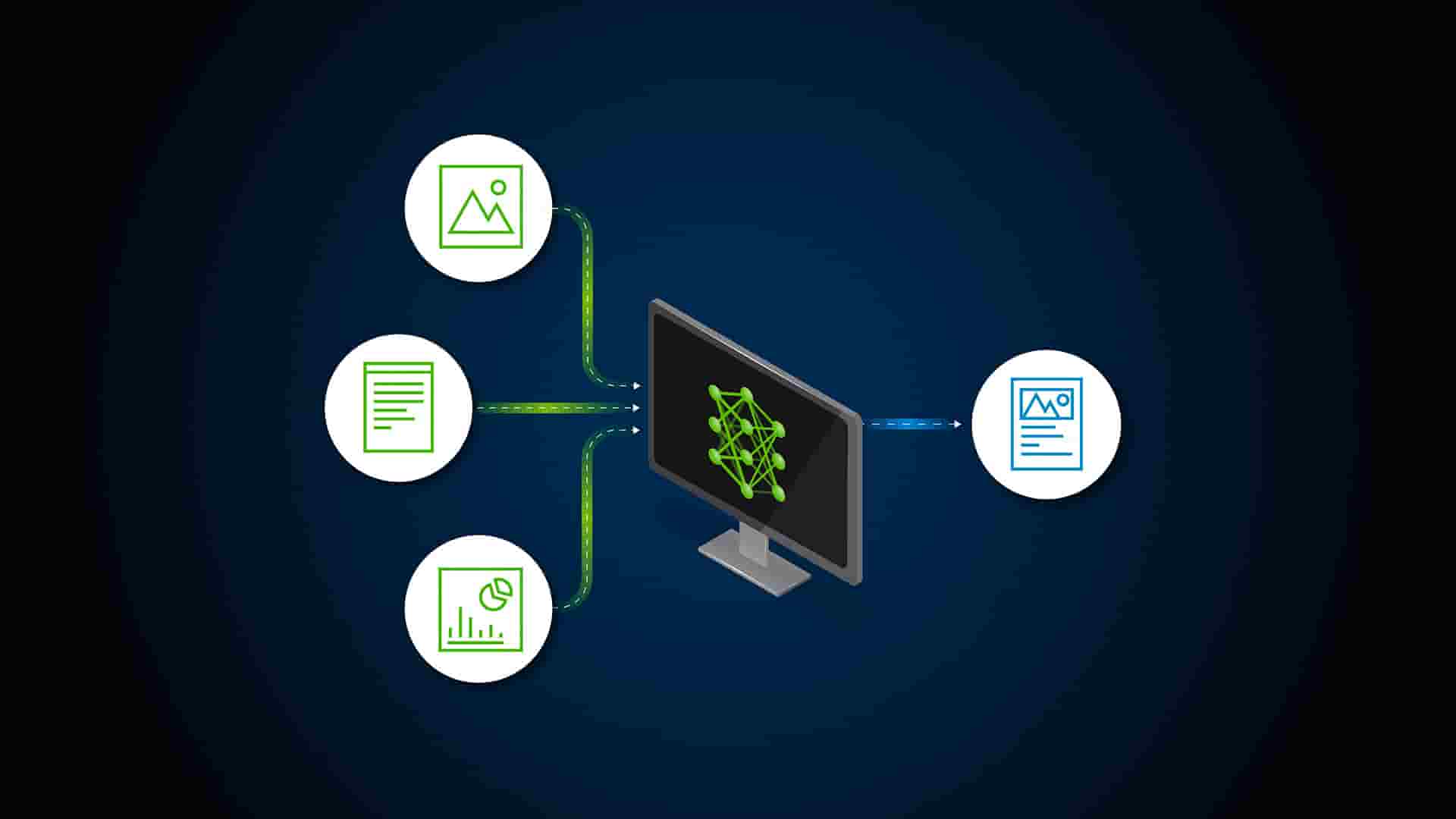
Understanding RAG-based models becomes increasingly crucial as organizations seek to implement AI solutions that can access vast repositories of knowledge while maintaining accuracy and relevance. These systems offer a compelling solution to the limitations of traditional language models, which often struggle with outdated information, hallucinations, and domain-specific knowledge gaps. By integrating retrieval mechanisms with generative capabilities, RAG models create a new paradigm for AI applications that need to be both knowledgeable and adaptable.
The significance of RAG technology extends beyond mere technical innovation. It represents a practical approach to making AI systems more reliable, transparent, and useful in real-world applications where accuracy and source attribution are paramount. This technology has opened new possibilities for enterprise applications, educational tools, research assistance, and customer service solutions that require both conversational ability and factual precision.
Understanding RAG Architecture: The Foundation of Intelligent Retrieval
The architecture of RAG-based models represents an elegant solution to the challenge of combining parametric knowledge stored within neural networks with non-parametric knowledge contained in external databases. At its core, a RAG system consists of two primary components working in harmonious coordination: a retrieval system that identifies relevant information from external sources and a generation system that synthesizes this information into coherent, contextually appropriate responses.
The retrieval component typically employs dense vector representations to encode both queries and potential source documents in a shared embedding space. This approach allows the system to identify semantically relevant information even when exact keyword matches are not present. The sophistication of modern embedding techniques means that RAG systems can understand nuanced relationships between concepts, enabling them to retrieve information that is contextually relevant rather than simply textually similar.
The generation component, usually based on transformer architecture, takes the retrieved information and the original query to produce comprehensive responses that seamlessly integrate external knowledge with the model's inherent understanding. This integration happens through attention mechanisms that allow the model to focus on the most relevant retrieved information while maintaining coherent narrative flow. The result is responses that are both informative and natural, avoiding the robotic feel that often characterizes simple template-based systems.
The interaction between these components creates a feedback loop that can be optimized for specific applications and domains. The retrieval system can be fine-tuned to prioritize certain types of sources or information, while the generation component can be adapted to produce responses in particular formats or styles. This flexibility makes RAG systems particularly valuable for applications that need to maintain consistent voice and style while accessing diverse information sources.
Modern RAG implementations often incorporate sophisticated indexing strategies that go beyond simple document retrieval. These systems can work with structured databases, knowledge graphs, and even real-time data feeds, making them suitable for applications that require access to dynamic information. The ability to integrate multiple data sources while maintaining response coherence represents one of the key advantages of the RAG approach over traditional question-answering systems.
Key Components and Technical Implementation
The technical implementation of RAG systems involves several critical components that must work together seamlessly to deliver effective results. The document preprocessing pipeline plays a crucial role in determining system performance, as it transforms raw information sources into formats suitable for retrieval and generation. This process typically involves chunking large documents into manageable segments, creating meaningful representations, and establishing relationships between different pieces of information.
Vector databases serve as the backbone of the retrieval system, storing dense representations of documents or document segments in formats optimized for similarity search. The choice of embedding model and vector database technology significantly impacts both retrieval accuracy and system performance. Modern implementations often use specialized vector databases that can handle billions of embeddings while maintaining sub-second query response times.
The query processing pipeline represents another critical component, transforming user questions into forms suitable for retrieval while preserving intent and context. This often involves query expansion techniques that help identify relevant information even when user queries are ambiguous or incomplete. Advanced systems may incorporate query rewriting capabilities that can translate natural language questions into more effective search queries.
Reranking mechanisms add another layer of sophistication to RAG systems, allowing them to refine initial retrieval results based on additional criteria such as source reliability, recency, or domain relevance. These systems can incorporate machine learning models specifically trained to assess the relevance of retrieved documents to specific queries, improving the overall quality of information provided to the generation component.
The generation pipeline must handle the complex task of synthesizing information from multiple sources while maintaining factual accuracy and natural language flow. This requires sophisticated prompt engineering and often involves techniques such as chain-of-thought reasoning to ensure that generated responses are both comprehensive and logically coherent. Modern RAG systems may also incorporate fact-checking mechanisms that verify generated content against retrieved sources.
For professionals seeking to master these complex systems, comprehensive education becomes essential. Programs such as the Natural Language Processing course in Noida provide deep insights into the theoretical foundations and practical implementation techniques that make RAG systems effective, covering everything from embedding theory to advanced retrieval strategies.
Enterprise Applications and Business Impact
The adoption of RAG-based models in enterprise environments has demonstrated significant potential for transforming how organizations handle information management and customer service. Large corporations are implementing these systems to create intelligent knowledge bases that can provide employees with instant access to company policies, procedures, and institutional knowledge. These applications go far beyond simple search functionality, offering contextual answers that can help employees make informed decisions quickly and accurately.
Customer service applications represent one of the most successful implementations of RAG technology in business environments. These systems can access vast databases of product information, troubleshooting guides, and policy documents to provide accurate, helpful responses to customer inquiries. Unlike traditional chatbots that rely on predefined scripts, RAG-powered customer service systems can handle complex, nuanced questions while maintaining consistency with company policies and procedures.
Legal and compliance applications have found particular value in RAG systems' ability to access and synthesize information from extensive document repositories. Law firms use these systems to research case law, analyze contracts, and prepare legal documents with unprecedented efficiency. The ability to trace generated content back to specific sources makes these systems particularly valuable in professional contexts where accuracy and attribution are crucial.
Research and development organizations leverage RAG models to accelerate innovation by providing researchers with intelligent access to scientific literature, patents, and internal research databases. These systems can identify relevant prior work, suggest research directions, and even help identify potential collaborations by analyzing patterns in research output. The time savings and insight generation capabilities of these systems have proven valuable across various scientific disciplines.
Financial services organizations use RAG systems for risk assessment, regulatory compliance, and investment research. These applications require access to vast amounts of financial data, regulatory documents, and market analysis, making them ideal candidates for RAG implementation. The ability to provide real-time analysis based on current market conditions while maintaining access to historical context creates significant competitive advantages.
Educational and Research Applications
The educational sector has embraced RAG technology as a powerful tool for creating personalized learning experiences and intelligent tutoring systems. These applications can access comprehensive educational content repositories to provide students with tailored explanations, examples, and practice problems based on their individual learning needs and progress. The ability to maintain consistency with curriculum standards while adapting to different learning styles makes RAG systems particularly valuable for educational applications.
Research applications of RAG technology have revolutionized how scholars access and synthesize information from academic literature. These systems can process vast amounts of research papers, identify relevant studies, and provide comprehensive literature reviews that would take human researchers weeks or months to complete. The ability to identify patterns and connections across large bodies of research has led to new insights and research directions that might otherwise have been overlooked.
Academic institutions are using RAG systems to create intelligent campus information systems that can help students navigate complex administrative processes, understand degree requirements, and access relevant resources. These applications reduce the burden on administrative staff while providing students with immediate access to accurate, up-to-date information about policies and procedures.
Language learning applications have found particular success with RAG technology, as these systems can provide contextual explanations, cultural insights, and usage examples drawn from authentic sources. The ability to access diverse language resources while maintaining pedagogical coherence makes RAG systems ideal for creating comprehensive language learning experiences.
Healthcare and Scientific Research Integration
Healthcare applications of RAG technology represent some of the most impactful implementations, with systems that can access medical literature, clinical guidelines, and patient data to support clinical decision-making. These applications must meet stringent accuracy and reliability requirements while providing healthcare professionals with timely access to relevant information. The ability to synthesize information from multiple sources while maintaining traceability to original sources makes RAG systems particularly suitable for medical applications.
Drug discovery and pharmaceutical research have benefited significantly from RAG implementations that can access vast databases of chemical compounds, research studies, and regulatory information. These systems can identify potential drug interactions, suggest research directions, and accelerate the literature review process that is crucial for pharmaceutical development. The time and cost savings achieved through these applications have proven substantial for research organizations.
Clinical documentation and coding applications use RAG technology to help healthcare providers create accurate, comprehensive medical records while ensuring compliance with regulatory requirements. These systems can access relevant coding guidelines, suggest appropriate diagnostic codes, and help ensure that documentation meets quality and reimbursement requirements.
Public health applications of RAG technology have proven valuable for disease surveillance, health policy development, and emergency response planning. These systems can access epidemiological data, research studies, and policy documents to provide comprehensive analysis and recommendations for public health officials. The ability to rapidly synthesize information from multiple sources has proven crucial during health emergencies and policy development processes.
Technical Challenges and Optimization Strategies
Implementing effective RAG systems requires addressing several technical challenges that can significantly impact performance and reliability. Retrieval quality represents one of the most critical challenges, as the effectiveness of the entire system depends on the ability to identify and retrieve relevant information. This challenge involves optimizing embedding models, fine-tuning retrieval algorithms, and developing effective evaluation metrics that can assess retrieval quality across different domains and use cases.
Computational efficiency becomes increasingly important as RAG systems scale to handle large document collections and high query volumes. Optimization strategies include developing efficient indexing techniques, implementing caching mechanisms, and using approximate nearest neighbor search algorithms that can maintain accuracy while reducing computational requirements. Advanced systems may also incorporate techniques such as query clustering and result caching to improve response times.
Information freshness and consistency represent ongoing challenges for RAG systems that need to maintain accuracy as underlying data sources change. Effective solutions require implementing automated update mechanisms, version control systems, and change detection algorithms that can identify when information needs to be refreshed or updated. These systems must balance the need for current information with the computational costs of frequent updates.
Handling conflicting or contradictory information from multiple sources requires sophisticated conflict resolution strategies. Advanced RAG systems may incorporate source reliability scoring, temporal reasoning capabilities, and consensus-building algorithms that can synthesize information from sources with varying levels of authority and accuracy. These capabilities become particularly important in domains where information quality and reliability vary significantly across sources.
Future Developments and Emerging Trends
The future of RAG technology promises even more sophisticated capabilities as research continues to address current limitations and explore new possibilities. Multimodal RAG systems that can work with text, images, audio, and video content are emerging as particularly promising developments. These systems will enable applications that can access and synthesize information from diverse media types, creating more comprehensive and engaging user experiences.
Real-time RAG systems that can access and incorporate streaming data sources represent another significant development direction. These systems will enable applications that can provide up-to-the-minute information while maintaining the comprehensive knowledge access that makes RAG systems valuable. This capability will be particularly important for applications in finance, news, and emergency response where information currency is crucial.
Federated RAG architectures that can securely access information across multiple organizations while maintaining privacy and security constraints are becoming increasingly important for enterprise applications. These systems will enable new forms of collaboration and knowledge sharing while respecting organizational boundaries and regulatory requirements.
The integration of RAG technology with other AI capabilities such as reasoning systems, planning algorithms, and multiagent frameworks promises to create even more powerful and versatile AI applications. These integrated systems will be capable of more complex problem-solving and decision-making tasks that require both extensive knowledge access and sophisticated reasoning capabilities.
Conclusion
RAG-based AI models represent a fundamental advancement in artificial intelligence that addresses critical limitations of traditional language models while opening new possibilities for practical AI applications. The combination of retrieval and generation capabilities creates systems that are both knowledgeable and adaptable, making them suitable for a wide range of applications across different industries and domains.
The architecture of RAG systems, while complex, provides a robust foundation for building AI applications that can access vast amounts of information while maintaining accuracy and reliability. The success of these systems in enterprise, educational, healthcare, and research applications demonstrates their practical value and suggests continued growth and adoption in the coming years.
As organizations increasingly recognize the value of AI systems that can provide accurate, timely, and well-sourced information, RAG technology will likely become even more central to AI development strategies. For professionals aiming to build expertise in advanced AI systems such as RAG, enrolling in a structured AI course in Noida can provide both theoretical depth and hands-on experience in modern retrieval and generation techniques. The ongoing improvements in retrieval algorithms, generation capabilities, and system architectures promise even more powerful and versatile RAG applications in the future.
Understanding and implementing RAG technology effectively requires comprehensive knowledge of both theoretical foundations and practical implementation techniques. As this technology continues to evolve and mature, professionals who strengthen their skills through practical training programs like an Artificial Intelligence course in Noida will be well-positioned to create innovative AI applications that truly harness the power of both artificial intelligence and human knowledge.