RAG Models in AI: Boosting Accuracy With External Data
Large Language Models (LLMs) like GPT, Claude, and Gemini have taken the AI world by storm. They can generate human-like responses, write essays, summarize documents, and even code. However, despite their brilliance, they have one major limitation — they don’t know everything.
Since LLMs are trained on static data, their knowledge stops at the time of training. They can’t access new or private information. This often leads to outdated or inaccurate responses a problem known as hallucination.
To solve this, the AI community introduced RAG (Retrieval-Augmented Generation) a powerful technique that allows language models to access external, real-time, and factual data before generating answers.
In this guide, we’ll explore what RAG models are, how they work, and how they’re revolutionizing AI-powered business solutions by boosting accuracy, relevance, and reliability.
What is a RAG Model in AI?
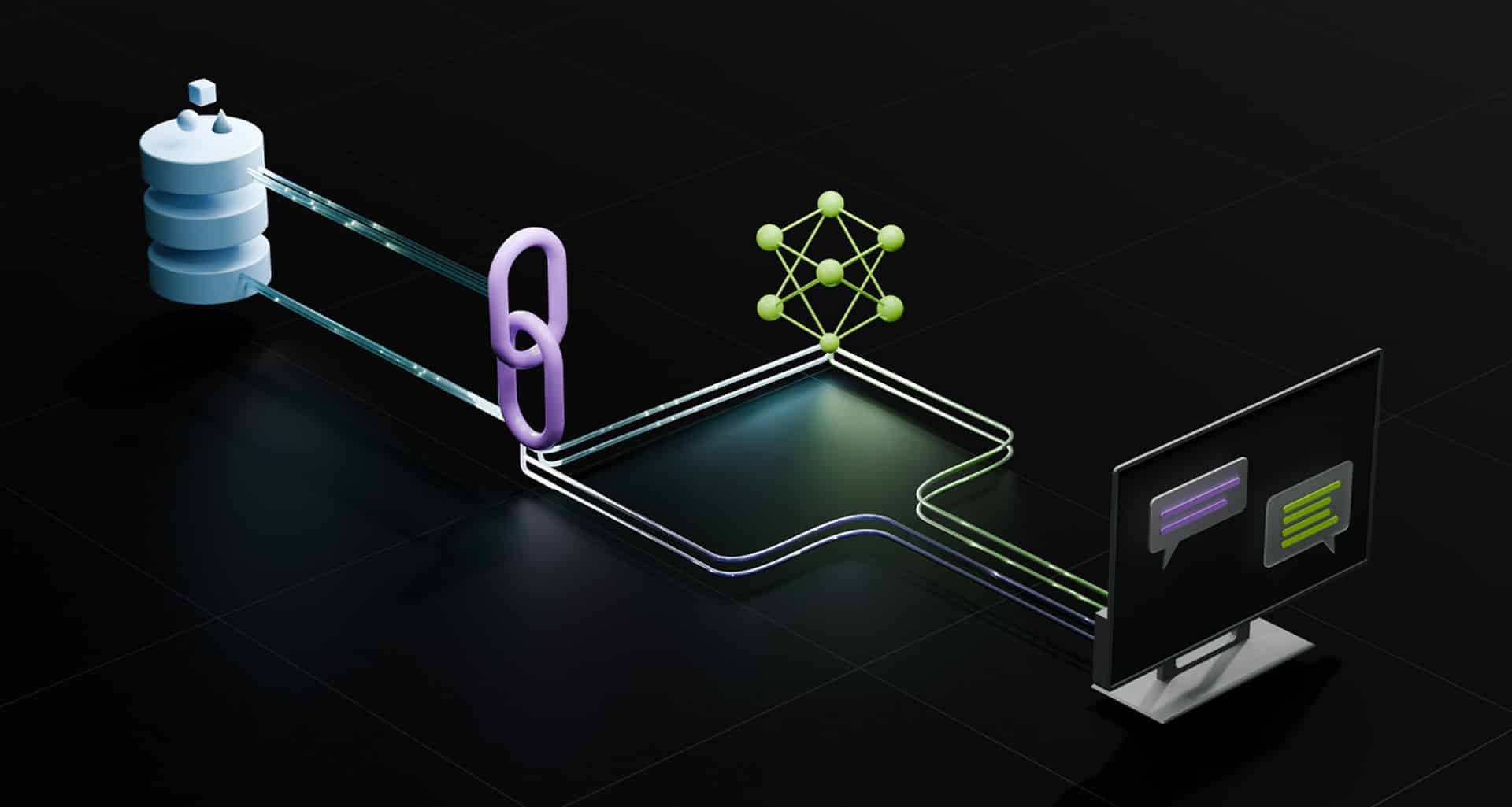
RAG, or Retrieval-Augmented Generation, is a framework that combines two major AI components:
1. Retrieval System – Fetches relevant information from external data sources (like databases, documents, or the web).
2. Generation Model – Uses that retrieved data to generate accurate and contextual responses.
This architecture allows LLMs to pull facts from external knowledge bases and use them during response generation.
In simpler terms:
RAG = Knowledge Retrieval + Intelligent Text Generation
So instead of relying purely on pre-trained data, a RAG model grounds its responses in real, updated, and verifiable information.
Why RAG Models Matter
Imagine asking a standard LLM:
“What are the latest RBI interest rates in 2026?”
A normal model trained till 2023 won’t know the answer. But a RAG-based system can retrieve the latest data from official RBI documents or financial APIs — then generate a precise, context-aware reply.
That’s the power of RAG. It bridges the gap between static model knowledge and dynamic real-world information.
How RAG Models Work
Let’s break down the internal workflow of a RAG pipeline in simple terms.
Step 1: Query Understanding
The process begins when a user asks a question or submits a prompt. Example:
“Summarize the key highlights from the 2026 Union Budget.”
The system first interprets the query and decides which data sources it needs to consult.
Step 2: Retrieval
A retriever module then searches external data repositories (such as PDFs, databases, or indexed knowledge bases) to find the most relevant information related to the query.
These data sources are often indexed using vector embeddings — numerical representations that capture semantic meaning.
The retriever selects the most similar data chunks using techniques like cosine similarity or semantic search.
Step 3: Context Injection
Once the relevant data is fetched, it’s combined with the original prompt and sent to the LLM.
For example:
“Based on the following document excerpts, summarize the key points of the 2026 Union Budget.”
This ensures the model’s generation is grounded in factual context.
Step 4: Response Generation
Finally, the generator (LLM) produces the final output — a human-like, contextual answer derived from both its language understanding and the retrieved data.
Core Components of a RAG System
Component
Description
Retriever
Finds relevant information from external data stores.
Knowledge Base
Source of facts — databases, documents, or APIs.
Generator (LLM)
Produces the final text using retrieved context.
Embedding Model
Converts text into numerical vectors for comparison.
Ranking Mechanism
Prioritizes the most relevant data chunks.
Why Businesses Are Adopting RAG Models
RAG-based systems are quickly becoming essential for enterprise AI. Here’s why businesses love them:
1. Factual Accuracy
By referencing real data, RAG drastically reduces hallucinations and misinformation.
2. Domain Adaptability
You can connect models to private data — HR policies, legal contracts, or product manuals — and make them context-aware.
3. Up-to-Date Knowledge
RAG allows AI to fetch the latest data even if the model was trained months or years ago.
4. Cost Efficiency
Instead of retraining LLMs from scratch with new data, RAG lets you update the knowledge base only, saving compute resources and time.
5. Trust and Transparency
Businesses can trace back AI-generated outputs to actual data sources, improving accountability.
Example: How RAG Works in Real Scenarios
Let’s understand with a few use cases across industries.
1. Customer Support Automation
Traditional Chatbot: Relies on pre-defined FAQs or static answers.
RAG-Powered Chatbot: Connects to internal knowledge bases, policy documents, and past ticket histories to generate precise, real-time answers.
Example Query:
“How can I cancel my premium subscription if it was purchased through a third-party app?”
The RAG model retrieves the exact company policy and generates a clear, accurate response instantly.
2. Financial Report Summarization
Banks and fintech companies deal with vast amounts of financial data. A RAG-based assistant can automatically:
Fetch quarterly reports
Summarize trends
Highlight anomalies
Example:
“Summarize the main reasons for profit fluctuations in Q2 2026.”
The retriever fetches reports and balance sheets, while the LLM crafts a concise summary.
3. Healthcare and Research Assistance
Doctors or researchers can use RAG systems to retrieve and summarize the latest studies, clinical notes, or patient histories.
Example:
“List the latest WHO guidelines on managing Type 2 Diabetes.”
The model pulls data directly from WHO publications — ensuring accuracy and compliance.
4. Legal Document Analysis
Law firms can use RAG to search thousands of case files, contracts, and legal precedents.
Example:
“Find cases similar to XYZ vs ABC regarding data privacy violations.”
The retriever locates matching cases, and the generator produces a comparative summary, saving hours of manual research.
The Technical Backbone: Vector Databases
RAG relies heavily on vector databases like:
Pinecone
Weaviate
FAISS
Milvus
These databases store embeddings of documents and allow quick semantic search based on meaning, not just keywords.
This means even if your query wording differs, the model still finds conceptually related data.
RAG vs Fine-Tuning: Which is Better?
Aspect
RAG
Fine-Tuning
Purpose
Retrieve external knowledge
Teach new knowledge
Speed
Faster to implement
Slower, requires training
Flexibility
Dynamic (real-time updates)
Static (requires retraining)
Cost
Low
High
Use Case
For live, updated data
For domain-specific adaptation
Verdict: For dynamic and factual use cases, RAG is far more efficient and scalable. Fine-tuning still matters when you need deep, domain-specific understanding.
Tools and Frameworks for Building RAG Systems
If you’re planning to build your own RAG-powered AI, here are the leading frameworks:
1. LangChain – For building modular retrieval and generation pipelines.
2. LlamaIndex – For connecting private data and managing document indexing.
3. Pinecone / Weaviate – Vector databases for semantic search.
4. OpenAI / Hugging Face Models – As generation backends.
5. FastAPI / Streamlit – For deploying RAG applications interactively.
Advantages of RAG-Enhanced AI Systems
Factual and Verifiable Outputs
Easy Integration with Company Data
Improved Context Awareness
Reduced Hallucinations
Adaptability Across Domains
Limitations of RAG Models
While powerful, RAG systems are not flawless. Businesses must manage:
Data Quality: Poor or outdated data sources can degrade output accuracy.
Latency: Retrieving large documents may increase response time.
Complexity: Setting up embeddings and databases requires technical expertise.
However, with good data engineering and caching strategies, these issues are manageable.
Future of RAG in AI
RAG is paving the way for the next generation of data-aware AI systems. As enterprises prioritize accuracy, compliance, and transparency, retrieval-augmented models will become the standard foundation for all intelligent applications.
Future advancements may include:
Hybrid RAG systems with real-time web access
Self-updating vector databases
Multi-modal retrieval (text, images, video)
Personalized retrieval tuned to user behavior
In essence, RAG is making AI not just smarter, but also trustworthy and practical for real business environments.
FAQs
1. What does RAG stand for in AI?
RAG stands for Retrieval-Augmented Generation, a framework that combines knowledge retrieval and text generation for more accurate and factual AI responses.
2. How does RAG improve accuracy?
It retrieves relevant external data and provides it as context to the LLM before response generation, reducing errors and hallucinations.
3. Can RAG be used with ChatGPT?
Yes, RAG pipelines can be built using OpenAI APIs, LangChain, or LlamaIndex to enhance ChatGPT with real or private data access.
4. Is RAG suitable for private company data?
Absolutely. You can integrate RAG with internal knowledge bases securely to make AI assistants aware of your company’s documents and policies.
5. What’s the difference between RAG and fine-tuning?
Fine-tuning permanently adds new data to a model’s parameters, while RAG retrieves and uses external data dynamically during inference.
Conclusion
RAG models represent one of the biggest breakthroughs in AI reliability. By combining retrieval and generation, they make LLMs smarter, more factual, and contextually aware.
For businesses, RAG unlocks a new level of automation — where chatbots, analytics tools, and assistants can all respond with real-world accuracy, not just educated guesses.
If you’re building enterprise AI systems, learning RAG is no longer optional — it’s essential. It’s the key to bridging the gap between AI intelligence and real-world truth.