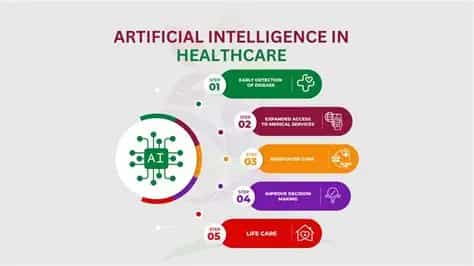
Whether you're a seasoned healthcare professional, a tech enthusiast, or simply curious about the future, understanding these real-world applications is crucial. Let's explore how AI is becoming the new digital heartbeat of modern healthcare.
AI in Medical Imaging and Diagnostics: Seeing the Unseen
One of the most mature and impactful applications of AI in healthcare is in medical imaging analysis. Radiologists and pathologists spend years training to interpret complex images like X-rays, CT scans, MRIs, and tissue slides. However, the sheer volume of data can be overwhelming, and even the most skilled eye can be prone to fatigue or subtle oversights. This is where AI steps in as a powerful ally.
How it works: AI algorithms, particularly deep learning models known as Convolutional Neural Networks (CNNs), are trained on vast datasets of labeled medical images. They learn to recognize intricate patterns, anomalies, and tell-tale signs of disease that might be invisible to the human eye.
Real-world examples:
- Early Cancer Detection: AI systems are now being deployed to analyze mammograms, identifying suspicious lesions indicative of breast cancer with a level of accuracy that often matches or even surpasses human radiologists. Similarly, AI can detect cancerous nodules in lung CT scans and identify malignant skin lesions from dermatological images.
- Diabetic Retinopathy: This is a leading cause of blindness where early detection is critical. AI-powered tools can analyze retinal scans in minutes to identify signs of the disease, allowing for timely intervention, especially in underserved areas with a shortage of ophthalmologists.
- Stroke Diagnosis: In stroke care, every second counts. AI algorithms can rapidly analyze brain scans to identify blockages or bleeding, helping doctors make faster decisions about treatment, which can significantly improve patient outcomes.
AI isn't replacing radiologists; it's empowering them. It acts as a tireless, highly accurate "second pair of eyes," flagging areas of concern, prioritizing urgent cases, and freeing up physicians to focus on complex diagnoses and patient care.
Revolutionizing Drug Discovery and Development
The journey of a new drug from a lab concept to a pharmacy shelf is notoriously long, expensive, and fraught with failure. On average, it can take over a decade and cost billions of dollars, with most potential drugs failing in clinical trials. AI is drastically changing this equation by making the process faster, cheaper, and more likely to succeed.
How it works: AI and machine learning models can sift through massive biological and chemical databases to identify promising drug candidates, predict how they will interact with the human body, and even design new molecules from scratch.
Real-world examples:
- Identifying Drug Targets: AI can analyze genetic data, protein structures, and patient records to pinpoint the biological mechanisms behind a disease, helping researchers identify the most effective targets for new drugs.
- Predicting Compound Efficacy: Instead of years of trial-and-error lab work, AI can simulate how different chemical compounds will behave, predicting their potential effectiveness and side effects before they are even synthesized.
- Repurposing Existing Drugs: AI can analyze the properties of thousands of existing approved drugs to see if they could be effective against other diseases. This was seen during the COVID-19 pandemic, where AI helped identify existing antiviral drugs that might be effective against the new virus.
By accelerating research and reducing the failure rate, AI is not just saving money; it's bringing life-saving treatments to patients faster than ever before. For those looking to dive into the world of data that makes these breakthroughs possible, mastering the core principles through a comprehensive Uncodemy's Artificial Intelligence course in noida is an invaluable starting point.
Personalized Medicine: Treatment Tailored to You
For decades, medicine has largely followed a one-size-fits-all approach. Treatment protocols were designed for the "average" patient. However, we now know that individuals respond differently to treatments based on their unique genetic makeup, lifestyle, and environment. AI is the key to unlocking the full potential of personalized medicine.
How it works: AI algorithms can integrate and analyze a vast array of patient data, including genomics (your DNA), proteomics (proteins), electronic health records (EHRs), and even data from wearable devices. By identifying patterns within this data, AI can predict which treatment strategies will be most effective for a specific individual.
Real-world examples:
- Customized Cancer Treatment: In oncology, AI can analyze the genetic mutations of a patient's tumor and recommend the most effective combination of chemotherapy drugs or targeted therapies. This moves away from broad-spectrum treatments to a highly precise attack on the cancer cells.
- Optimizing Drug Dosages: AI can predict how a patient will metabolize a certain drug, allowing doctors to prescribe the perfect dosage that maximizes effectiveness while minimizing side effects. This is particularly crucial for drugs with narrow therapeutic windows, like blood thinners.
- Predicting Disease Risk: By analyzing your genetic and lifestyle data, AI models can calculate your personal risk for developing conditions like heart disease, diabetes, or Alzheimer's, enabling you to take proactive and preventative measures.
Enhancing Surgery with AI-Powered Robotics
Robotic surgery has been around for years, but integrating AI is taking it to a new level of precision and capability. AI-powered robots are not autonomous surgeons; rather, they are sophisticated tools that enhance a human surgeon's skills.
How it works: These systems use AI to provide real-time guidance, stabilize movement, and navigate complex anatomical structures. They combine data from pre-operative medical scans with real-time feedback from cameras and sensors during the procedure.
Real-world examples:
- Greater Precision and Control: AI enhances robotic systems by filtering out a surgeon's natural hand tremors, allowing for superhuman-like precision in delicate procedures like neurosurgery or microsurgery.
- Surgical Guidance: An AI can overlay 3D models of a patient's anatomy onto the surgeon's view during an operation, helping them navigate around critical nerves and blood vessels to minimize damage to healthy tissue.
- Data-Driven Insights: AI can analyze data from thousands of previous surgeries to identify best practices and provide real-time suggestions to the surgeon, potentially improving outcomes and reducing complications.
The result is less invasive procedures, smaller incisions, reduced blood loss, shorter hospital stays, and faster recovery times for patients.
Streamlining Administrative Workflow and Reducing Burnout
While not as glamorous as diagnosing cancer or assisting in surgery, AI's role in automating administrative tasks is one of its most immediate and practical benefits. The healthcare industry is burdened by paperwork, scheduling conflicts, and complex billing processes, which contribute significantly to clinician burnout and operational inefficiencies.
How it works: AI tools, particularly those using Natural Language Processing (NLP), can understand, process, and automate routine administrative tasks.
Real-world examples:
- Automated Clinical Documentation: AI-powered scribes can listen to a doctor-patient conversation and automatically transcribe and summarize the key information into the electronic health record (EHR). This frees the doctor from a mountain of paperwork to focus on the patient.
- Intelligent Scheduling: AI can optimize hospital schedules for operating rooms and patient appointments, reducing wait times and ensuring resources are used efficiently.
- Medical Billing and Claims Processing: AI can automate the process of medical coding and claims submission, reducing errors, preventing fraud, and ensuring faster reimbursement from insurance companies.
By handling these repetitive tasks, AI allows doctors, nurses, and administrators to dedicate more of their time and energy to what truly matters: patient care. The analytical skills needed to build and manage these systems are highly sought after. Aspiring professionals can build a strong foundation with advanced training, like an Uncodemy's Artificial Intelligence course and Machine Learning course in noida that focuses on real-world problem-solving.
The Future is Here
The applications of artificial intelligence in healthcare are not distant dreams; they are tangible solutions being implemented today, saving lives, reducing costs, and improving the quality of care. From providing a more accurate diagnosis to developing a personalized cancer therapy, AI is a transformative force.
Of course, this journey is not without its challenges. Issues of data privacy, algorithmic bias, and regulatory approval must be carefully navigated. However, the potential benefits are immense. As technology continues to evolve, we can expect AI to become even more deeply integrated into the fabric of our healthcare system, creating a future where medicine is more predictive, preventative, and personalized for everyone. The fusion of human empathy and artificial intelligence promises a healthier tomorrow.