Recursion in C Examples for Beginners: A Complete Learning Journey
Mr. Bambam Yadav / 1 days - 0
- 4 min read
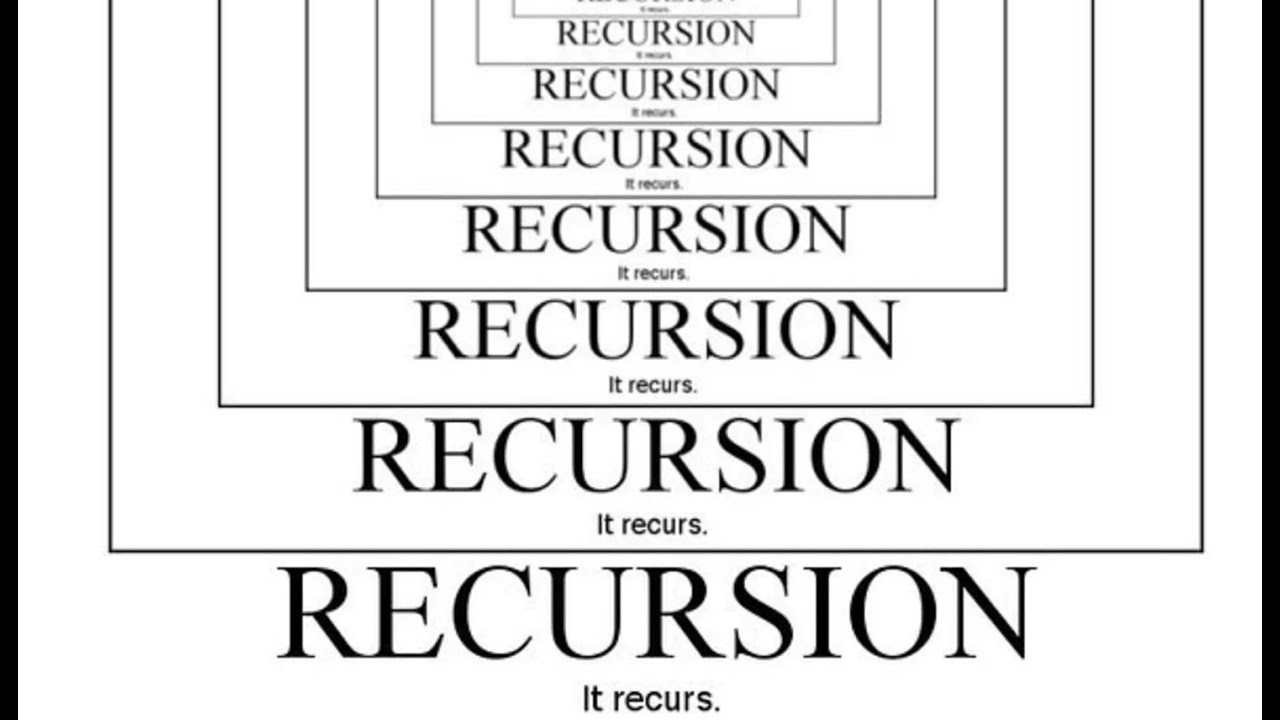
Recursion in C programming demonstrates the beauty of mathematical thinking translated into code, where complex problems are broken down into simpler, more manageable subproblems. This approach mirrors how humans naturally think about solving complicated tasks by dividing them into smaller, familiar components. The elegance of recursive solutions often surprises beginners who discover that seemingly complex problems can be solved with remarkably concise and intuitive code.
For students seeking comprehensive understanding of C programming concepts including recursion, Uncodemy provides structured learning programs that guide beginners through fundamental concepts with hands-on practice and expert mentorship. The institute's beginner-friendly approach ensures that students build strong foundations while developing practical skills essential for professional software development careers.
Understanding the Fundamentals of Recursion
Recursion represents a programming technique where a function calls itself to solve progressively smaller versions of the same problem. This self-referential approach enables programmers to tackle complex computational tasks by breaking them down into manageable pieces that follow the same logical pattern. The beauty of recursion lies in its ability to express complex algorithms in surprisingly simple and readable code structures.
The fundamental principle behind recursion involves identifying patterns within problems that can be reduced to smaller instances of themselves. When programmers recognize these patterns, they can design functions that handle the current case while delegating smaller cases to recursive calls. This delegation continues until the problem reaches a size that can be solved directly without further recursion, creating a natural termination point.
Understanding recursion requires grasping two essential components that must be present in every recursive function. The base case provides a stopping condition that prevents infinite recursion by defining scenarios where the function returns a result without making additional recursive calls. The recursive case defines how the function reduces the problem size and calls itself with modified parameters, ensuring progress toward the base case.
The concept of the call stack becomes crucial when working with recursive functions, as each function call creates a new stack frame containing local variables and return addresses. As recursive calls accumulate, the stack grows, and when base cases are reached, the stack unwinds as functions return their results. Understanding this mechanism helps programmers visualize how recursive functions execute and why they consume memory proportional to their recursion depth.
Basic Recursive Function Structure
Every recursive function in C follows a predictable structure that beginners can learn to recognize and implement consistently. This structure provides a template that programmers can adapt to various problem types while ensuring their recursive solutions remain correct and efficient. Understanding this structure helps beginners avoid common mistakes and write more reliable recursive code.
The typical recursive function begins with parameter validation and base case checking, ensuring that the function can handle edge cases and terminate properly. Base cases represent scenarios where the problem is simple enough to solve directly without further recursion. These cases prevent infinite recursion and provide the foundation upon which recursive solutions are built.
Following the base case handling, the recursive case implements the core logic that reduces the problem size and makes recursive calls with modified parameters. This reduction must guarantee progress toward the base case, ensuring that the recursion will eventually terminate. The recursive case often combines the results of recursive calls with additional processing to produce the final answer.
Error handling and input validation play important roles in robust recursive functions, as invalid inputs can lead to infinite recursion or incorrect results. Beginners should develop habits of checking parameter validity and handling edge cases gracefully to create reliable recursive solutions that work correctly across diverse input scenarios.
Factorial Calculation: The Classic Introduction
Factorial calculation serves as the traditional introduction to recursion because it perfectly demonstrates the recursive relationship where each problem instance depends on a smaller version of itself. The mathematical definition of factorial naturally translates into recursive code, making it an ideal example for beginners to understand recursive thinking.
The factorial of a positive integer n, denoted as n!, equals the product of all positive integers from 1 to n. This definition inherently contains recursion since n! equals n multiplied by (n-1)!, creating a clear recursive relationship. The base case occurs when n equals 0 or 1, where the factorial is defined as 1.
Implementing factorial calculation recursively demonstrates how mathematical definitions can be directly translated into code. The recursive function checks if the input is 0 or 1 and returns 1 for these base cases. For larger values, the function returns n multiplied by the factorial of (n-1), creating the recursive call that gradually reduces the problem size.
Understanding factorial recursion helps beginners grasp important concepts like function call overhead and stack usage. Each recursive call consumes stack space, and for large values of n, the recursion depth can become significant. This example introduces students to the trade-offs between elegant recursive solutions and their computational costs.
Fibonacci Sequence Generation
The Fibonacci sequence represents another classic example that showcases recursion's power and limitations. This sequence, where each number equals the sum of the two preceding numbers, demonstrates how recursive solutions can elegantly express mathematical relationships while highlighting potential efficiency issues that beginners should understand.
The mathematical definition of Fibonacci numbers creates a natural recursive structure where F(n) equals F(n-1) plus F(n-2) for n greater than 1. The base cases occur at F(0) = 0 and F(1) = 1, providing the foundation for all subsequent calculations. This relationship translates directly into recursive code that mirrors the mathematical definition.
Implementing Fibonacci recursion teaches beginners about the importance of multiple base cases and how recursive functions can make multiple recursive calls within a single invocation. The function must handle both F(n-1) and F(n-2) calls, demonstrating how complex recursive relationships can be expressed naturally in code.
However, naive Fibonacci recursion also introduces concepts of algorithmic efficiency and optimization. The recursive approach recalculates the same values multiple times, leading to exponential time complexity. This inefficiency provides an excellent opportunity to discuss memoization and dynamic programming as optimization techniques that beginners can explore as they advance.
Array Processing with Recursion
Array processing demonstrates how recursion can handle data structures by breaking them into smaller components. These examples show beginners how recursive thinking applies beyond mathematical calculations to practical data manipulation tasks commonly encountered in programming applications.
Finding the maximum element in an array using recursion illustrates how array problems can be decomposed into smaller subproblems. The recursive approach compares the first element with the maximum of the remaining array portion, gradually reducing the array size until only one element remains. This technique demonstrates divide-and-conquer strategies that form the foundation of many advanced algorithms.
Array sum calculation through recursion shows how accumulative operations can be expressed recursively. The function adds the first element to the sum of the remaining elements, creating a recursive relationship that naturally handles arrays of any size. This example helps beginners understand how recursive functions can process collections systematically.
Searching for specific values in arrays using recursion demonstrates how conditional logic integrates with recursive calls. The function checks if the current element matches the target value and either returns success or continues searching in the remaining array portion. These examples prepare beginners for more complex searching algorithms they will encounter in advanced programming courses.
String Manipulation Through Recursion
String processing with recursion introduces beginners to working with character arrays and demonstrates how recursive techniques apply to text manipulation tasks. These examples bridge mathematical recursion concepts with practical string handling operations commonly used in real-world applications.
String length calculation using recursion shows how iterative operations can be expressed recursively. The function examines the current character and, if it's not the null terminator, adds one to the length of the remaining string. This approach demonstrates how recursive functions can traverse data structures systematically while building results incrementally.
String reversal through recursion illustrates how recursive functions can rearrange data by processing elements in reverse order. The recursive approach handles the first character while reversing the remaining string, then combines these results to produce the final reversed string. This example shows how recursion naturally handles complex data manipulation tasks.
Palindrome checking with recursion demonstrates how recursive functions can implement comparison operations by examining data from multiple perspectives simultaneously. The function compares characters from both ends of the string while recursively checking the remaining middle portion, showing how recursive logic can handle symmetric data analysis.
Tree Traversal Fundamentals
Binary tree traversal represents one of the most natural applications of recursion, where the tree structure itself embodies recursive relationships. These examples introduce beginners to data structures while demonstrating how recursion elegantly expresses complex navigation patterns.
Inorder tree traversal using recursion visits nodes in a specific sequence by recursively processing left subtrees, visiting current nodes, and then processing right subtrees. This systematic approach demonstrates how recursive functions can navigate complex data structures while maintaining consistent ordering principles.
Preorder and postorder traversals show how different recursive visiting sequences produce different node orderings while using essentially the same recursive structure. These variations help beginners understand how small changes in recursive logic can dramatically affect algorithm behavior and output characteristics.
Tree height calculation through recursion demonstrates how aggregate properties can be computed by combining results from recursive subtree explorations. The function determines the maximum depth by recursively calculating heights of left and right subtrees and selecting the larger value, illustrating how recursive functions can compute derived properties.
Common Recursion Pitfalls and Solutions
Understanding common mistakes helps beginners develop reliable recursive solutions while avoiding frustrating debugging sessions. These pitfalls represent learning opportunities that strengthen understanding of recursive principles and proper implementation techniques.
Infinite recursion occurs when recursive functions lack proper base cases or fail to make progress toward termination conditions. Beginners often forget to include base cases or design recursive calls that don't reduce problem size, creating functions that call themselves indefinitely until stack overflow occurs. Learning to identify and prevent infinite recursion becomes essential for writing correct recursive code.
Stack overflow errors result from excessive recursion depth that exhausts available memory for function call frames. While some recursive problems naturally require deep recursion, beginners should understand that recursive solutions consume memory proportional to their depth and consider iterative alternatives for problems with large input sizes.
Inefficient recursive algorithms, like naive Fibonacci calculation, demonstrate how elegant recursive code can hide serious performance problems. Beginners should learn to recognize when recursive solutions recalculate the same subproblems repeatedly and understand optimization techniques like memoization that can dramatically improve performance.
Debugging Recursive Functions
Debugging recursive code requires special techniques that help beginners understand execution flow and identify problems in recursive logic. These debugging strategies enable students to troubleshoot their recursive implementations effectively and build confidence in their problem-solving abilities.
Trace tables help beginners visualize recursive function execution by tracking parameter values and return results for each recursive call. Creating these tables manually for small input values helps students understand how recursive functions build their results and identify logical errors in their implementations.
Print statements strategically placed within recursive functions can reveal execution patterns and help identify where recursive logic fails. Beginners should learn to add temporary debugging output that shows parameter values, recursive call depth, and intermediate results to understand how their functions behave.
Step-by-step debugging using integrated development environments allows beginners to observe recursive function execution in real-time. Learning to use debugger tools effectively helps students understand call stack behavior and variable scope changes throughout recursive execution.
Converting Iterative Solutions to Recursion
Understanding how to transform iterative algorithms into recursive equivalents helps beginners develop recursive thinking skills and appreciate the relationship between different programming approaches. These conversion techniques provide valuable practice in recognizing recursive patterns within familiar iterative solutions.
Loop-based calculations often translate directly into recursive functions by replacing loop variables with function parameters and loop conditions with base cases. The loop body becomes the recursive case that processes current values and makes recursive calls with updated parameters, demonstrating how iteration and recursion express similar computational patterns.
Accumulator patterns in recursive functions mirror how iterative solutions build results gradually through repeated operations. Recursive functions can use additional parameters to carry intermediate results through recursive calls, enabling them to replicate the behavior of iterative algorithms while maintaining recursive structure.
Tail recursion optimization represents an advanced concept where recursive calls occur as the last operation in functions, enabling compilers to optimize recursive code into iterative equivalents. Understanding tail recursion helps beginners appreciate how recursive and iterative approaches can achieve similar performance characteristics.
Performance Considerations and Optimization
Understanding the performance implications of recursive solutions helps beginners make informed decisions about when to use recursion and how to optimize recursive algorithms for better efficiency. These considerations become increasingly important as students work on larger, more complex programming projects.
Time complexity analysis reveals how recursive algorithms scale with input size, helping beginners understand the computational costs of their solutions. Simple recursive functions like factorial have linear time complexity, while more complex examples like Fibonacci have exponential complexity without optimization.
Space complexity considerations focus on memory usage, particularly stack space consumption during recursive execution. Each recursive call requires stack frame allocation, making deep recursion potentially problematic for large inputs. Understanding these limitations helps beginners design appropriate recursive solutions.
Memoization techniques demonstrate how recursive functions can cache previously computed results to avoid redundant calculations. This optimization strategy can dramatically improve performance for recursive algorithms that solve overlapping subproblems, transforming exponential algorithms into polynomial ones.
Real-World Applications and Examples
Exploring practical applications of recursion helps beginners understand how these techniques solve real-world problems in software development. These examples bridge academic learning with professional programming practices, showing how recursion contributes to elegant and efficient solutions.
File system navigation uses recursion naturally because directory structures form tree hierarchies that recursive functions can traverse systematically. Applications that search files, calculate directory sizes, or perform batch operations on file trees often implement recursive algorithms that mirror the hierarchical structure they process.
Parser implementation for programming languages and data formats frequently relies on recursive descent techniques that mirror the grammatical structure of the languages being parsed. These applications demonstrate how recursion enables elegant solutions for complex text processing tasks.
Game development scenarios, such as maze solving or game tree exploration, showcase how recursive algorithms can explore possible states systematically. These applications help beginners understand how recursion contributes to artificial intelligence and decision-making algorithms.
Building Strong Foundations
Mastering recursion requires consistent practice and gradual progression from simple examples to more complex applications. Beginners should focus on understanding fundamental principles before attempting advanced recursive algorithms, building confidence through successful implementation of basic recursive functions.
For students seeking comprehensive C programming education with emphasis on recursion and other fundamental concepts, Uncodemy provides structured learning programs that combine theoretical knowledge with extensive hands-on practice. The institute's beginner-focused curriculum includes step-by-step guidance, practical projects, and expert mentorship that help students build strong programming foundations.
Practice exercises should begin with mathematical functions like factorial and Fibonacci before progressing to data structure manipulation and complex problem-solving scenarios. Regular coding practice helps students internalize recursive thinking patterns and develop intuition for recognizing recursive problem structures.
Code review and peer feedback activities enable beginners to learn from different recursive implementations and understand alternative approaches to the same problems. Participating in programming communities and working on collaborative projects provides exposure to diverse recursive coding styles and best practices.
Advanced Learning Path
As beginners master basic recursion concepts, they can explore advanced topics that build upon fundamental recursive principles. Dynamic programming, divide-and-conquer algorithms, and recursive data structure implementations represent natural progressions for students who have solidified their understanding of basic recursion.
Understanding recursive data structures like linked lists, trees, and graphs opens doors to advanced programming concepts and enables students to work with complex data organizations. These structures naturally support recursive operations and provide rich environments for practicing recursive programming techniques.
Algorithm design strategies that leverage recursion, such as backtracking and branch-and-bound techniques, demonstrate how recursive thinking contributes to solving optimization problems and constraint satisfaction scenarios commonly encountered in professional software development.
Conclusion
Recursion represents a fundamental programming concept that every aspiring developer should master thoroughly. The journey from understanding basic recursive principles to implementing complex recursive algorithms requires patience, practice, and proper guidance, but the rewards include elegant problem-solving capabilities and deeper appreciation for algorithmic thinking.
The examples and concepts explored in this comprehensive guide provide beginners with a solid foundation for understanding recursion in C programming. From simple mathematical calculations to complex data structure manipulation, recursive techniques offer powerful tools for expressing sophisticated algorithms in clean, readable code.
For beginners committed to mastering C programming and recursion, Uncodemy offers comprehensive training programs that provide structured learning paths, expert instruction, and practical project experience. The institute's commitment to beginner success ensures that students develop both theoretical understanding and practical skills essential for building successful programming careers while mastering fundamental concepts that remain valuable throughout their professional development journey.