Roadmap to Becoming a MERN Stack Developer
Mr. Bambam Yadav / 1 week - 0
- 9 min read
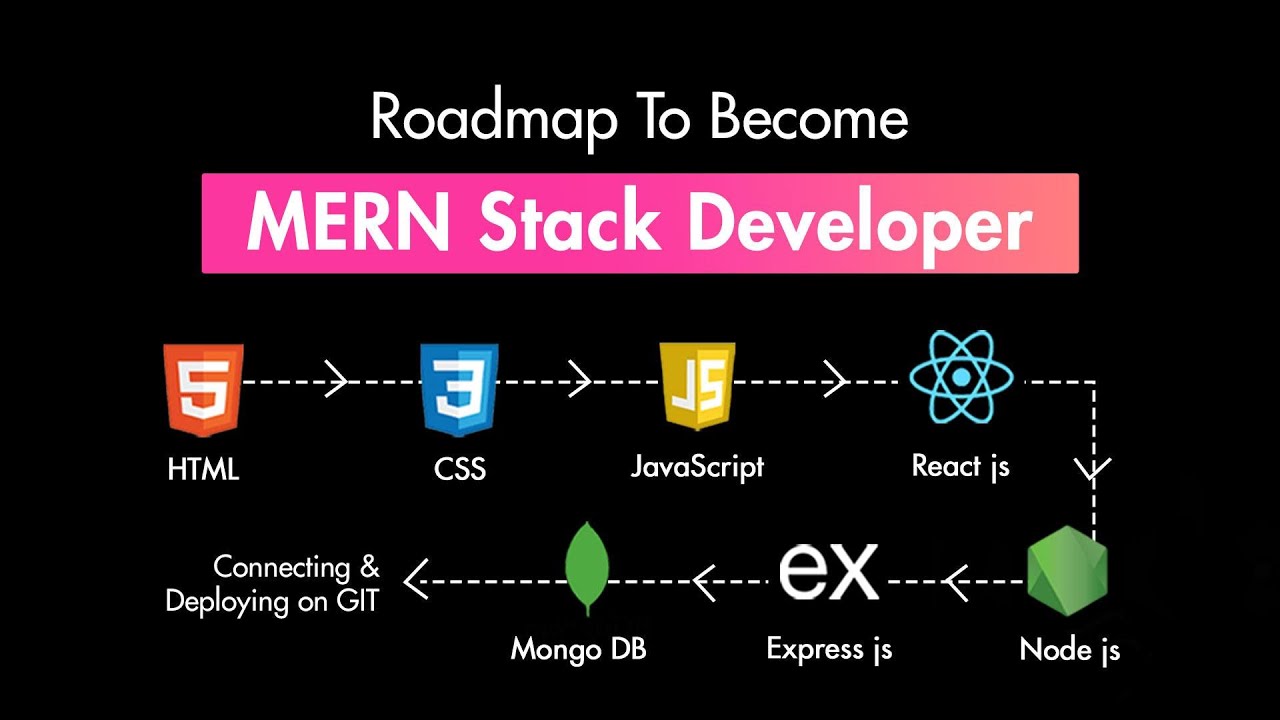
Step 1: Understand What MERN Actually Is
Let’s start with the acronym:
- MongoDB – A NoSQL database. Think flexible, JSON-like data storage.
- Express.js –A backend web framework for Node. Handles your routes, logic, APIs.
- React.js – The frontend framework. Manages your UI.
- Node.js –Runs JavaScript on the server side.
Together, MERN allows you to write JavaScript everywhere—in the browser, in your server, and when talking to your database. It keeps things consistent and lets you build full-stack apps without juggling multiple languages.
Here’s why that matters: You can build real apps like e-commerce platforms, chat systems, dashboards, and admin panels using just JavaScript.
Step 2: Nail the Fundamentals (No Skipping)
If you try to skip this, the whole thing collapses later. MERN is advanced, but it’s built on basics:
HTML & CSS
You don’t need to be a designer, but you need to know how to:
- Structure a page with semantic HTML
- Make layouts with Flexbox and Grid
- Use responsive units (%, rem, vw, etc.)
- Write media queries
JavaScript
This is where many people try to fast-forward. Don’t. You should understand:
- Variables, functions, loops
- Arrays, objects
- DOM manipulation
- Asynchronous JavaScript (Promises, async/await)
- ES6+ features like destructuring, arrow functions, spread/rest
Uncodemy’s beginner modules help you actually get this stuff without boring you to death with hours of talking heads. You code real things from the beginning.
Step 3: Git and GitHub — Learn Early
Here’s the deal: If you want to work on real-world projects (even solo ones), you need Git. It’s your time machine. GitHub is where your projects live.
Learn how to:
- Initialize a repo
- Make commits with good messages
- Push/pull from GitHub
- Handle branches and merge conflicts
Common Mistake: People wait too long to learn Git. Learn it side by side with HTML/CSS/JS. Uncodemy teaches this right from the start so it becomes muscle memory.
Step 4: Get Comfortable with React
React is where your web apps come to life. And yes, it can be intimidating at first.
Start with:
- Functional components
- JSX (it’s just HTML in JS, kind of)
- Props and state
- useState, useEffect
- Lists and keys
- Controlled inputs (for forms)
- Conditional rendering
Once you’ve got those down, level up to:
- React Router for navigation
- Context API for state management
- Custom hooks
- Performance optimization
Pro tip: Don’t just build todo apps. Build something like a personal notes app with login, or a weather dashboard with an API. Uncodemy walks you through hands-on projects like this so you’re not stuck with copy-paste tutorials.
Step 5: Backend Development with Node and Express
This is where you connect your app to the outside world. Express makes it simple to build APIs.
You’ll learn:
- How to set up a Node project with npm
- Create REST APIs (GET, POST, PUT, DELETE)
- Handle middleware (auth, logging, etc.)
- Serve static files
- Build routes and controllers
- Connect to MongoDB with Mongoose
You’ll also need to understand how the frontend talks to the backend using HTTP requests (with Fetch or Axios).
This part feels overwhelming at first—but with projects like building a blog or an inventory app, things start to click. That’s how Uncodemy structures its backend module.
Step 6: Learn MongoDB the Right Way
MongoDB isn’t just a giant JSON file. It’s a powerful NoSQL database. But it requires a shift in thinking if you come from relational databases.
Focus on:
- Understanding collections and documents
- Using Mongoose for schemas and validation
- Creating models
- Performing CRUD operations
- Handling relationships (like user → posts)
Also important:
- Input validation
- Error handling
- Security (don’t trust user input!)
Uncodemy uses real-world use cases like user systems, product catalogs, and messaging apps to help you actually apply MongoDB.
Step 7: Authentication and Authorization
Now we’re getting into the good stuff: logins, protected routes, and role-based access.
Things you need to know:
- Hashing passwords (bcrypt)
- Creating and verifying JWT tokens
- Login/signup APIs
- Protecting routes on the server and the client
- Storing tokens securely (cookies vs localStorage)
This is often one of the hardest parts to get right. Uncodemy’s modules walk you through this step by step so you’re not just following blindly—you understand what’s happening.
Step 8: Build Full Projects That Mimic Real-World Apps
Now that you know the pieces, you need to bring it all together.
Examples:
- E-Commerce Store:Products, cart, checkout, user login, admin dashboard.
- Blog Platform: Posts, comments, likes, categories, tags.
- Dashboard App: Charts, filters, CRUD, responsive UI.
Build at least 2-3 projects where you:
- Build both frontend and backend
- Deploy them online
- Use GitHub for version control
- Write clean, modular code
Uncodemy’s full-stack capstone projects are designed exactly for this.
Step 9: Learn Deployment Like a Developer
Don’t just build stuff—put it online. That’s how you prove you know what you’re doing.
Frontend:
- Use Netlify or Vercel for React apps
Backend:
- Host on Render, Railway, or Heroku (if it still exists)
Other things to learn:
- Environment variables
- Dealing with CORS
- Optimizing performance
- Monitoring and debugging production issues
Uncodemy shows you how to go live without breaking your app—or your confidence.
Step 10: Build a Portfolio That Speaks for You
Forget the basic portfolio template. Build something that actually tells your story.
What to include:
- 2–3 strong projects with live links
- GitHub repos with clean commits
- A short bio that explains your journey
- A resume that focuses on what you did, not just the tools
Uncodemy helps you refine this. They even help you practice how to talk about your work like a dev, not a nervous beginner.
Step 11: Start Applying and Prepping for Interviews
This is the real finish line.
Prep for:
- Technical rounds (JavaScript, React, Node, MongoDB)
- Live coding or take-home assignments
- Behavioral questions (tell your story!)
- System design basics
Uncodemy gives you:
- Mock interviews
- Resume and LinkedIn audits
- Referrals from partner companies
- Access to a community that keeps you motivated
You don’t get dumped after the course—you get actual help landing that first job.
Step 12: Keep Learning, Even After Landing a Job
Here’s the truth: Learning never stops in tech.
Once you land a job:
- Keep sharpening your core skills
- Learn TypeScript
- Explore testing (Jest, Mocha)
- Understand DevOps basics (CI/CD, Docker)
- Get into system design as you grow
Uncodemy gives you post-course guidance so you don’t plateau. The goal isn’t just to land a job—it’s to build a career.
Why This Roadmap Works (and Where Uncodemy Fits In)
Look, you could patch this all together with free videos, blog posts, and Stack Overflow tabs open in panic mode. People do it. But it’s slower, messier, and way lonelier.
Here’s what Uncodemy brings to the table:
- A structured path
- Live instruction with actual developers
- Project-based learning
- Feedback when you’re stuck
- Mentorship that doesn’t disappear after the course ends
You’re not a number in a cohort. You’re a real learner with real goals. And they treat you that way.
Final Word: If You’re Serious, This is How You Start
The MERN stack is no joke—but it’s also not some mythical, unattainable goal. If you’ve got the curiosity and the commitment, you can become a full-stack developer.
The key? Don’t get lost in tutorials. Don’t wait for perfect conditions. Start building, keep shipping, ask for help, and stay on track.
If you want a smarter way to learn MERN—with people who’ve got your back—check out Uncodemy’s full stack courses.
Let’s build something real.