Conditional Operator in C Explained with Practical Examples
In the world of C programming, the conditional operatoralso known as theternary operator—plays a crucial role in writing concise and efficient code. Often underappreciated by beginners, this operator simplifies conditional statements and makes your code more readable. In this article, we’ll explore the syntax, usage, and real-world applications of the conditional operator in C, using practical examples to solidify your understanding.
Conditional Operator in C Explained with Practical Examples
Sonal Rana / 2 days ago
0
7 min read
What is the Conditional Operator in C?
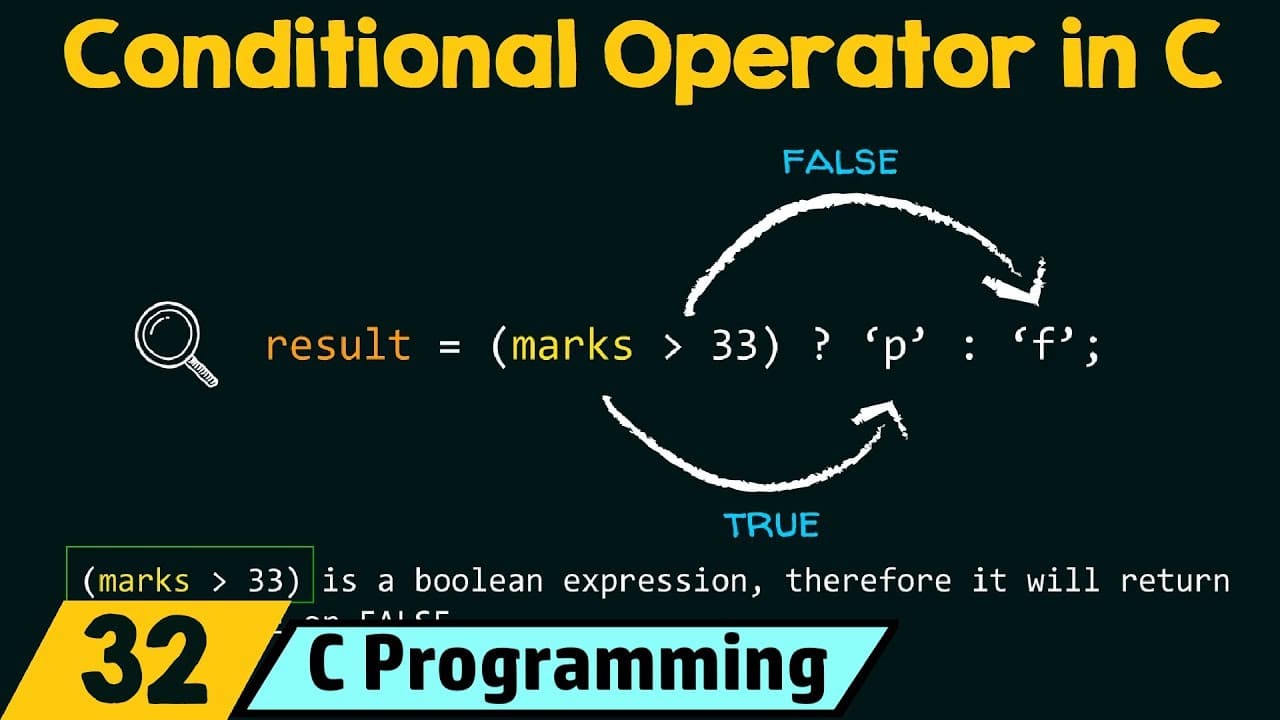
The conditional operatorin C is aternary operator, meaning it takesthree operands.It acts as a shorthand for theif-else statement, making it useful for simple conditional assignments or operations.
This is a great example of how conditional operators can be used effectively inreal-world applications, especially for decision-based logic.
Pitfalls to Avoid
While the conditional operator is powerful, it’s not without drawbacks:
Overuse:Using it for complex conditions makes the code unreadable.
Nesting: Deep nesting can confuse even experienced developers.
Side Effects: Avoid performing assignments or side-effect operations inside conditional expressions.
Bad Practice:
                        int x = 10;
                        int y = 5;
                        int result = (x > y) ? (x = x - y) : (y = y - x); // Avoid this kind of side-effect use
This type of expression reduces clarity and makes debugging difficult.
Best Practices
Use conditional operators forsimple decisions.
Prefer if-else for complex logic with multiple branches.
Avoid nesting more than two or three levels.
Never use them if readability is compromised.
When Not to Use the Conditional Operator
There are situations where the conditional operator isnot appropriate:
When actions involve multiple statements.
When debugging is critical and readable logs are needed.
When team collaboration requires high code readability.
For example, a switch-case or if-else block is better suited for business logic involving different transaction types in a financial app.
Summary
The conditional (ternary) operator in C is a handy tool for simplifying simple conditional logic into a compact, readable form. Here’s what you should remember:
Syntax:
condition ? true_result : false_result
Ideal for:Simple assignments, returns, or inline checks
Avoid:Nested or complex logic
Always aim forreadability and maintainability
Learning and mastering such fundamental tools not only improves your coding fluency but also lays the groundwork for more advanced programming, including web and application development.
Want to Build Full Stack Projects and Become Job-Ready?
Understanding concepts like the conditional operator is just the beginning of your programming journey. If you're serious about turning your coding skills into a career, it's time to level up.
🚀 Enroll in our Full Stack Developer Course 🚀
Masterfront-end and back-end technologies
Get hands-on with real-world projects
Learn from industry experts
Gaininterview preparation and job assistance
Whether you're a beginner or looking to switch careers, this course is designed to take you fromzero to job-ready full stack developer.
🎓 Start your journey today and transform your future in tech!
Knowing how and when to use the conditional operator is a sign of a developer who writes clean, efficient code. Combine this skill with the right learning path, and you're well on your way to becoming a professional full stack developer.