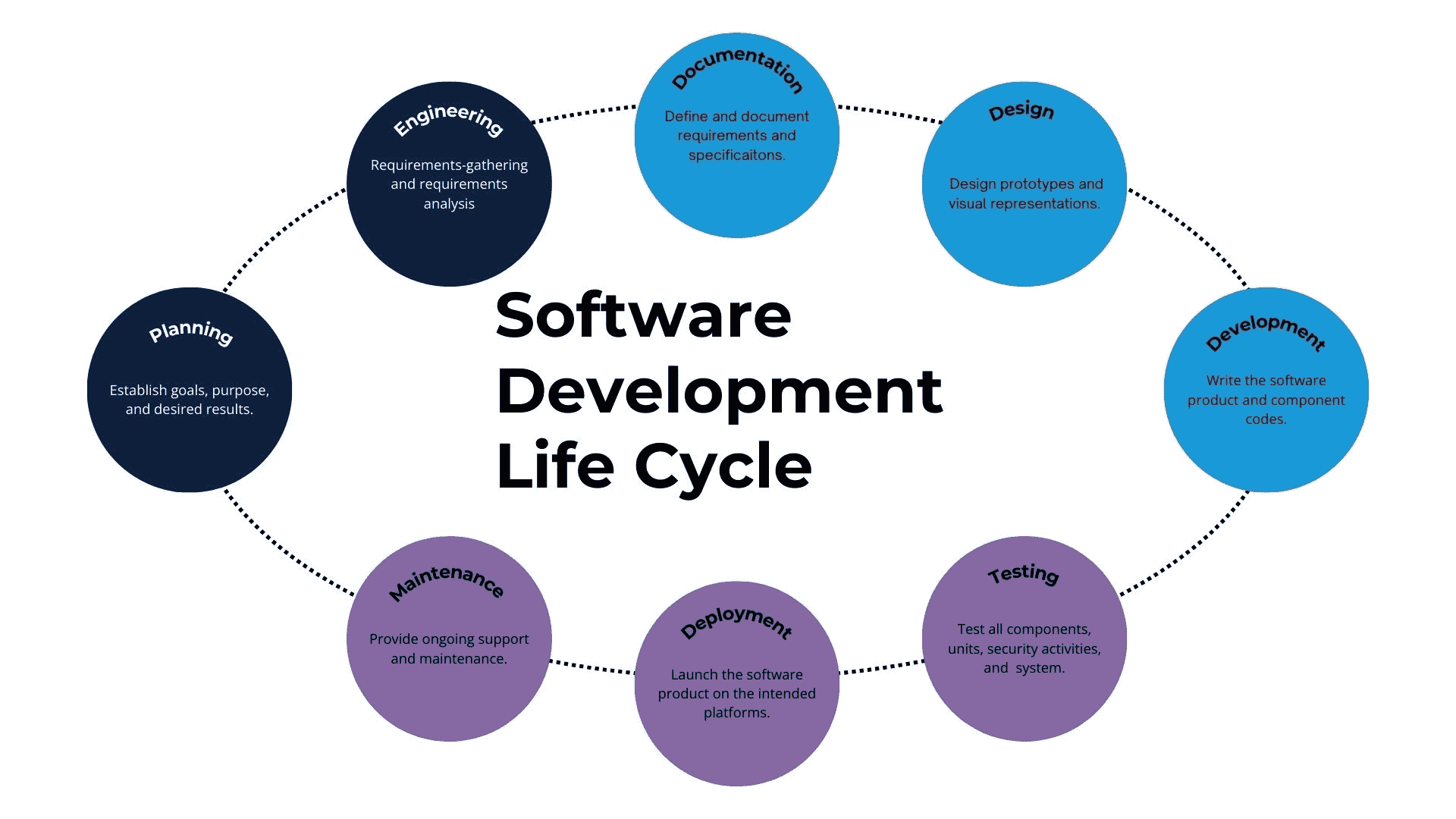
What is SDLC?
SDLC (Software Development Life Cycle) is a step-by-step process that defines tasks performed at each stage of software development. It provides a framework to plan, design, build, test, and deliver software efficiently.
7 Phases of SDLC
1. Planning Phase
The project’s objectives, scope, resources, and risks are identified in this phase.
- Example: Planning an e-commerce website to sell products online.
- Tools: Microsoft Project, Jira, Trello, Asana.
2. Requirement Analysis Phase
Gathering and analyzing user requirements to define clear specifications.
- Example: Analyzing customer needs for features like payment gateway, cart system, and order tracking.
- Tools: Jira, Confluence, IBM DOORS, Google Docs.
3. Design Phase
The system architecture, database design, and user interface are planned here.
- Example: Creating database schemas for user accounts, orders, and inventory.
- Tools: Lucidchart, Figma, UML tools, Visual Paradigm.
4. Development Phase (Coding)
The actual coding of the software takes place.
- Example: Developers write code for frontend (React, Angular) and backend (Node.js, Java, Python).
- Tools: Visual Studio Code, Eclipse, IntelliJ IDEA, GitHub.
5. Testing Phase
Software is tested for bugs, errors, and performance issues.
- Example: Testing if the e-commerce checkout works properly.
- Tools: Selenium, JUnit, Postman, TestRail.
6. Deployment Phase
The software is delivered to users or clients.
- Example: Deploying the e-commerce site on AWS or Azure.
- Tools: Jenkins, Docker, Kubernetes, AWS, Azure.
7. Maintenance Phase
Ensuring smooth performance, updates, and bug fixes after deployment.
- Example: Fixing issues in the payment gateway after launch.
- Tools: ServiceNow, Jira Service Desk, Nagios.
Popular SDLC Models
- Waterfall Model – Sequential process (step-by-step).
- Agile Model – Iterative and flexible (scrum, sprints).
- V-Model – Verification and validation approach.
- Spiral Model – Combines design and prototyping.
Why is SDLC Important?
- Reduces risks and errors.
- Improves software quality.
- Helps in proper project management.
- Ensures timely delivery within budget.
Conclusion
SDLC is the backbone of software engineering. By understanding its phases and using the right tools, developers and organizations can create high-quality software efficiently. Whether you’re a beginner or a professional, mastering SDLC concepts is essential for career growth.
Want to strengthen your software engineering skills? Explore Uncodemy’s Software Engineering Courses and gain hands-on experience with real projects!