Single Linked List in Data Structure with Code and Use Cases
In the vast and intricate world of data structures, the single linked list stands as a foundational concept every aspiring developer and computer science student must understand. It forms the bedrock for many advanced structures and is often one of the first topics covered in any well-rounded Data Structures Course in Noida. Understanding how a single linked list functions, how it differs from other data structures, and where it finds its application in real-world problems is essential for both academic and practical programming pursuits.
Single Linked List in Data Structure with Code and Use Cases
Mr. Bambam Yadav / 1 days
0
4 min read
What is a Single Linked List?
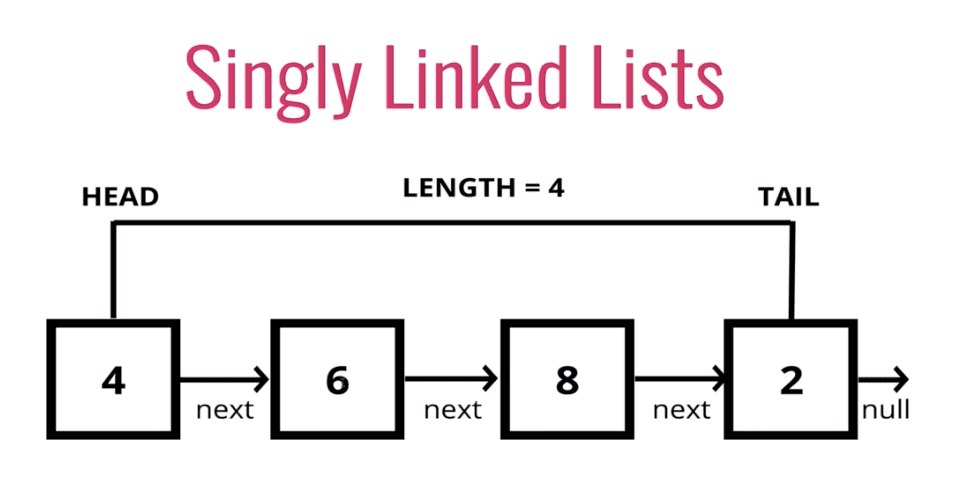
A single linked list is a linear data structure in which elements are stored in nodes. Each node contains two components: the data and a reference (or pointer) to the next node in the sequence. Unlike arrays, linked lists do not require contiguous memory locations. This key difference allows for efficient memory utilization and dynamic data management.
A single linked list has a headpointer, which points to the first node of the list. The last node’s next pointer is set to null, marking the end of the list. As data is added or removed, nodes can be dynamically created or deleted without the need to shift other elements, which is often a limitation in static structures like arrays.
Structure of a Node in a Single Linked List
In C, the basic structure of a node in a single linked list is defined as:
                            struct Node {
                                int data;
                                struct Node* next;
                            };
Here, data holds the value, and next points to the next node in the list. When a new node is created, both of these fields must be appropriately initialized.
Key Operations on a Single Linked List
The functionality of a single linked list becomes clear when we explore the common operations performed on it. These operations demonstrate both the flexibility and the limitations of the structure.
1. Insertion
Insertion in a single linked list can occur at three main positions: the beginning, the end, or a specific position in the middle.
Insertion at Beginning:This operation is efficient and takes constant time.
Insertion at End:Requires traversal to the last node.
Insertion at a Given Position:Involves traversing to the node after which the new node needs to be inserted.
2. Deletion
Just like insertion, deletion can also occur at the beginning, end, or a specific position.
Deletion at Beginning:Adjust the head pointer.
Deletion at End: Traverse to the second last node and update its next pointer to null.
Deletion at Position:Requires knowledge of the previous node to change its next pointer.
3. Traversal
Traversal involves going through each node in the list starting from the head and accessing or printing the data.
4. Searching
To search an element, one must traverse the list and compare each node’s data with the desired value.
5. Reversing the List
Reversing a single linked list involves rearranging the pointers so that the direction of the list is inverted.
Basic Code Implementation in C
To understand the practical side of this data structure, let’s consider a simple implementation of a single linked list in C with insertion, deletion, and traversal functions.
                            #include
                            #include

                            struct Node {
                                int data;
                                struct Node* next;
                            };

                            // Function to insert a new node at the beginning
                            void insertAtBeginning(struct Node** head, int newData) {
                                struct Node* newNode = (struct Node*) malloc(sizeof(struct Node));
                                newNode->data = newData;
                                newNode->next = *head;
                                *head = newNode;
                            }

                            // Function to print the linked list
                            void printList(struct Node* node) {
                                while (node != NULL) {
                                    printf("%d -> ", node->data);
                                    node = node->next;
                                }
                                printf("NULL\n");
                            }

                            int main() {
                                struct Node* head = NULL;
                                insertAtBeginning(&head, 10);
                                insertAtBeginning(&head, 20);
                                insertAtBeginning(&head, 30);
                                printList(head);
                                return 0;
                            }
This code demonstrates a single linked list where new elements are inserted at the beginning, and the list is then displayed. This approach is a simplified model but helps in building a conceptual foundation.
Use Cases of Single Linked List
Despite being a relatively simple data structure, the single linked list has numerous practical applications in computer science and software development. Here are a few prominent use cases:
1. Dynamic Memory Allocation
In systems where memory is a constraint, linked lists offer dynamic memory allocation. Elements can be added or removed without concern for reallocating or resizing memory blocks.
2. Implementation of Stacks and Queues
Stacks (LIFO) and queues (FIFO) can be efficiently implemented using linked lists. The dynamic nature of linked lists makes them ideal for scenarios where the number of elements is not known in advance.
3. Symbol Tables in Compilers
Compilers use linked lists to manage symbol tables, which track identifiers and variables in code.
4. Graph Representations
Adjacency lists in graph data structures often use linked lists to store the list of neighbors for each vertex.
5. Undo Mechanism in Applications
In software such as text editors, linked lists can be used to manage the sequence of user actions for undo/redo functionality.
6. Real-Time Systems
In real-time systems like embedded controllers, linked lists allow for real-time scheduling and task management where time and memory constraints are strict.
Advantages of Single Linked List
Efficient Insertion/Deletion:Especially useful when compared to arrays, which require shifting elements.
Dynamic Size: The list grows and shrinks as needed, unlike arrays which have a fixed size.
Memory Efficiency:Only the required memory is used.
Disadvantages of Single Linked List
No Random Access:Unlike arrays, accessing a particular element requires traversing from the head node.
Extra Memory Overhead:Each node requires extra space for the pointer.
Reverse Traversal Not Possible:Since each node points only to the next, it's difficult to traverse in the opposite direction without modifying the structure.
Enhancing Single Linked Lists
Over time, many enhancements and variations of the single linked list have been created to overcome some of its limitations. Examples include:
Doubly Linked List: Each node has two pointers (next and previous), allowing traversal in both directions.
Circular Linked List:The last node points to the first node, forming a circular structure.
Such advanced variations are also covered in a comprehensive Data Structures Course in Noida, enabling students to move from foundational understanding to advanced applications.
Real-Life Analogies
Understanding data structures through analogies can help clarify abstract concepts. A single linked list is often compared to a treasure hunt where each clue (node) leads to the next. If you lose one clue, the rest of the path becomes inaccessible — similar to how deleting a node improperly can break the chain.
Interview Relevance
In coding interviews and technical assessments, questions on the single linked list are extremely common. They test a candidate’s understanding of pointers, memory management, and logical problem-solving. Some common interview challenges include:
Detecting loops in a linked list
Reversing a linked list
Finding the middle node
Removing duplicates
Students who practice these problems thoroughly are better equipped for technical roles in software companies.
Conclusion
The single linked list is more than just an academic exercise; it's a practical tool in the world of programming. Whether it’s managing memory in low-level applications or building high-level abstractions in software tools, the single linked list plays a vital role. For students undertaking a Data Structures Course in Noida, mastering the single linked list in data structureis a critical step toward becoming proficient in both theory and practical implementation.
Understanding its mechanics, being able to write clean and efficient code for it, and recognizing when it is the best structure to use — these are skills that distinguish a good programmer from a great one. With consistent practice, students can gain the confidence to implement single linked lists and apply them effectively in various software scenarios.