Single Linked List in Data Structure with Code and Use Cases
If you are a programming enthusiast or an aspiring software developer, mastering data structures is a
must. Whether you're preparing for coding interviews or diving into system design, data structures lay
the foundation for efficient problem-solving. Among the first and most fundamental concepts you'll
encounter in any Data Structures Course in Noida is the single linked list in data structure.
Single Linked List in Data Structure with Code and Use Cases
Sonal Rana / 4 day ago
11
13 min read
This article explains what a single linked list is, its structure, how it works, code examples,
real-world use cases, and frequently asked questions, all written in a beginner-friendly way to
help you understand it clearly.
1. Types of Linked Lists
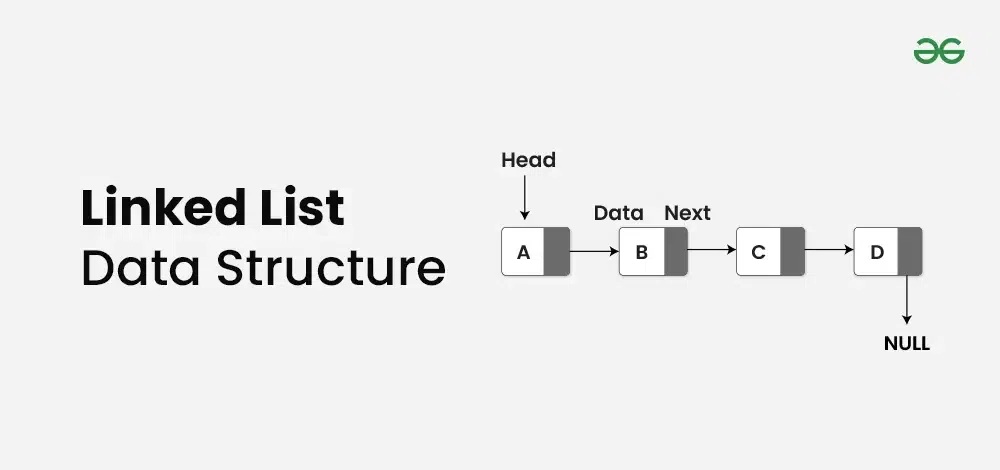
Linked lists are linear data structures where elements are stored in nodes, and
each node points to the next one in the sequence. Below are the main types:
Singly Linked List
Structure: Each node contains two parts:
Data: Holds the actual value.
Next Pointer: Points to the next node in the list.
The last node’s pointer is set to NULL, indicating the end of the list.
struct Node {
    int data;
    struct Node* next;
};
Characteristics:
Unidirectional Traversal (Only forward).
Requires a head pointer to access the list.
Efficient in inserting and deleting at the beginning.
Use Cases:
Implementing stacks
Maintaining a history of visited pages (e.g., browser navigation)
2. What is a Single Linked List in Data Structure?
A single linked list is a linear data structure where elements are stored in
nodes, and each node points to the next one in the sequence. Unlike arrays, elements in a linked
list are not stored in contiguous memory locations. This makes insertion and deletion operations
more efficient in many scenarios.
Each node in a single linked list typically contains two parts:
Data – the value or information.
Pointer (or next) – a reference to the next node in the list.
The list starts with a head pointer that points to the first node. The last node
points to null, indicating the end of the list.
Understanding the single linked list in data structure is not just about acing
coding tests, these structures are used in the real world too.
Music or Video Playlist Apps
Songs or videos are arranged in a sequence. You can move forward one item at a time,
just like traversing a linked list.
Web Browsers (History Navigation)
While the doubly linked list is often used for back-and-forth navigation, a
simplified version like a single linked list handles the "forward" chain.
Dynamic Memory Allocation
Operating systems use linked lists to manage memory blocks efficiently without
needing continuous memory.
Image Viewer
Like playlist apps, images in a gallery can be stored in a linked list, allowing
smooth traversal.
Undo Feature in Applications
Many text editors implement undo functionality using linked lists to track the
history of changes.
7. Advantages of Single Linked List
Dynamic size: No need to predefine the size like in arrays.
Efficient insertion/deletion: Especially at the beginning or middle.
Low memory overhead: Only stores what's needed.
8. Limitations
Slow access time: No direct indexing like arrays.
Extra memory: Each node stores an additional pointer.
Difficult to reverse: Without extra space or recursive functions.
9. Why Learn from a Data Structures Course in Noida?
If you're serious about mastering data structures, enrolling in a hands-on Data
Structures Course in Noida gives you a massive advantage. These courses often include:
Real-time coding projects
Expert mentors with industry experience
Peer discussions and community support
Focused learning paths with live problem-solving
Placement assistance in top tech companies
Whether you're learning C, C++, Java, or Python, understanding how a single
linked list in data structure works is one of the first building blocks in your coding journey.
10. Common Mistakes in Single Linked List Implementation
Not Initializing the Head Pointer
Mistake:
struct Node* head;
Using head without setting it to NULL first can lead to undefined behavior or
crashes.
Fix:
struct Node* head = NULL;
Incorrect Memory Allocation
Mistake:
struct Node* newNode;
newNode->data = 10;
Trying to assign data before allocating memory.
Fix:
struct Node* newNode = (struct Node*)malloc(sizeof(struct Node));
if (newNode == NULL) {
    printf("Memory not allocated.\n");
    exit(1);
}
newNode->data = 10;
Memory Leaks (Not Freeing Memory)
Mistake: Allocating nodes but never using free() to release them.
Fix: Always free memory after deleting or finishing with a node:
free(temp);
Incorrect Pointer Manipulation
Mistake:
current->next = current;
Wrongly pointing a node to itself, which causes infinite loops.
Fix: Double-check pointer assignments. After current = current->next, ensure
proper termination conditions.
Losing Track of the Head Node
Mistake: Reassigning head during traversal:
head = head->next; // Destroys original head
Fix: Use a temporary pointer when traversing:
struct Node* temp = head;
Accessing next of NULL
Mistake:
while (temp->next->data != x) // Crashes if temp->next is NULL
Fix: Always check if temp or temp->next is NULL before accessing:
if (temp != NULL && temp->next != NULL)
11. FAQs
Q1: What is the difference between a single linked list and a doubly
linked list?
A single linked list allows traversal in one direction, while a doubly linked list
lets you move both forward and backward.
Q2: Is a linked list faster than an array?
Linked lists are faster for insertion and deletion but slower for random access.
Q3: When should I use a single linked list?
Use it when you need a dynamic data structure with frequent insertions/deletions,
like in queues or stacks.
Q4: Can I reverse a singly linked list?
Yes, but it requires careful pointer manipulation. It can be done iteratively or
recursively.
Q5: Is learning linked lists enough for interviews?
No. Linked lists are a starting point. You also need to learn trees, graphs, heaps,
and more. A structured Data Structures Course in Noida will cover all these topics.
12. Final Thoughts
The single linked list in data structure is a simple yet powerful concept every
developer must master. It lays the foundation for understanding more complex data structures and
solving real-world problems efficiently.
Whether you’re a student, job seeker, or coding enthusiast, joining a Data
Structures Course in Noida can help you gain deep, practical knowledge. With expert guidance and
real coding practice, you’ll be better prepared for technical interviews, competitive
programming, and building strong applications.
So, the next time you write code to add, delete, or traverse a linked list,
remember, you’re not just learning syntax. You’re building blocks in the digital world.