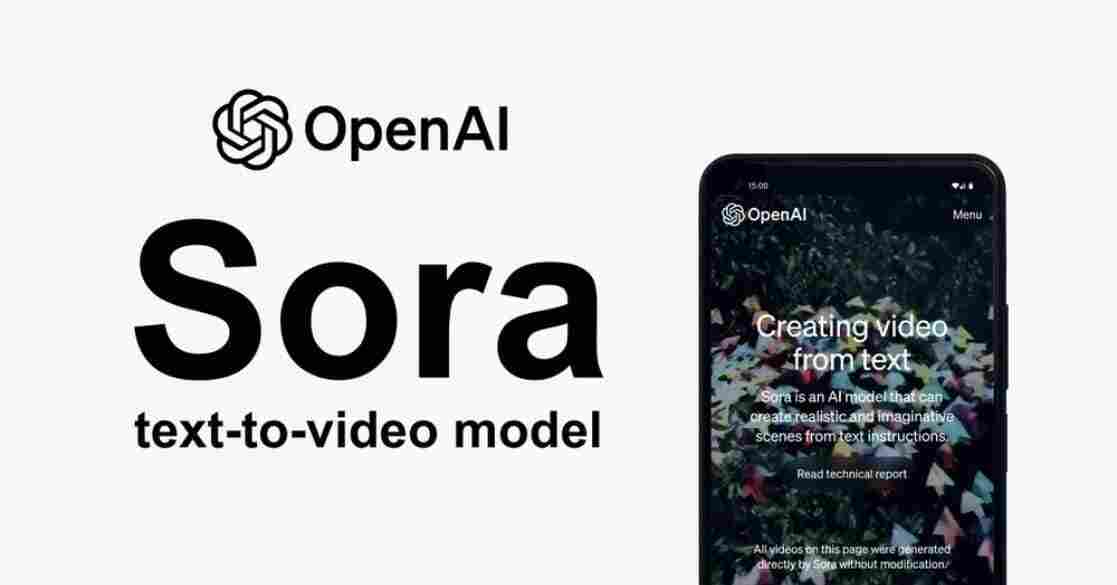
This leap forward brings storytelling, marketing, education, and entertainment into a new era, where anyone–not just professional filmmakers–can create visually stunning content.
But what makes Sora so impactful, and how exactly is it reshaping the way content is produced and consumed? Let’s dive deeper.
What is Sora?
Sora is an AI system trained on massive datasets of video and image-text pairs. Its job is to learn patterns of movement, lighting, perspective, and context so it can generate videos that look natural and coherent. Unlike traditional editing software that requires skill, time, and resources, Sora democratizes video creation by making it as simple as typing a sentence.
Some of its capabilities include:
~Generating short videos from text prompts.
~Extending existing footage to make it longer or smoother.
~Combining multiple elements into one cohesive scene.
~Offering cinematic quality with realistic textures, lighting, and physics.
This makes it more than just a tool–it’s an entirely new medium for creativity.
Why Text-to-Video is a Game-Changer
Video is the most engaging format online. Platforms like YouTube, Instagram, and TikTok thrive because humans are naturally drawn to moving visuals. However, producing high-quality video content is expensive, time-consuming, and requires technical expertise.
Sora changes this by:
1. Eliminating Barriers – Anyone with an idea can now turn it into video form.
2. Speeding Up Production – What once took days or weeks can now be generated in minutes.
3. Lowering Costs – No need for expensive cameras, locations, or post-production teams.
4. Unleashing Creativity – People can experiment freely without worrying about budgets.
It’s the same shift that happened with Canva for design and ChatGPT for writing–AI brings professional-quality tools to the everyday user.
Sora in Marketing and Advertising
Marketers know that video drives conversions. Yet, producing tailored video ads for every demographic is impractical. With Sora, brands can instantly create personalized campaigns at scale.
For example, a clothing brand could generate multiple ads showing the same outfit styled differently–urban streets, a beach, or a runway–depending on the target audience. All of this can be done without hiring separate crews or renting locations.
This personalization not only increases engagement but also makes advertising more cost-effective. Smaller businesses that once relied only on static images or text ads can now compete with polished video campaigns.
Sora in Education and Training
Education is another space being transformed by text-to-video AI. Imagine a teacher typing, “show the process of how a volcano erupts with animated visuals”, and within moments, a video lesson is ready.
This has massive benefits:
~Students learn visually, which improves retention.
~Educators save time creating engaging teaching aids.
~Training programs can simulate real-world scenarios, like safety drills or medical procedures.
Even complex concepts in science, history, or math can be brought to life through automatically generated videos, making learning more immersive and enjoyable.
Sora in Entertainment and Storytelling
For filmmakers, musicians, and storytellers, Sora opens a door to endless creativity. Independent creators who couldn’t afford expensive CGI or animation can now bring their visions to life with a simple description.
Short films can be generated without cameras.
Music videos can blend surreal, imaginative visuals with sound.
Game developers can prototype scenes and animations instantly.
Think about it: what once required Hollywood-level budgets can now be attempted from someone’s laptop. Creativity becomes the only limit.
Journalism and News Production
Journalism also benefits from AI-generated video. Instead of relying solely on static photos or lengthy text articles, newsrooms can quickly create illustrative videos.
For example:
Explaining how a climate event like a hurricane forms.
Reconstructing historical events for documentaries.
Visualizing data-driven stories with animated infographics.
Of course, this comes with responsibility–ensuring accuracy and preventing misuse–but the potential for faster, clearer storytelling is undeniable.
The Ethical Concerns
Like all AI tools, Sora raises ethical questions. The ability to generate hyper-realistic videos means deepfakes and misinformation could spread more easily. Bad actors could use the technology to create harmful, misleading, or inappropriate content.
To address this, OpenAI and others are working on:
Watermarking systems to identify AI-generated videos.
Usage guidelines that prevent harmful or unethical use.
Access controls to limit misuse during early testing.
For Sora to truly reshape content responsibly, developers, governments, and users must work together to establish safeguards.
Sora for Everyday Creators
One of the most exciting aspects of Sora is how it empowers everyday people. You don’t need to be a professional–whether you’re a student making a project, a small business owner creating product demos, or just someone experimenting with ideas, you now have the ability to create videos that previously required expertise.
This democratization echoes what happened when smartphones put cameras in everyone’s pocket. Suddenly, billions of people could tell their stories. With Sora, billions could become video creators, storytellers, and educators at scale.
The Future of Content Creation
Text-to-video is only the beginning. As models like Sora evolve, we’ll see:
Longer, more coherent videos with narrative arcs.
Interactive content, where users can edit or guide videos in real-time.
Integration with VR and AR, making immersive experiences.
Collaboration with other AI models, like pairing Sora with ChatGPT to generate both scripts and visuals together.
In essence, the future of content won’t be limited by technical ability but only by imagination.
Why Sora Matters Today
Right now, Sora may still be in its early stages, but its potential is already shaking industries. Businesses are rethinking how they market, teachers are rethinking how they teach, and creators are rethinking what stories they can tell.
It’s more than a tool–it’s a shift in the entire creative ecosystem. Just like how the printing press made books accessible to the masses, or how social media gave everyone a voice, Sora gives everyone a chance to make moving images that resonate, educate, and inspire.
Final Thoughts
When we look at Sora and what it brings to the world of content creation, it feels like we are standing at the edge of something revolutionary. For decades, creating high-quality video content required expertise, expensive equipment, and countless hours of editing. But now, with OpenAI’s text-to-video model, the entire landscape is shifting toward accessibility, speed, and creativity.
Sora doesn’t just simplify video production–it reshapes who gets to be a creator. A high school student can design a science project video in minutes, a small business can make engaging ads without burning their budget, and an independent artist can bring stories to life that previously would have demanded a Hollywood-sized team. The balance of power is moving away from those with resources and toward those with ideas. That’s the most exciting part–it democratizes creation.
Of course, with every innovation, there are responsibilities. We can’t overlook the ethical challenges: misinformation, deepfakes, and harmful content are risks that must be managed carefully. But if there’s one lesson we’ve learned from past technological shifts, it’s that innovation can thrive alongside regulation and thoughtful use. Just as social media needed guardrails, AI video generation will need them too.
Still, beyond the risks, the potential of Generative Artificial Intelligence is enormous. Imagine classrooms where abstract concepts are explained through immersive, AI-powered animations and AI-driven simulations, transforming the future of AI in education. Think about marketers using AI-powered content creation tools to produce dozens of hyper-personalized ad variations, showcasing the real-world impact of AI in marketing and advertising. Consider the possibilities for AI in journalism, digital art, and even personal storytelling through AI-powered visual storytelling. This isn’t just about replacing cameras—it’s about human-AI collaboration opening new creative doors we didn’t even know existed.
At the heart of this transformation is a bigger truth: creative AI tools like Sora don’t replace human imagination—they enhance augmented creativity. The AI handles the technical heavy lifting through applied artificial intelligence, giving creators more space to focus on vision, emotion, and originality. Just as word processors didn’t replace writing but amplified it, AI media production tools are here to supercharge AI-driven visual storytelling and redefine the future of creative technology.
This is also where Uncodemy becomes a vital part of the conversation. Technology alone isn’t enough–you need people who understand how to use it, experiment with it, and integrate it into real-world solutions. At Uncodemy, the focus has always been on hands-on learning and skill building, preparing learners not just to use tools but to master them in practical, career-ready ways.
Whether it’s exploring the possibilities of AI models, learning development frameworks, or experimenting with design tools, Uncodemy provides the kind of environment where curiosity meets action. For students, professionals, and creators who want to stay ahead of the curve, being part of such a learning ecosystem ensures that they don’t just watch the future happen–they participate in shaping it.
So, as we close on Sora and its role in reshaping content, one thing is clear: the future belongs to those who can combine creativity with technology. With platforms like Uncodemy guiding learners and AI tools like Sora unlocking possibilities, we’re entering a world where imagination has no limits. And honestly, that future looks brighter, more inclusive, and more creative than ever before.