Stack Using Array Implementation in C: A Comprehensive Guide
Understanding data structures is key to becoming a skilled programmer, and the stack is one of the most important structures you'll come across. Whether you're taking Uncodemy's C programming course in Noida or learning on your own, mastering the stack through array implementation will greatly improve your programming skills and problem-solving abilities.
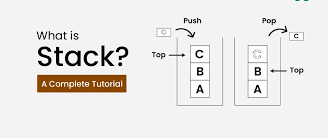
The stack data structure follows a simple but powerful principle: Last In, First Out (LIFO). Think of it like a stack of plates. You can only add or remove plates from the top. This idea works well in programming, where stack array implementation offers an efficient way to manage data with specific access patterns.
Stack Using Array Implementation in C: A Comprehensive Guide
Mr. Bambam Kumar Yadav/ 3 days ago
15
11 min read
Understanding the Stack Data Structure
A stack works on the LIFO principle. This means the last element added is the first one removed. This behavior makes stacks very useful for different applications, including function calls, expression evaluation, and backtracking algorithms. When we implement a stack using an array in C, we need to keep a pointer to the top element and track the stack's current size.
The appeal of implementing a stack with an array is its simplicity and efficiency. Unlike linked lists, arrays offer constant-time access to elements. This makes push and pop operations very fast. This efficiency makes array-based stacks perfect for situations where performance is important.
Essential Stack Operations
Every stack implementation must support basic operations that define how it works. The push operation adds an element to the top of the stack. The pop operation removes the top element. The peek operation lets you see the top element without removing it, and isEmpty checks if the stack has any elements.
Students in Uncodemy's C programming course in Noida learn that properly implementing these operations needs careful attention to boundary conditions. Stack overflow happens when you try to push elements onto a full stack. Stack underflow occurs when you attempt to pop from an empty stack.
Basic Stack Structure in C
The foundation of the stack using array implementation starts with defining the structure. We need an array to store elements, a variable to keep track of the top position, and a constant to define the maximum stack size. This structure forms the basis for all future operations.
```c #define MAX_SIZE 100 typedef struct{ int arr[MAX_SIZE]; int top;} Stack; ```
This simple structure includes everything needed for the stack using array implementation. The top variable acts as an index pointing to the most recently added element, starting at -1 for an empty stack.
Implementing Stack Operations
The push operation adds elements to the stack by incrementing the top pointer and inserting the new element at that position. Before pushing, we must verify the stack isn't full to prevent overflow conditions.
c void push(Stack* stack, int value){ if (stack->top >=MAX_SIZE - 1){ printf("Stack overflow\n"); return;} stack->arr[++stack->top]=value;}
The pop operation removes the top element by decrementing the top pointer. We must check if the stack is empty before attempting to pop to avoid underflow conditions.
c int pop(Stack* stack){ if (stack->top < 0){ printf("Stack underflow\n"); return -1;} return stack->arr[stack->top--];}
Stack Initialization and Utility Functions
Proper initialization sets the foundation for reliable stack using array implementation. The initialization function sets the top pointer to -1, indicating an empty stack ready for use.
c void initStack(Stack* stack){ stack->top=-1;} int isEmpty(Stack* stack){ return stack->top < 0;} int peek(Stack* stack){ if (isEmpty(stack)){ printf("Stack is empty\n"); return -1;} return stack->arr[stack->top];}
These utility functions provide essential stack management capabilities. The isEmpty function helps prevent underflow conditions, while peek allows examination of the top element without modification.
Error Handling and Boundary Conditions
A solid stack that uses an array needs good error handling. Stack overflow and underflow are the main error conditions that must be managed. Professional implementations feature proper error reporting and handle exceptional situations smoothly.
Students in Uncodemy's C programming course in Noida learn that effective error handling sets professional code apart from amateur work. Clear error messages and suitable return values help users recognize and respond to error conditions effectively.
Memory Management Considerations
Array-based stack implementations provide predictable memory usage patterns. All stack memory is allocated at compile time, which removes the overhead of dynamic memory allocation. This method delivers strong performance but needs careful attention to maximum stack size requirements.
The fixed size of a stack using an array means selecting the right array dimensions based on expected usage. Oversized arrays waste memory, while undersized arrays restrict functionality and lead to overflow conditions.
Performance Analysis of Array-Based Stacks
Stack using array implementation provides excellent performance for fundamental operations. Push and pop operations run in constant time O(1), making them very efficient, no matter the stack size. This advantage makes array-based stacks great for high-frequency operations.
The memory access patterns of array-based stacks also take advantage of cache locality. Sequential array access fits well with modern processor cache designs, giving additional performance benefits over pointer-based systems.
Real-World Applications
Understanding stacks through array implementation makes more sense when you look at practical applications. Expression evaluation algorithms use stacks to manage operator precedence and match parentheses. Function call management in programming languages depends a lot on stack-based memory management.
Uncodemy's C programming course in Noida usually covers these applications to show the real-world importance of stack data structures. Students learn how compilers use stacks for parsing and how operating systems handle function calls using stack frames.
Common Implementation Pitfalls
Several common mistakes affect stack implementations using arrays. Forgetting to check boundary conditions leads to buffer overflow vulnerabilities and program crashes. Incorrectly initializing the top pointer causes unpredictable behavior and hard-to-debug issues.
Another common error involves misunderstanding the relationship between array indices and the top pointer. The top pointer should always point to the most recently added element, not the next available position.
Advanced Stack Techniques
Once you have mastered the basic stack with array implementation, several advanced techniques open up. Dynamic stack resizing lets arrays grow as needed. This combines the performance benefits of arrays with the flexibility of dynamic allocation. Multi-stack implementations use a single array to support multiple independent stacks. This optimizes memory usage in applications that need several stacks at the same time. These techniques show the versatility of stack with array concepts.
Integration with Larger Programs
Stack using array implementation often serves as a part of larger applications. Understanding how to add stack functionality to complex programs requires careful thought about interfaces and error handling strategies. Students in Uncodemy's C programming course in Noida learn to create clean interfaces that conceal implementation details while offering necessary functionality. This method encourages code reusability and maintainability in larger software projects.
Testing and Debugging Strategies
Systematic testing ensures that the stack using array implementation works correctly in different scenarios. Test cases should include normal operations, boundary conditions, and error scenarios. Automated testing frameworks can check if the implementation is correct and catch regression errors.
Debugging stack implementations requires understanding how logical stack operations relate to underlying array manipulations. Visualization tools and step-through debugging help identify issues in complex stack-based algorithms.
Best Practices and Code Quality
A professional stack using array implementation follows set coding standards and best practices. Clear variable naming, clear comments, and consistent formatting improve code readability and maintainability. Modular design principles suggest separating stack operations into distinct functions with clear interfaces. This approach makes testing, debugging, and future improvements to stack functionality easier.
Performance Optimization Techniques
While a basic stack using an array is already efficient, some optimization techniques can boost performance even more. Inline functions remove the overhead of function calls for simple operations. Compiler optimizations can enhance the quality of the generated code.
In performance-critical applications, memory alignment is important. Proper alignment can improve cache performance and reduce memory access delays in stack operations.
Bringing It All Together: Your Stack Journey
Mastering stacks with array implementation provides a strong foundation for understanding more complex data structures and algorithms. The concepts learned through stack implementation, such as boundary checking, memory management, and error handling, apply widely in software development.
Whether you are studying through C programming course in Noidaor learning on your own, stacks using array implementation offer a great introduction to data structure concepts. Their simplicity and practicality make stacks an ideal starting point for exploring the basics of computer science.
The skills gained from stack implementation go beyond data structures and extend into areas like algorithm design, system programming, and software development. Knowing how simple array manipulations create powerful data structures helps build intuition for more complex programming challenges.
Remember, getting better at programming comes from practice and experimentation. Start with basic stack implementation using arrays and gradually add advanced features and optimizations. Each improvement provides important lessons about software design and implementation strategies.
Frequently Asked Questions (FAQs)
Q: What's the main advantage of stack using array over linked list implementation?
A: Array-based stacks provide constant-time access and better cache locality, resulting in faster operations and more predictable performance compared to linked list implementations.
Q: How do I determine the appropriate array size for my stack?
A: Consider your application's maximum expected stack depth, add a safety margin, and balance memory usage against the risk of overflow. Profiling actual usage patterns helps optimize size decisions.
Q: Can I implement multiple stacks using a single array?
A: Yes, you can divide the array into sections for different stacks or use more sophisticated allocation strategies. This approach optimizes memory usage when multiple stacks are needed.
Q: What happens if I try to pop from an empty stack?
A: Proper implementation should check for underflow conditions and handle them gracefully, typically by returning an error value or printing an error message rather than crashing.
Q: Is stack using array implementation suitable for all applications?
A: While efficient for most use cases, fixed-size arrays may not suit applications with highly variable stack sizes. Dynamic resizing or linked list implementations might be better for such scenarios.