The question: why learn Python?
Simple answer is: Python is a powerful programming language.
The popularity of python has been attributed to its ease of use and wide use with regard to the application that it may be used in. It is interpreted, high-level, programming language that is characterized by focus on readability of the code. Flexibility of coding is made possible because python supports various programming paradigms, i.e. it supports procedural programming, object-oriented programming, and functional programming.
Highlights of the Python Language
The features of Python are many, and these make it a broadly applicable language.
- Readability and Learning: The Python syntax is compact and clear and therefore, it is simple to write and comprehend hence, best suited to beginners. Specifically, in its design it focuses on readability of the code, which makes it possible to convey those concepts using fewer lines than what would be required with C++ or Java.
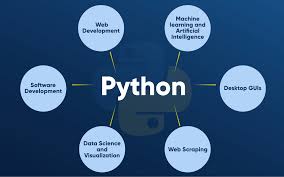
- Flexibility and Use: Python cannot be bound to one implementation area and can be applied across a collection of areas, including web development, information processing, equipment learning, and automation. This is why it is an important skill in different industries.
- Wealthy libs: Python has an extensive standard library which encapsulates pre-written code to many activities saving time and trouble. There are also thousands of third-party packages that python has been built on by the community.
- Platform Independence: Python programs may be written from a single code base and therefore, can unanimously be utilized in operating systems, such as Windows, macOS, and Linux. This is why it is a very good selection between teams with various operating systems.
- Interpreted Language: Python is an interpretive language, i.e code is read in line by line so debugging becomes effortless. You can test individual pieces of code without compiling the whole program.
- Open Source and Free: the source code of Python is available for free, and one could distribute it and modify it, which has contributed to a great community of developers contributing to the growth of Python and its ecosystem of libraries.
- Dynamically typed Python is considered to be dynamically typed, meaning that you do not have to specify the data type of a variable when declaring one; Python interpreter will determine the type, thus the code is more flexible.
-
There will be demand in Python Skills
There is demand in Python, which has increased as data science, machine learning, and artificial intelligence have grown. In different industries, companies want professionals capable of retrieving information out of data, developing machine learning models, and atomizing things with Python. A 2024 report by GitHub suggests that Python was the most sought-after programming language. Knowledge of Python can enhance job opportunities and open a variety of possibilities in the career prospect. The US pays an average of 120,000 to python developers in the country.
Python Learn Plan Python step-by-step
Learning Python is a process and needs to be stepped up. This is how you can learn Python step-by-step.
Step 1- Learn Your Motivation
It is important to establish your purpose of learning Python before plunging into it. The range of possible applications of Python is large, and this is why developing a goal will make you stay motivated and focused. Think about something you get passionate about, e.g. building websites, applying AI, analyzing personal data.
Step 2: Study basic syntax of Python in a short time
As much as one would want to memorise all of the syntax of python, it is more prudent to learn the basics and then jump into projects. Python is relatively simple to learn since it is readable.
° The basic understanding: Begin with the basic idea of variables, data types, operators and statements of control (if-statements, for-loops, while-loops).
° Functions: Perry to know what functions are, which are blocks of code that can be reused to carry out a task.
° Data Structures: Learn about the available data structures in Python like lists, tuples, sets and dictionaries which are mostly utilized in storing and manipulating information.
° Environment Preparation: Download Python on the official site or work in an environment such as Anaconda Python or DataLab that will allow you to write code in the browser. Make your first program, say, a hello, world! script, so as to understand the syntax and architecture of it.
Learning W3Schools has tutorials on Python and has a "Try it Yourself" editor where code can be practiced and results observed. Interactive tutorial LearnPython.org also features Beginner tutorial, including variables, operators, string formatting, and so on. Installation, variables, data types and control flow are provided in step-by-step examples with Tutorials Teacher. GeeksforGeeks also offers tutorials on how to install Python, your first program, comments, variables, keywords and operators.
Step 3: Learn middle concepts of python
Once you realize that you have a solid command of basics, pass on to middle or higher levels to increase your knowledge and answer complex questions.
Error.
° Dealing with errors and errors: become familiar with how to handle unexpected faults with try/except blocks, a valuable general method in producing lasting programs.
° Python is wonderful to work with Libraries: One of the excellent properties of Python in the programming language is the comprehensive community of packages, commonly called libraries. Learn the practice of importing and using popular libraries like NumPy to manipulate numbers, Pandas to use the data and Matplotlib to plot the data.
° Object-Oriented Programming (OOP): Study the concepts described with Object-Oriented Programming (OOP) such as the use of classes and objects as well as inheritance and polymorphism and make your code modular, reusable and scalable.
Step 4: Structured Projects with Learn by doing
One of the best routes to learn Python is by being proactive with your learning by taking up projects. You can start with systematic works to implement the ideas and reinforce your knowledge. Dataquest focuses more on this pattern, inviting the learner to immerse himself into cool projects as soon as he/she understands the basics.
° Project Examples: Begin with structured projects, which fits your interest. Examples would be creation of a word-guessing game, creating an app to order food or analyzing movie or sport data. In more advanced projects, the prediction of the stock market or the detection of pneumonia by using X-ray images with machine learning could take place.
° Project resources: Resources on Dataquest have several structured project resources by topics such as Data Science and Machine Learning (Dataquest, Scikit-learn Documentation, CS109A), Web Frameworks (Kivy Guide, BeeWare and the language, Bottle Tutorial and Bottle the web framework, How To Tango With Django, etc.), Game Development (Pygame Tutorials, Pygame tutorial, Making Games with Pygame, Invent Your Own Computer Games with Python, etc.), Hardware/Sensors/Robots (Using Python with Arduino,
° Practice and Iteration: To strengthen the knowledge, it is important to code on a daily basis. Go over earlier projects to refactor code or do something new to the project to strengthen the learning and see the progress.
Step 5: Having your Projects
After you are used to the
structured projects, you have to test yourself, with independent Python projects. It is best to begin with minuscule endeavors, and feel able to complete projects so as to have an accomplishment.
° Discovering Ideas: It is possible to build on past projects, go through Python project lists, or join Python meetups. Launch a hacking project of your own open-sourcing capabilities or creating applications to make your life easier.
° Project Types: A few of the independent project ideas will be the use of data science and machine learning (i.e., election polls visualization, weather prediction, stock market prediction, news articles summarization), the development of apps (i.e., activity tracker, weather-related notifications, real-time smart chat), websites (i.e., meal planner, movie review site, note taking), games (i.e., location-based game, puzzle solving game), hardware, sensors, robots (i.e., remote-controlled house sensor scenarios, smarter alarm clock, self-driving
° Troubleshooting: In case of challenges, go to online sources, websites such as StackOverflow, Google, official Python documentation or AI-assisted automated coding tutors.
Step 6- Continue to push yourself
Being proficient in Python is continuous. Take harder and bigger projects every time to sharpen up. Think of instruction, expansion of your products, maximization of efficiency, or even selling your productions.
Uncodemy Courses Python
Uncodemy has python course training, especially those in Delhi and Pune, which aims to benefit beginners and experts. The institute will offer an all-inclusive course and a placement and practical experience.
Course Highlights
Full Coverage: The curriculum in the Uncodemy Python course explains concepts, along with advanced concepts, functions, NumPy, Pandas, Matplotlib, and Object-Oriented Programming (OOP).
Practical knowledge: The courses focus on practical business of projects, which enables students to practice what they learn in practice. Examples are topic modeling on news articles and Netflix movie clustering, company bankruptcy prediction and tweet sentiment analysis.
Expert Trainers: Uncodemy has specialists in the industries as trainers offering one on one mentorship and guidance.
Flexible Learning Options: Uncodemy is providing offline and flexible learning so that anyone can have access to it in his or her time.
Placement Assistance: Placement Assistance is a major benefit, the placement assistance includes career services, resume tours and interview preparation programs to assist students in gaining employment when done.
Low Costs: No one will be left out since the courses are charged at an affordable fee.
Community: Uncodemy is a community based learning ground.
Particular courses Provided by Uncodemy
Classes of the Python course in Uncodemy go into the subject through multiple levels.
Functions: This module discusses defining and calling functions, different kinds of arguments (positional, keyword, default and non-default arguments, arbitrary arguments and keyword arbitrary arguments).
Numpy: The students get an introduction of the variations between lists and NumPy arrays, vector and matrix computation, and array segmentation and slicing.
Pandas: It starts with Series in this module
DataFrame Objects, loc and iloc, maintaining data (additions/removals of columns), basic grouping, aggregate functions, file reading, plotting and basic methods.
Matplotlib: This module discusses how to draw a scatter plot, line plot, bar plot, histogram, and pie chart, how to manipulate labels, ticks, titles, marker styles, type, sizes, figures, and subplots.
OOPs: This module addresses the topic of classes and objects, types of variables and methods, and several other types of inheritance (single, multi-level, hierarchical, multiple, and hybrid inheritance).
Uncodemy is focused on teaching people the main IT skills, and the course is friendly and built according to the structure of Data Science, Machine Learning, and Python programming knowledge.