In this blog post, we will take a step-by-step journey into building a machine learning model from scratch. We'll keep it simple, realistic, and beginner-friendly. Whether you're a student, a curious learner, or someone preparing to dive into data science, this guide is for you.
Let’s get started.
🚀 Why Learn to Build an ML Model from Scratch?
Before we jump into the technicalities, let’s quickly understand why you should learn to build ML models from scratch:
- It helps you understand how ML algorithms work behind the scenes.
- You become more confident in tweaking models to suit real-world problems.
- You gain practical skills that are highly valued in tech careers.
- It’s a crucial step if you want to become a machine learning engineer or data scientist.
🧠 Step-by-Step Guide to Build a Machine Learning Model from Scratch
Step 1: Define the Problem
Everything starts with a problem statement.
Ask yourself:
- What are you trying to predict?
- Is this a classification or regression problem?
- What does success look like?
💡 Example: Suppose you're trying to predict whether an email is spam or not. That’s a classification problem.
Step 2: Collect the Data
Data is the foundation of any machine learning model. Without data, you have nothing to learn from.
Sources to collect data:
- Open datasets (Kaggle, UCI Machine Learning Repository, etc.)
- Company’s internal databases
- Web scraping tools
- APIs (like Twitter API, Google Maps API)
💡 Tip: Make sure your data is relevant, recent, and clean.
Step 3: Understand and Explore the Data (EDA)
Once you have your data, it’s time to explore it. This process is called Exploratory Data Analysis (EDA).
Tasks include:
- Checking for missing values
- Understanding distributions of features
- Finding correlations
- Visualizing patterns (using plots, graphs, heatmaps)
💡 Tools to use: pandas, matplotlib, seaborn (for Python users)
Step 4: Preprocess the Data
Raw data is messy. You need to clean and prepare it for your model.
Steps in preprocessing:
- Handling missing values (drop, fill, or impute)
- Encoding categorical variables (label encoding, one-hot encoding)
- Scaling numerical values (standardization or normalization)
- Splitting the data into training and testing sets
💡 Rule of thumb: Use 80% of data for training, and 20% for testing.
Step 5: Choose the Right Algorithm
There are many machine learning algorithms. Choosing the right one depends on your problem type and data.
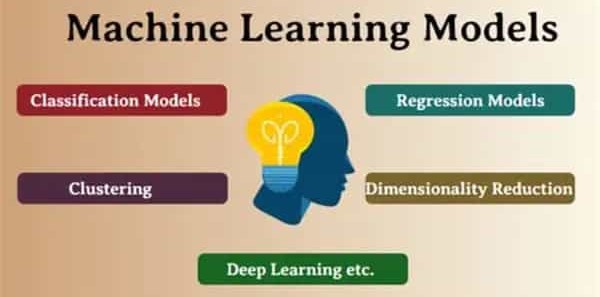
Common ML algorithms: | Problem Type | Algorithm Examples | |------------------|--------------------------------------------| | Classification | Logistic Regression, Decision Trees, SVM | | Regression | Linear Regression, Random Forest Regressor | | Clustering | K-Means, DBSCAN |
💡 Start simple. You can always try more complex algorithms later.
Step 6: Train the Model
Now it’s time to teach your model using the training data.
What happens during training?
- The algorithm learns patterns from the data.
- It adjusts internal parameters to minimize errors.
💡 Use libraries like: scikit-learn for training models in Python.
Step 7: Evaluate the Model
Once the model is trained, you need to test how well it performs on unseen data (test set).
Metrics to evaluate:
- Accuracy (for classification)
- Precision, Recall, F1-score
- Mean Squared Error (MSE) (for regression)
- Confusion Matrix
💡 Never evaluate your model on the same data it was trained on.
Step 8: Tune Hyperparameters
Hyperparameters are settings that control the behavior of the algorithm (e.g., learning rate, tree depth).
You can use:
- Grid Search
- Random Search
- Bayesian Optimization
💡 Tuning helps improve model performance.
Step 9: Make Predictions
Now that your model is trained and evaluated, you can use it to make real-world predictions.
💡 Example: Predicting if a customer will churn or not based on their behavior.
Step 10: Deploy the Model
Training a model is only half the journey. You must deploy it into production so others can use it.
Tools for deployment:
- Flask/Django (for web apps)
- Streamlit (for data apps)
- AWS, GCP, or Azure (for cloud deployment)
💡 Deployment makes your ML model truly useful.
🛠 Tools and Libraries You Should Learn
If you’re using Python, here are essential tools:
- NumPy and Pandas – for data manipulation
- Matplotlib and Seaborn – for data visualization
- Scikit-learn – for machine learning algorithms
- TensorFlow or PyTorch – for deep learning
🔄 Bonus: Example Project Workflow
Let’s say you want to build a model to predict house prices.
Here's how it flows:
- Define the problem: Predict house prices based on features.
- Collect data: Download dataset from Kaggle.
- Explore data: Check average prices, correlations.
- Preprocess: Handle missing values, normalize data.
- Choose algorithm: Use Linear Regression.
- Train the model.
- Evaluate: Use R² score and MSE.
- Tune: Try Ridge or Lasso regression.
- Predict: Get price estimates for new houses.
- Deploy: Create a web app using Flask.
👩🏫 [Machine Learning Using Python] Course in Noida – by Uncodemy
If you’re serious about learning machine learning, theory alone is not enough. You need hands-on projects, mentorship, and real-world exposure.
Uncodemy offers a top-rated [Machine Learning Using Python] course in Noida where you’ll:
- Learn step-by-step model building
- Work on real-time datasets
- Get mentorship from industry experts
- Build an impressive portfolio for job interviews
Whether you’re a beginner or looking to level up, this course is highly recommended.
❓ Frequently Asked Questions (FAQs)
Q1. Do I need to learn coding to build ML models?
Yes, basic knowledge of Python is essential. Libraries like scikit-learn make it easier to implement models with just a few lines of code.
Q2. How long does it take to learn machine learning?
It varies. With consistent effort, you can learn the basics in 3–6 months and become job-ready within a year.
Q3. Can I build ML models without a background in math?
While advanced math isn't required initially, understanding concepts like linear algebra, calculus, and probability will help you grasp ML algorithms better.
Q4. Is machine learning used only in big tech companies?
Not at all. ML is used in healthcare, banking, marketing, retail, education, and even agriculture.
Q5. What’s the difference between AI and ML?
Machine Learning (ML) is a subset of Artificial Intelligence (AI). AI is the broader concept, and ML is one way to achieve it.
✍️ Final Thoughts
Building a machine learning model from scratch isn’t as intimidating as it seems. The journey is all about understanding the process, practicing regularly, and applying your knowledge to real-world problems.
Start small, stay curious, and don’t hesitate to make mistakes. Every great data scientist was once a beginner just like you.
And if you're looking to fast-track your journey, don’t forget to check out Uncodemy’s [Machine Learning Using Python] course in Noida—a course designed to help you build confidence and competence in the world of ML.